This week's news for medievalists features the mystery of how books were being stolen from a medieval monastery's library, and the plans to build an Anglo-Saxon house.
Finally, check out our Instagram page, where you can see some of the photos we have been taking, such as this fun picture from Southwark Cathedral:
Showing posts with label Monasticism. Show all posts
Monday, September 22, 2014
Tuesday, March 18, 2014
Jacques de Molay, Templar, died on this day in 1314
Today marks the 700th anniversary of the execution of Jacques de Molay, Grand Master of the Knights Templar. For many historians this day marks the unofficial end of the Templars, the military monastic order that for about two hundred years defended Jerusalem and the Holy Land for Roman Catholics.
Dominic Selwood, the resident historian at The Telegraph, has penned a good account of the story of the fall of the Grand Master and his brethren. He writes:
While the Knights Templar was destroyed in the fourteenth-century, their notoriety and story would continue on to the present day. In his article, Your Conspiracy Theories Began 700 Years Ago Today, Paul Fain notes that their mantle would be taken up by many others. For example:
You can find some articles about the Knights Templar on Medievalists.net. Check out also these accounts about the founding of Templars from De Re Militari: The Society for Medieval Military History.
Dominic Selwood, the resident historian at The Telegraph, has penned a good account of the story of the fall of the Grand Master and his brethren. He writes:
To draw down the final curtain, on the 18th of March 1314 the four most senior living Templars were hauled to Paris. On a rostrum erected on the parvis before the great cathedral of Notre-Dame, they were publicly condemned to perpetual imprisonment. Hugues de Pairaud and Geoffroi de Gonneville accepted the sentences in silence. But Jacques de Molay and Geoffroi de Charney stunned the crowd by talking over the cardinals and professing their innocence and that of the Temple.Click here to read his full article
The electrifying news was rushed across the city to King Philip at the Louvre. Desperate to crush this dangerous new defiance, he abandoned all legal procedures and ordered the two old Templars to be burned without delay.
While the Knights Templar was destroyed in the fourteenth-century, their notoriety and story would continue on to the present day. In his article, Your Conspiracy Theories Began 700 Years Ago Today, Paul Fain notes that their mantle would be taken up by many others. For example:
The early Freemasons claimed ties to the Templars, despite a gap of a few hundred years between their creation and de Molay’s death. A dubious link to the old-school warriors apparently gave them some street cred.He adds:
The Templars also made an appearance in the news last week. Mexican police killed Nazario Moreno, the leader of a drug cartel that used the name Knights Templar. According to Time, Moreno’s followers wore white robes and kept statues of him wearing medieval armor. It’s unclear where he hid the Holy Grail.You can find a lot of information on the Templars - books, video games, even cheesy documentaries like this one:
You can find some articles about the Knights Templar on Medievalists.net. Check out also these accounts about the founding of Templars from De Re Militari: The Society for Medieval Military History.
Tuesday, April 16, 2013
Newly discovered Anglo-Saxon grave may be evidence of 7th-century monastery
Archaeological work being done at St.Hilda's Church in Hartlepool has turned up an Anglo-Saxon grave. Other burials from the Early Modern period were also found, as the church is digging up a section of its floor to install a new heating system.
The discovery might be evidence that an Anglo-Saxon monastery existed on this site. Bede records that a nun named Heiu founded a monastery in the area named Heruteu in the 640s.
Dr Steve Sherlock, of Tees Archaeology, said: “It’s an exciting thing. We hope to do more work to understand it. It’s always presumed that there was a church here in Norman times in 1066. We note that the church is sited in the area of St Hilda’s Anglo-Saxon monastery, about 60ft north of the present church.
“It’s always been presumed that this church was the site of St Hilda’s Anglo-Saxon monastery. We haven’t found any trace of that, but this one burial may be one of the clues pointing towards that.”
Click here to read the full article from the Hartlepool Mail
Click here to read more about an Anglo-Saxon Monastery at Hartlepool from Teeside Archaeology
The discovery might be evidence that an Anglo-Saxon monastery existed on this site. Bede records that a nun named Heiu founded a monastery in the area named Heruteu in the 640s.
Dr Steve Sherlock, of Tees Archaeology, said: “It’s an exciting thing. We hope to do more work to understand it. It’s always presumed that there was a church here in Norman times in 1066. We note that the church is sited in the area of St Hilda’s Anglo-Saxon monastery, about 60ft north of the present church.
“It’s always been presumed that this church was the site of St Hilda’s Anglo-Saxon monastery. We haven’t found any trace of that, but this one burial may be one of the clues pointing towards that.”
Click here to read the full article from the Hartlepool Mail
Click here to read more about an Anglo-Saxon Monastery at Hartlepool from Teeside Archaeology
Wednesday, November 07, 2012
Medieval Priory discovered on Jersey
Jersey archaeologists had the first chance to explore a rare medieval priory after uncovering a stone wall.
Robert Waterhouse, Societe Jersiaise Archaeologist, said the St Clement's priory had been an accidental find. He said the society knew it must have existed as there was documentary evidence, but that it had not been able to find it until now.
Mr Waterhouse said: "In the summer we carried out a student excavation in the cemetery looking for [an] Iron Age and Roman settlement that was known to exist here.At the end of the investigation one of our trenches came up with a substantial stone wall while the one behind came up with a great mass of building rubble and medieval pottery. We put in a larger trench and came up trumps. We got a substantial medieval wall in the south west corner of the building."
Click here to read this article from the BBC
Tuesday, September 25, 2012
Medieval monastery in Hungary was a glass-making hub, researchers find
Central European University Professor of Medieval Studies Jozsef Laszlovszky and his students have been hanging out in the 12th century. They haven't gone back in time, just up the Danube to the site of a medieval monastic estate in Pomaz that housed a glass-production center. Part of the site was poorly excavated in the 1930s and skeptics weren't sure that it was once a bustling manufacturing hub but Laszlovszky, who is also an archeologist, and his team have been studying the very real evidence. From bricks that bear the scars of very high kiln temperatures to broken pieces of glass, it's now clear that the site, which includes a church and a cemetery, was a specialized center.
“We got into archeological layers full of typical materials – for example, fragments of melting pots with melted glass and even complete glass object which were most likely the finished products,” said Laszlovsky. “Interestingly, they probably used recycled glass for the products. We think that's a 21st century thing, but it's not.”
For decades the excavation site – about 20 kilometers from Budapest – was owned by a state company and was off limits to the general public. Laszlovszky was brought in by the local council to do an archeological survey to asses the site. Now owned by a private investor with a keen interest in preservation, the site will eventually be open to the public.
Click here to read this article from Central European University
“We got into archeological layers full of typical materials – for example, fragments of melting pots with melted glass and even complete glass object which were most likely the finished products,” said Laszlovsky. “Interestingly, they probably used recycled glass for the products. We think that's a 21st century thing, but it's not.”
For decades the excavation site – about 20 kilometers from Budapest – was owned by a state company and was off limits to the general public. Laszlovszky was brought in by the local council to do an archeological survey to asses the site. Now owned by a private investor with a keen interest in preservation, the site will eventually be open to the public.
Click here to read this article from Central European University
Friday, September 07, 2012
Anglo-Saxon treasures uncovered at Polesworth Abbey dig
Anglo-Saxon treasures which date back as far as 700AD have been unearthed during a major archaelogical dig at a historic North Warwickshire site.
Dating back almost 1,200 years, Polesworth Abbey, near Tamworth, a Scheduled Ancient Monument, is steeped in centuries of history – some of which has just been unearthed for the first time in hundreds of years.
Originally a Benedictine nunnery which was founded in the 9th century by St Modwena and King Egbert, a near 200-strong team of local people, aged 12 to in their 80s, has spent the last six weeks carefully excavating land on the river side of the abbey as part of a community archaeological dig.
Supported by a professional team from Northamptonshire Archaeology, the team’s goal was to find any secrets hidden in the soil on the site of the monastery’s former kitchen and refectory.
Click here to read this article from the Birmingham Post
Dating back almost 1,200 years, Polesworth Abbey, near Tamworth, a Scheduled Ancient Monument, is steeped in centuries of history – some of which has just been unearthed for the first time in hundreds of years.
Originally a Benedictine nunnery which was founded in the 9th century by St Modwena and King Egbert, a near 200-strong team of local people, aged 12 to in their 80s, has spent the last six weeks carefully excavating land on the river side of the abbey as part of a community archaeological dig.
Supported by a professional team from Northamptonshire Archaeology, the team’s goal was to find any secrets hidden in the soil on the site of the monastery’s former kitchen and refectory.
Click here to read this article from the Birmingham Post
Monday, September 03, 2012
Find hints at early medieval monastery
Archaeologists exploring links among early medieval monasteries in Ireland, Britain and mainland Europe have discovered important evidence of a settlement in Co Donegal.
The team of tutors and students from the University of Sunderland made their discovery last week during a 10-day field trip to Culdaff on the Inishowen peninsula. Using the latest in mapping equipment, they discovered a circular boundary wall, some 100 metres in diameter, buried underground in fields at Carrowmore.
Click here to read this article from the Irish Independent
The team of tutors and students from the University of Sunderland made their discovery last week during a 10-day field trip to Culdaff on the Inishowen peninsula. Using the latest in mapping equipment, they discovered a circular boundary wall, some 100 metres in diameter, buried underground in fields at Carrowmore.
Click here to read this article from the Irish Independent
Wednesday, August 15, 2012
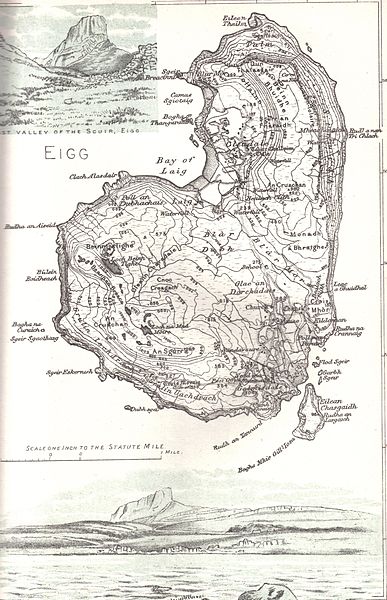
Monastery where Christian saint was martyred is uncovered on Scottish Island
An archaeological dig on a Scottish island has unearthed the remains of what is thought to be a monastery founded by one of the country’s first Christian saints.
St Donnan brought Christianity to many places in the West Highlands in the seventh century before settling on Eigg. According to local folklore, he became a martyr after he was killed by Norsemen, along with 50 monks, while giving Mass on Easter Sunday in the year 617.
Eigg History Society won £17,500 of Heritage Lottery funding to carry out an archaeological excavation on the island in an effort to locate St Donnan’s monastery. The dig at Kildonnan Graveyard on the south-east side of the island has now uncovered evidence which experts believe shows it is the exact site.
Click here to read the full article from The Scotsman
St Donnan brought Christianity to many places in the West Highlands in the seventh century before settling on Eigg. According to local folklore, he became a martyr after he was killed by Norsemen, along with 50 monks, while giving Mass on Easter Sunday in the year 617.
Eigg History Society won £17,500 of Heritage Lottery funding to carry out an archaeological excavation on the island in an effort to locate St Donnan’s monastery. The dig at Kildonnan Graveyard on the south-east side of the island has now uncovered evidence which experts believe shows it is the exact site.
Click here to read the full article from The Scotsman
Wednesday, June 27, 2012
Medieval Wombridge priory excavated
Archaeologists are due to return to a Telford church almost a year after a medieval priory was first unearthed.
The remains of the building, thought to date back to the 13th Century, were found in the grounds of Wombridge Church last August.
A team of volunteers are to help archaeologists uncover the medieval floor.
Click here to read this article from BBC
See also Medieval priory uncovered in Wombridge
Sunday, June 24, 2012
Monks from Eynsham Abbey reburied
Nine bodies left languishing in a storeroom for decades will finally be laid to rest tomorrow.
Some of the skeletons, uncovered at Eynsham Abbey in an archaeological dig, have waited more than 400 years for a proper burial. They were discovered in the late 1980s and early 1990s and kept in a storeroom at the Oxfordshire Museum’s Resource Centre in Standlake.
That was until their existence was discovered by a local priest, who decided to bring them back and return them to their rightful home.
Click here to read this article from the Oxford Times
See also Eynsham's medieval monks reburied in church
Some of the skeletons, uncovered at Eynsham Abbey in an archaeological dig, have waited more than 400 years for a proper burial. They were discovered in the late 1980s and early 1990s and kept in a storeroom at the Oxfordshire Museum’s Resource Centre in Standlake.
That was until their existence was discovered by a local priest, who decided to bring them back and return them to their rightful home.
Click here to read this article from the Oxford Times
See also Eynsham's medieval monks reburied in church
Friday, June 22, 2012
No sexy outfits nuns told in 1,300-year-old 'rule' book
They were held up as paragons of virtue, but one congregation of Essex nuns appear to have needed some pointers on how to conduct themselves.
In a book of advice for the cloistered women written more than 1,300 years ago, they were reminded of the benefits of virginity, warned of the sin of pride, and cautioned against wearing garments which “set off” the body.
The guidance came from the Anglo-Saxon cleric Aldhelm in a text dedicated to the abbess nuns of Barking Abbey, the oldest surviving version of which is now up for sale. In the work, De Laude Virginitatis [In Praise of Virginity], the author tells the nuns that abstinence from sex is not enough - their “stainlessness of bodily virginity” must be accompanied by a “chastity of the spirit” if they are to avoid the “untamed impulses of bodily wantonness”.
Addressing the issue of clothing, he writes: “If you dress yourself sumptuously and go out in public so as to attract notice, if you rivet the eyes of young men to you and draw the sighs of adolescents after you, and nourish the fires of sexual anticipation ... you cannot be excused as if you were of a chaste and modest mind.”
Click here to read this article from The Telegraph
In a book of advice for the cloistered women written more than 1,300 years ago, they were reminded of the benefits of virginity, warned of the sin of pride, and cautioned against wearing garments which “set off” the body.
The guidance came from the Anglo-Saxon cleric Aldhelm in a text dedicated to the abbess nuns of Barking Abbey, the oldest surviving version of which is now up for sale. In the work, De Laude Virginitatis [In Praise of Virginity], the author tells the nuns that abstinence from sex is not enough - their “stainlessness of bodily virginity” must be accompanied by a “chastity of the spirit” if they are to avoid the “untamed impulses of bodily wantonness”.
Addressing the issue of clothing, he writes: “If you dress yourself sumptuously and go out in public so as to attract notice, if you rivet the eyes of young men to you and draw the sighs of adolescents after you, and nourish the fires of sexual anticipation ... you cannot be excused as if you were of a chaste and modest mind.”
Click here to read this article from The Telegraph
Monday, June 18, 2012
Hexham Abbey receives £1.8m to restore medieval buildings
Hexham Abbey in northeast England has been granted £1.8m from the Heritage Lottery Fund for a restoration of the Abbey’s medieval monastery buildings.
The restoration project includes the creation of a state-of-the-art visitor centre and community facilities within the former monastic complex adjoining the 7th century abbey church which dominates the heart of Hexham.
Ivor Crowther, Head of the Heritage Lottery Fund North East, said: “Hexham Abbey has played a pivotal role in the lives of local people and visitors for hundreds of years. This project, that will restore and reunite the Abbey’s monastery buildings, will mean that the heritage of this special place is brought to life and provide a place for everyone to reflect, learn from and enjoy. HLF are incredibly proud to be supporting this project to protect a true heritage gem in the North East.”
Click here to read this article from Medievalists.net
The restoration project includes the creation of a state-of-the-art visitor centre and community facilities within the former monastic complex adjoining the 7th century abbey church which dominates the heart of Hexham.
Ivor Crowther, Head of the Heritage Lottery Fund North East, said: “Hexham Abbey has played a pivotal role in the lives of local people and visitors for hundreds of years. This project, that will restore and reunite the Abbey’s monastery buildings, will mean that the heritage of this special place is brought to life and provide a place for everyone to reflect, learn from and enjoy. HLF are incredibly proud to be supporting this project to protect a true heritage gem in the North East.”
Click here to read this article from Medievalists.net
Friday, June 15, 2012
New look for St Benet’s Abbey ruins at Horning
The mysterious ruins of St Benet’s Abbey next to the River Bure at Horning are currently hidden beneath scaffolding as an £800,000 restoration project gets under way.
And the painstaking work of specialist builders from Suffolk firm R and J Hogg is creating quite a point of interest for Broads holidaymakers passing on boats.
Since the scaffolding went up in April, Bernie Bartrum and his team have inspected every inch of the medieval abbey gatehouse and adjoining 18th century windmill to check for the ravages of time.
Foreman Steve Martin said: “It is a fantastic spot to work over the summer. Before we started we had to carry out a wildlife survey and we have seen everything here from hen harriers and kestrels to barn owls and a sparrowhawk carrying a large rat.”
Click here to read this article from the Norwich Evening News
Thursday, June 14, 2012
Academic seeks origin of mysterious Spanish cloister
Could a poolside folly at a private Mediterranean resort in Spain owned by a reclusive German billionaire actually be a 12th century architectural treasure spirited away from its original home?
This is the historical mystery being unraveled by a medieval art expert who has been investigating a cloister that has stood since 1958 on a northeastern Spanish estate owned by wealthy German philanthropist Curt Engelhorn and his family.
Gerona University Medieval Art History Professor Gerardo Boto believes the cloister, now nestled in a pine forest on the estate in Palamos, some 120 km north of Barcelona in the northeastern Spanish region of Catalonia, could be the remains of a romanesque monastery that was originally built several hundred miles away in the central region of Castilla y León.
"If its authenticity is confirmed, that could help us rewrite a few aspects about Spanish romanesque," Boto told Reuters on his first visit to the cloister.
Click here to read this article from Reuters
Click here to read Who has a cloister around their pool?
This is the historical mystery being unraveled by a medieval art expert who has been investigating a cloister that has stood since 1958 on a northeastern Spanish estate owned by wealthy German philanthropist Curt Engelhorn and his family.
Gerona University Medieval Art History Professor Gerardo Boto believes the cloister, now nestled in a pine forest on the estate in Palamos, some 120 km north of Barcelona in the northeastern Spanish region of Catalonia, could be the remains of a romanesque monastery that was originally built several hundred miles away in the central region of Castilla y León.
"If its authenticity is confirmed, that could help us rewrite a few aspects about Spanish romanesque," Boto told Reuters on his first visit to the cloister.
Click here to read this article from Reuters
Click here to read Who has a cloister around their pool?
Thursday, June 07, 2012
Who has a cloister around their pool?
An exceptional 12th-century cloister has been sitting for half a decade inside the garden of a private home in Girona province without anyone knowing about it, except its owners and a few locals. Gerardo Boto, a professor of medieval art at Girona University, unveiled the discovery at a recent Barcelona art convention, where he amazed Romanesque architecture experts with a detailed description of the find, which is already being compared to the monastery of Santo Domingo de Silos in Burgos.
Most remarkably, it does not show up in any official inventory, nor does it enjoy cultural protection from any public agency.
Click here to read this article from El Pais
Sunday, June 03, 2012
UMKC conference to celebrate Medieval nuns’ literary contributions
The letter to Eadburga expressed thanks for the previous goods sent from Minster-in-Thanet and asked for yet another favor — a special copy of the Epistles of St. Peter.
Along with Bishop Boniface’s “thank you” was a quantity of gold, to be pounded flat or powdered by the clever fingers of the monastic scribes, for gilding the hand-written book’s Latin letters. When trying to convert the “carnally minded” Germans in the early 700s A.D., it paid to be a little flashy.
This Anglo-Saxon bishop/missionary to the pagan tribes was not writing to a house of Kentish monks, however. Eadburga was an abbess, one of hundreds, if not thousands, of nuns involved in copying books throughout the Middle Ages. In our collective cultural misconception, fed by clever advertising (remember the “It’s a miracle” Xerox ad?), cartoons and movies (“The Name of the Rose”), this job is largely thought of as a monk’s — read, “man’s.”
Yet cloistered women also underpinned European civilization, noted medievalist Virginia Blanton, “another part of the past which, when I was in school, did not appear in our history books.”
Click here to read this article from The Kansas City Star
Click here to visit the Nuns’ Literacies in Medieval Europe II website
Along with Bishop Boniface’s “thank you” was a quantity of gold, to be pounded flat or powdered by the clever fingers of the monastic scribes, for gilding the hand-written book’s Latin letters. When trying to convert the “carnally minded” Germans in the early 700s A.D., it paid to be a little flashy.
This Anglo-Saxon bishop/missionary to the pagan tribes was not writing to a house of Kentish monks, however. Eadburga was an abbess, one of hundreds, if not thousands, of nuns involved in copying books throughout the Middle Ages. In our collective cultural misconception, fed by clever advertising (remember the “It’s a miracle” Xerox ad?), cartoons and movies (“The Name of the Rose”), this job is largely thought of as a monk’s — read, “man’s.”
Yet cloistered women also underpinned European civilization, noted medievalist Virginia Blanton, “another part of the past which, when I was in school, did not appear in our history books.”
Click here to read this article from The Kansas City Star
Click here to visit the Nuns’ Literacies in Medieval Europe II website
Friday, April 20, 2012
Medieval treasures discovered in English abbey
An archaeological investigation at Furness Abbey in northwest England has uncovered the grave of an abbot, which includes an extremely rare medieval silver-gilt crozier and bejewelled ring.
The grave, which could date back to the 12th century, was uncovered by Oxford Archaeology North, as they were investigated ways to repair the sinking foundations of the ruined abbey. An initial examination of his skeleton, which is currently in the care of Oxford Archaeology North, indicated that he was probably between 40 and 50 years old when he died. Like many monastic burials of middle-aged and older men, he had a pathological condition of the spine often considered to be associated with obesity and mature-onset (Type II) diabetes. Tests will soon be carried out to determine a more exact date of when the abbot died.
The grave was situated in the presbytery, the most prestigious position in the church and generally reserved for the richest benefactors. Most Cistercian abbots were buried in the chapter house.
Click here to read this article from Medievalists.net
The grave, which could date back to the 12th century, was uncovered by Oxford Archaeology North, as they were investigated ways to repair the sinking foundations of the ruined abbey. An initial examination of his skeleton, which is currently in the care of Oxford Archaeology North, indicated that he was probably between 40 and 50 years old when he died. Like many monastic burials of middle-aged and older men, he had a pathological condition of the spine often considered to be associated with obesity and mature-onset (Type II) diabetes. Tests will soon be carried out to determine a more exact date of when the abbot died.
The grave was situated in the presbytery, the most prestigious position in the church and generally reserved for the richest benefactors. Most Cistercian abbots were buried in the chapter house.
Click here to read this article from Medievalists.net
Tuesday, April 10, 2012
Medieval Monastic Library of Lorsch recreated online
The unique holdings of the medieval monastic library of Lorsch, currently scattered over 68 libraries worldwide, are being re-compiled into a virtual library. Heidelberg University Library and local government officials in Germany have been working since March of 2010 to publish the 330 surviving Lorsch manuscripts and manuscript fragments online. The project by the name of “Bibliotheca Laureshamensis – digital” is being funded by the State of Hesse with 450.000 euros and will continue through 2013.
“The virtual reconstruction of the former library of Lorsch Abbey, now a UNESCO World Heritage Site, gives us the chance to study the abbey’s intellectual foundation, and the Carolingian world view in general, in depth for the first time”, said Eva Kühne-Hörmann, the Hessian Minister of Higher Education, Research and the Arts, during the presentation of the project. “This outstanding endeavour, which is of great interest to the State of Hesse, has united experts from Hesse and Baden-Württemberg in an exemplary, cross-border cooperative effort that reflects the historic significance and geographical location of the monastic library of Lorsch between the palatinate and the diocese of Mainz.”
The Bibliotheca Laureshamensis – digital project will see the digitisation of the abbey’s codices. In addition, scientific descriptions detailing the origin, owners, appearance, handwriting and content of the library’s manuscripts will be compiled in a project database. For the first time, researchers will have comprehensive and systematic access to the Lorsch manuscripts, a fact that opens up entirely new possibilities of research.
Click here to read this article from Medievalists.net
“The virtual reconstruction of the former library of Lorsch Abbey, now a UNESCO World Heritage Site, gives us the chance to study the abbey’s intellectual foundation, and the Carolingian world view in general, in depth for the first time”, said Eva Kühne-Hörmann, the Hessian Minister of Higher Education, Research and the Arts, during the presentation of the project. “This outstanding endeavour, which is of great interest to the State of Hesse, has united experts from Hesse and Baden-Württemberg in an exemplary, cross-border cooperative effort that reflects the historic significance and geographical location of the monastic library of Lorsch between the palatinate and the diocese of Mainz.”
The Bibliotheca Laureshamensis – digital project will see the digitisation of the abbey’s codices. In addition, scientific descriptions detailing the origin, owners, appearance, handwriting and content of the library’s manuscripts will be compiled in a project database. For the first time, researchers will have comprehensive and systematic access to the Lorsch manuscripts, a fact that opens up entirely new possibilities of research.
Click here to read this article from Medievalists.net
Wednesday, March 21, 2012
Ox Carts and No Coffee: Building a Monastery the Medieval Way
Historians, architects, archaeologists and volunteers in Germany are teaming up to build a medieval monastery the old-fashioned way. Working conditions will be strictly 9th-century, without machines, rain jackets or even coffee. It will take decades, but they hope to garner fresh insights into everyday life in the 800s.
What did a medieval stonemason do when heavy rainfall interrupted his work? Umbrellas are impractical at construction sites. Gore-Tex jackets weren't yet invented, nor were plastic rain jackets. "He donned a jacket made of felted loden cloth," says Bert Geurten, the man who plans to build an authentic monastery town the old-fashioned way.
Felted loden jackets will also be present on rainy days at Geurten's building site, which is located near Messkirch, in the southwestern German state of Baden-Württemberg, between the Danube River and Lake Constance. Beginning in 2013, a Carolingian monastery town will be built here using only the materials and techniques of the 9th century. From the mortar to the walls, the rain jackets to the menu, every aspect of the operation will be carried out as just as it was in the days of Charlemagne. "We want to work as authentically as possible," says Geurten.
The building contractor from the Rhineland region has long dreamt of carrying out his plan. When he was a teenager, the now 62-year-old was inspired by a model of the St. Gallen monastery plan in an exhibition in his home city of Aachen. The plan, dating from the beginning of the 9th century, shows the ideal monastery, as envisioned by Abbot Haito of Reichenau.
Haito dedicated his drawing to his colleague Abbot Gozbert of St. Gall, who presided over the monastery from 816 to 837. He meticulously recorded everything that he believed was necessary for a monastic city, from a chicken coop to a church for 2,000 worshipers. Altogether he envisaged 52 buildings -- but they were never built. That will change in spring 2013, though, when ox-pulled carts wil begin carrying the first stones to the building site in the forest near Messkirch. It won't be finished until about 2050, according to estimates.
Click here to read this article from Der Spiegel
See also this Youtube video (in German)
What did a medieval stonemason do when heavy rainfall interrupted his work? Umbrellas are impractical at construction sites. Gore-Tex jackets weren't yet invented, nor were plastic rain jackets. "He donned a jacket made of felted loden cloth," says Bert Geurten, the man who plans to build an authentic monastery town the old-fashioned way.
Felted loden jackets will also be present on rainy days at Geurten's building site, which is located near Messkirch, in the southwestern German state of Baden-Württemberg, between the Danube River and Lake Constance. Beginning in 2013, a Carolingian monastery town will be built here using only the materials and techniques of the 9th century. From the mortar to the walls, the rain jackets to the menu, every aspect of the operation will be carried out as just as it was in the days of Charlemagne. "We want to work as authentically as possible," says Geurten.
The building contractor from the Rhineland region has long dreamt of carrying out his plan. When he was a teenager, the now 62-year-old was inspired by a model of the St. Gallen monastery plan in an exhibition in his home city of Aachen. The plan, dating from the beginning of the 9th century, shows the ideal monastery, as envisioned by Abbot Haito of Reichenau.
Haito dedicated his drawing to his colleague Abbot Gozbert of St. Gall, who presided over the monastery from 816 to 837. He meticulously recorded everything that he believed was necessary for a monastic city, from a chicken coop to a church for 2,000 worshipers. Altogether he envisaged 52 buildings -- but they were never built. That will change in spring 2013, though, when ox-pulled carts wil begin carrying the first stones to the building site in the forest near Messkirch. It won't be finished until about 2050, according to estimates.
Click here to read this article from Der Spiegel
See also this Youtube video (in German)
Wednesday, March 07, 2012
Emergency repairs to medieval gatehouse set to begin
A medieval monastic gatehouse at Pentney Priory in Norfolk, England, is to be saved, following a £200,000 English Heritage grant for emergency structural repairs.
The Grade I listed gatehouse which is also a Scheduled Monument has been on the Heritage at Risk register for many years and is at serious risk of collapse. Temporary internal scaffolding is currently in place in an attempt to brace the unsupported external walls and falling masonry poses a significant threat to the nearby public footpath.
Click here to read this article from Medievalists.net
The Grade I listed gatehouse which is also a Scheduled Monument has been on the Heritage at Risk register for many years and is at serious risk of collapse. Temporary internal scaffolding is currently in place in an attempt to brace the unsupported external walls and falling masonry poses a significant threat to the nearby public footpath.
Click here to read this article from Medievalists.net
Subscribe to:
Comments (Atom)


.jpeg)