Showing posts with label Germany. Show all posts
Showing posts with label Germany. Show all posts
Wednesday, November 28, 2012
The Geese Book – medieval manuscript now available online
One of the most interesting manuscripts of the late Middle Ages is now available online – The Geese Book, a lavishly and whimsically illuminated, two-volume liturgical book, can now be accessed through a project from the Arizona Center for Medieval and Renaissance Studies.
The Geese Book was produced in Nuremberg, Germany between 1503 and 1510, and gives the complete liturgy compiled for the parish of St. Lorenz, which was used until the Reformation was introduced in the city in 1525.
The volumes are renowned for their high quality decorative illumination including fanciful pictures, provocative and satirical imagery of animals, dragons, and wild people. The work takes its name from an enigmatic illustration showing a choir of geese singing from a large chant manuscript with a wolf as their choirmaster. A fox, who has joined the choir, extends his paw menacingly in the direction of one of the geese.
Click here to read this article from Medievalists.net

Wednesday, August 08, 2012
Lost Viking Military Town Unearthed in Germany?

Ongoing excavations at Füsing (map), near the Danish border, link the site to the "lost" Viking town of Sliasthorp—first recorded in A.D. 804 by royal scribes of the powerful Frankish ruler Charlemagne. Used as a military base by the earliest Scandinavian kings, Sliasthorp's location was unknown until now, said dig leader Andres Dobat, of Aarhus University in Denmark.
Whether it proves to be the historic town or not, the site offers valuable insights into military organization and town planning in the early Viking era, according to the study team. Some 30 buildings have been uncovered since excavations began in 2010.
Aerial photographs and geomagnetic surveys indicate about 200 buildings in total. Chief among them is a Viking longhouse measuring more than a hundred feet (30 meters) long and 30 feet (9 meters) wide.
The longhouse's burnt-out remains seemingly bear witness to a violent attack: Arrowheads found embedded in its charred wall posts suggest the communal building was at some point set on fire and shot at, Dobat said.
A Viking Saga from Aarhus Universitet on Vimeo.
Click here to read this article from National Geographic
See also Ancient town unearthed could explain Viking urban planning
See also Legendary Viking town unearthed
Tuesday, August 07, 2012
Inscription reveals ancient Jewish toilet in Cologne

The inscription was discovered in December 2011 on the lintel above a walled-up window in the cellar of Lyvermann House, which was built in about 1266 and belonged to a wealthy Jewish family that lived right near the synagogue. Behind the wall was a cesspool, six meters deep.
According to Prof. David Assaf of Tel Aviv University’s Jewish History Department, “Such a serious-amusing inscription has never been found anywhere, not before and not since.”
Click here to read this article from Haaretz
Friday, June 01, 2012
Is Snow White Real? A Look Back Into The Life Story Of Countess Margarete Von Waldeck
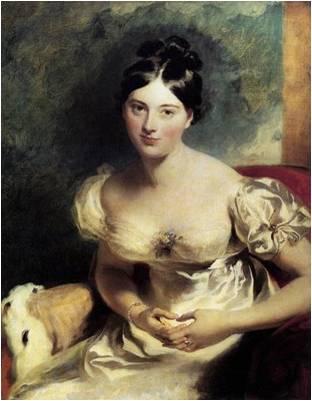
Jakob and Wilhelm Grimm, the authors of the original "Schneewittchen und die sieben Zwerge" or the story "Snow White and the Seven Dwarfs," were German scholars who collected, researched and wrote stories based on folklore in the early 1800's.Treating the stories spread by word of mouth as scholarly research, the Grimm brothers eventually compiled more than 200 stories, one being Snow White, based on accounts from various people from peasants to aristocrats, which drew some criticism based on the factual nature during the transcription process.
However, in 1994, a German scholar named Eckhard Sander wrote "Schneewittchen: Marchen oder Wahrheit?" which translates to" Snow White: Is It a Fairy Tale?" in an effort to debunk claims that the protagonist in Snow White was never a real person or not based in historical fact. According to Sander, the account from the Grimm Brothers' fairy tale Snow White was based on the life of Margarete von Waldeck, a German countess who was the mistress of a Spanish prince during the 1500's.
Click here to read this article from the International Business Times
Click here to see our page on Snow White and the Huntsman
Tuesday, April 10, 2012
Medieval Monastic Library of Lorsch recreated online
The unique holdings of the medieval monastic library of Lorsch, currently scattered over 68 libraries worldwide, are being re-compiled into a virtual library. Heidelberg University Library and local government officials in Germany have been working since March of 2010 to publish the 330 surviving Lorsch manuscripts and manuscript fragments online. The project by the name of “Bibliotheca Laureshamensis – digital” is being funded by the State of Hesse with 450.000 euros and will continue through 2013.
“The virtual reconstruction of the former library of Lorsch Abbey, now a UNESCO World Heritage Site, gives us the chance to study the abbey’s intellectual foundation, and the Carolingian world view in general, in depth for the first time”, said Eva Kühne-Hörmann, the Hessian Minister of Higher Education, Research and the Arts, during the presentation of the project. “This outstanding endeavour, which is of great interest to the State of Hesse, has united experts from Hesse and Baden-Württemberg in an exemplary, cross-border cooperative effort that reflects the historic significance and geographical location of the monastic library of Lorsch between the palatinate and the diocese of Mainz.”
The Bibliotheca Laureshamensis – digital project will see the digitisation of the abbey’s codices. In addition, scientific descriptions detailing the origin, owners, appearance, handwriting and content of the library’s manuscripts will be compiled in a project database. For the first time, researchers will have comprehensive and systematic access to the Lorsch manuscripts, a fact that opens up entirely new possibilities of research.
Click here to read this article from Medievalists.net
“The virtual reconstruction of the former library of Lorsch Abbey, now a UNESCO World Heritage Site, gives us the chance to study the abbey’s intellectual foundation, and the Carolingian world view in general, in depth for the first time”, said Eva Kühne-Hörmann, the Hessian Minister of Higher Education, Research and the Arts, during the presentation of the project. “This outstanding endeavour, which is of great interest to the State of Hesse, has united experts from Hesse and Baden-Württemberg in an exemplary, cross-border cooperative effort that reflects the historic significance and geographical location of the monastic library of Lorsch between the palatinate and the diocese of Mainz.”
The Bibliotheca Laureshamensis – digital project will see the digitisation of the abbey’s codices. In addition, scientific descriptions detailing the origin, owners, appearance, handwriting and content of the library’s manuscripts will be compiled in a project database. For the first time, researchers will have comprehensive and systematic access to the Lorsch manuscripts, a fact that opens up entirely new possibilities of research.
Click here to read this article from Medievalists.net
Wednesday, March 21, 2012
Ox Carts and No Coffee: Building a Monastery the Medieval Way

What did a medieval stonemason do when heavy rainfall interrupted his work? Umbrellas are impractical at construction sites. Gore-Tex jackets weren't yet invented, nor were plastic rain jackets. "He donned a jacket made of felted loden cloth," says Bert Geurten, the man who plans to build an authentic monastery town the old-fashioned way.
Felted loden jackets will also be present on rainy days at Geurten's building site, which is located near Messkirch, in the southwestern German state of Baden-Württemberg, between the Danube River and Lake Constance. Beginning in 2013, a Carolingian monastery town will be built here using only the materials and techniques of the 9th century. From the mortar to the walls, the rain jackets to the menu, every aspect of the operation will be carried out as just as it was in the days of Charlemagne. "We want to work as authentically as possible," says Geurten.
The building contractor from the Rhineland region has long dreamt of carrying out his plan. When he was a teenager, the now 62-year-old was inspired by a model of the St. Gallen monastery plan in an exhibition in his home city of Aachen. The plan, dating from the beginning of the 9th century, shows the ideal monastery, as envisioned by Abbot Haito of Reichenau.
Haito dedicated his drawing to his colleague Abbot Gozbert of St. Gall, who presided over the monastery from 816 to 837. He meticulously recorded everything that he believed was necessary for a monastic city, from a chicken coop to a church for 2,000 worshipers. Altogether he envisaged 52 buildings -- but they were never built. That will change in spring 2013, though, when ox-pulled carts wil begin carrying the first stones to the building site in the forest near Messkirch. It won't be finished until about 2050, according to estimates.
Click here to read this article from Der Spiegel
See also this Youtube video (in German)
Wednesday, February 01, 2012
Reconstruction of Frankfurt's Old Town begins
Over the next few weeks, people walking across the Romerberg on their way to the Emperor's Cathedral will automatically find themselves facing a gigantic construction site. What's happening here in the heart of Frankfurt's old town, passers-by may ask. It is, simply put, one of the most controversial and, at the same time, one of the most spectacular reconstruction projects currently going on in Germany. While other cities squabble over the reconstruction of individual buildings, Frankfurt am Main has been discussing the reconstruction of an entire quarter.

The chronology of the steps it took to bring the project to fruition says much about the general state of mind of Frankfurt's citizenry, for it was they that helped to bring about what the casual observer might call the obvious solution. But the influence exerted by Frankfurt's inhabitants is not surprising, really. After all, the city has been referred to as the "cradle of German democracy" since the landmark events of 1848.
The approximately 7,000-square-metre area in the heart of Frankfurt's old town will now be reconstructed on the basis of the original blueprints of the quarter. Once completed, it will comprise nearly 30 townhouses, eight of which being exact replicas of their historical predecessors. An entire housing row will be rebuilt along the path of the former alley "Hinter dem Lammchen", these houses being formerly known as "Junger Esslinger", "Alter Esslinger", "Goldenes Lammchen" and "Klein Nurnberg". Two further townhouses, named "Goldene Waage" and "Rotes Haus", will be reconstructed just north of the archaeological gardens. These gardens were set up right alongside Frankfurt's famous cathedral in 1972/73, a more or less unintentional by-product of the subway line construction that took place then. Various historical eras and styles are on display here, the reconstructed walls and bronze sculptures representing Roman times, the High Middle Ages and the typical design of the imperial palaces of the time.
Click here to read this article from Travel Daily News

The chronology of the steps it took to bring the project to fruition says much about the general state of mind of Frankfurt's citizenry, for it was they that helped to bring about what the casual observer might call the obvious solution. But the influence exerted by Frankfurt's inhabitants is not surprising, really. After all, the city has been referred to as the "cradle of German democracy" since the landmark events of 1848.
The approximately 7,000-square-metre area in the heart of Frankfurt's old town will now be reconstructed on the basis of the original blueprints of the quarter. Once completed, it will comprise nearly 30 townhouses, eight of which being exact replicas of their historical predecessors. An entire housing row will be rebuilt along the path of the former alley "Hinter dem Lammchen", these houses being formerly known as "Junger Esslinger", "Alter Esslinger", "Goldenes Lammchen" and "Klein Nurnberg". Two further townhouses, named "Goldene Waage" and "Rotes Haus", will be reconstructed just north of the archaeological gardens. These gardens were set up right alongside Frankfurt's famous cathedral in 1972/73, a more or less unintentional by-product of the subway line construction that took place then. Various historical eras and styles are on display here, the reconstructed walls and bronze sculptures representing Roman times, the High Middle Ages and the typical design of the imperial palaces of the time.
Click here to read this article from Travel Daily News
Tuesday, January 10, 2012
Goslar's perfectly preserved medieval town a sight to behold
The historic German Hanse city of Goslar accumulated great wealth in medieval times thanks to the silver mines in neighbouring Rammelsberg while it was also the location chosen by Emperor Heinrich II for court meetings and synods.
The mines of Rammelsberg and the perfectly preserved old town of Goslar, which dates back to the Middle Ages and includes over a thousand timber-framed houses, have both been designated UNESCO World Heritage Sites since 1992.

Goslar played an important role in the Hanseatic League and between the 10th to the 12th century became one of the seats of the Holy Roman Empire.
Evidence of Goslar's importance and wealth are evident in the construction of an imperial Palace and the Palatine chapel of St Ulrich, which contains the heart of Heinrich III.
Click here to read this article from Monsters and Critics
The mines of Rammelsberg and the perfectly preserved old town of Goslar, which dates back to the Middle Ages and includes over a thousand timber-framed houses, have both been designated UNESCO World Heritage Sites since 1992.

Goslar played an important role in the Hanseatic League and between the 10th to the 12th century became one of the seats of the Holy Roman Empire.
Evidence of Goslar's importance and wealth are evident in the construction of an imperial Palace and the Palatine chapel of St Ulrich, which contains the heart of Heinrich III.
Click here to read this article from Monsters and Critics
Saturday, August 27, 2011
500 years ago, yeast’s epic journey gave rise to lager beer
In the 15th century, when Europeans first began moving people and goods across the Atlantic, a microscopic stowaway somehow made its way to the caves and monasteries of Bavaria.
The stowaway, a yeast that may have been transported from a distant shore on a piece of wood or in the stomach of a fruit fly, was destined for great things. In the dank caves and monastery cellars where 15th century brewmeisters stored their product, the newly arrived yeast fused with a distant relative, the domesticated yeast used for millennia to make leavened bread and ferment wine and ale. The resulting hybrid – representing a marriage of species as evolutionarily separated as humans and chickens – would give us lager, the clear, cold-fermented beer first brewed by 15th century Bavarians and that today is among the most popular – if not the most popular – alcoholic beverage in the world.
Click here to read this article from Medievalists.net
The stowaway, a yeast that may have been transported from a distant shore on a piece of wood or in the stomach of a fruit fly, was destined for great things. In the dank caves and monastery cellars where 15th century brewmeisters stored their product, the newly arrived yeast fused with a distant relative, the domesticated yeast used for millennia to make leavened bread and ferment wine and ale. The resulting hybrid – representing a marriage of species as evolutionarily separated as humans and chickens – would give us lager, the clear, cold-fermented beer first brewed by 15th century Bavarians and that today is among the most popular – if not the most popular – alcoholic beverage in the world.
Click here to read this article from Medievalists.net
Monday, August 08, 2011
German city banks future on unearthing Jewish past
COLOGNE, Germany - This city in western Germany is banking its future on its Jewish past. But at present, the investment is exacting a heavy price: $52 million, to be exact.
Following a divisive decades-long battle, Cologne's municipal government voted recently to allocate that sum toward the construction of a new museum focused on the city's medieval Jewish quarter. Its centerpiece will be the product of a massive excavation project that began in 2007 in the middle of the city, on the square in front of City Hall.
For years the project had been dogged by opponents who said the country didn’t need another monument dedicated to the Jewish past or complained about the disruption that the project would create in Cologne, Germany’s fourth-largest city.
Click here to read this article from the Jerusalem Post
Following a divisive decades-long battle, Cologne's municipal government voted recently to allocate that sum toward the construction of a new museum focused on the city's medieval Jewish quarter. Its centerpiece will be the product of a massive excavation project that began in 2007 in the middle of the city, on the square in front of City Hall.
For years the project had been dogged by opponents who said the country didn’t need another monument dedicated to the Jewish past or complained about the disruption that the project would create in Cologne, Germany’s fourth-largest city.
Click here to read this article from the Jerusalem Post
Monday, July 18, 2011
Cologne uncovers an ancient Jewish past
The remains of an ancient Jewish quarter - right in the centre of the German city of Cologne, and still being uncovered - are little short of an archaeological sensation.
The excavations, which began in 2007, have already revealed remains of a synagogue, hospital, bakery, community hall and mikveh, or bathhouse used for ritual purification.
The city now plans to enclose the entire site to create a new Jewish museum outside the former Cologne city hall.
Click here to read this article from Monsters and Critics
The excavations, which began in 2007, have already revealed remains of a synagogue, hospital, bakery, community hall and mikveh, or bathhouse used for ritual purification.
The city now plans to enclose the entire site to create a new Jewish museum outside the former Cologne city hall.
Click here to read this article from Monsters and Critics
Subscribe to:
Posts (Atom)