
Showing posts with label Churches. Show all posts
Showing posts with label Churches. Show all posts
Monday, October 27, 2014
Westminster Abbey, Ukek and York: Medieval News Roundup
From archaeological discoveries in Russia and England, to a 15th century recipe on 'Caudell of Almondys', here is some of the things we found in the news, on the blogs, and on Twitter.


Friday, June 28, 2013
Crusader Feces, Bat Feces, Latin swear words, and building a village - medieval news roundup
Here are some news stories from the medievalverse, and a few from beyond it...
 An article in the International Journal of Paleopathology shows that many Crusaders would have been suffering from worms or other diseases. Test done by two researchers from the University of Cambridge at Saranda Kolones castle in Cyrpus showed that two species of parasite, the roundworm and the whipworm, were prevalent among the crusaders. The castle was built after the Third Crusade and abandoned in 1222.
Evilena Anastasiou and Piers D. Mitchell write that "the discovery of these parasites highlights how medieval crusaders may have been at risk of malnutrition at times of siege and famine, as these worms competed with them for nutrients."
You can read more about this story from Reuters.
The article 'Human intestinal parasites from a latrine in the 12th century Frankish castle of Saranda Kolones in Cyprus' is available here.
Arkansas that are building medieval castles, we now have a team of 25 workers in Germany who have just started constructing a replica of a ninth century monastic settlement and town. Bert Geuten is leading the effort to build the medieval site near the southern German town of Meßkirch in Baden-Württemberg. Because they are using authentic historical tools and techniques, it will take over 40 years before the project is complete, which will include a 2,000 seat cathedral.
They began last weekend by starting construction on a small church. “In the ninth century the monks would have built a small church first – they didn't want to wait until the cathedral was ready to be able to pray. So we're doing the same,” Geuten explained.
Click here to read the full article from The Local.
 Churches in England are again facing danger, but not from thieves stealing their metal or declining attendance. Instead, bats are the new threat, according to a report in the Daily Telegraph. An environmental directive from the European Union prohibits building owners from killing bats or destroying their roosts, and this is apparently leading to church interiors being contaminated with bat droppings.
Tony Baldry, a Member of Parliament who officially speaks for the Church of England, said, "the church of St Peter ad Vincula at South Newington in my own constituency has some very fine, almost unique, medieval wall paintings which seem to have been spared Thomas Cromwell's men. But having survived the ravages of the Reformation they are now threatened by bat urine. And these are irreplaceable parts of our natural heritage."
Click here to read the article from Daily Telegraph
 The International Medieval Congress is taking place at the University of Leeds from June 30th to July 4th. Over 2000 people will be attending (I wish I was there too). Anthony Lowe, event manager for MeetInLeeds is in charge of making sure everything goes smoothly “This has been three years in the planning as it is the largest conference we have hosted on the campus,” he explains to ConferenceNews. “It’s been great working with all the different departments to create a medieval campus, with special exhibitions in the university art gallery, library and academic meeting rooms, as well as themed menus and medieval street food."
He adds, “It’s going to be incredibly busy but we’re extremely well-prepared for it and will be working hard to ensure that everyone has a fabulous experience and remembers their medieval experience for many years to come. Leeds is a very attractive campus and we are looking forward to showing it at its very best.”
Click here to read the full article from ConferenceNews
People went to coffeehouses not just to drink coffee, but to read and discuss the latest pamphlets and news-sheets and to catch up on rumor and gossip. Coffeehouses were also used as post offices. Patrons would visit their favorite coffeehouses several times a day to check for new mail, catch up on the news and talk to other coffee drinkers, both friends and strangers. Some coffeehouses specialized in discussion of particular topics, like science, politics, literature or shipping. As customers moved from one to the other, information circulated with them.
You can read the article here.
 Staying in Early Modern England, Penn State News has an interesting profile of Leah Orr, a specialist in 18th-century literature. She just completed her PhD on Did the Novel Rise? Fiction and Print Culture in England, 1690-1730, which "rebuts the longstanding notion that the novel as we now know it became a recognized form and rose to prominence during that time period. That conception of early fiction, she argues, is based on close readings of a few famous texts by major authors, such as Daniel Defoe and Aphra Behn, and neglects the broader literary context in which those texts were written and first read."
Click here to read more from Penn State.
Medieval Polish Treasures Revealed at Down Museum Exhibition
Rachel Koopmans wins Margaret Wade Labarge Prize for Books in Medieval Studies
Video: Students studying Archaeology at Queen's University take part in an excavation which discovers a Medieval Lime Kiln, which may have been used during the construction of Dundrum Castle.
Crusader Feces

Evilena Anastasiou and Piers D. Mitchell write that "the discovery of these parasites highlights how medieval crusaders may have been at risk of malnutrition at times of siege and famine, as these worms competed with them for nutrients."
You can read more about this story from Reuters.
The article 'Human intestinal parasites from a latrine in the 12th century Frankish castle of Saranda Kolones in Cyprus' is available here.
One stone at a time
While we have reported on groups in France andThey began last weekend by starting construction on a small church. “In the ninth century the monks would have built a small church first – they didn't want to wait until the cathedral was ready to be able to pray. So we're doing the same,” Geuten explained.
Click here to read the full article from The Local.
Bat Feces

Tony Baldry, a Member of Parliament who officially speaks for the Church of England, said, "the church of St Peter ad Vincula at South Newington in my own constituency has some very fine, almost unique, medieval wall paintings which seem to have been spared Thomas Cromwell's men. But having survived the ravages of the Reformation they are now threatened by bat urine. And these are irreplaceable parts of our natural heritage."
Click here to read the article from Daily Telegraph
How to Swear like a Roman
One of my daily reads The Atlantic magazine occasionally has articles related to history. Last month, they looked at ancient cursing with Futuo! How the Romans Swore. It focuses on the new book, Holy Sh*t! A Brief History of Swearing by Melissa Mohr, and explains the meaning behind Latin words such as futuo, landica, cinaedus, mingo, cacare and verecundum. You can read that article here.What it takes to run the IMC
He adds, “It’s going to be incredibly busy but we’re extremely well-prepared for it and will be working hard to ensure that everyone has a fabulous experience and remembers their medieval experience for many years to come. Leeds is a very attractive campus and we are looking forward to showing it at its very best.”
Click here to read the full article from ConferenceNews
Social Networking in the 1600s
Tom Standage is the author of the forthcoming book, Writing on the Wall: Social Media — The First 2,000 Years. In this article from the New York Times, he writes about how the coffeehouse was the social-networking site of the 17th century. He explains:People went to coffeehouses not just to drink coffee, but to read and discuss the latest pamphlets and news-sheets and to catch up on rumor and gossip. Coffeehouses were also used as post offices. Patrons would visit their favorite coffeehouses several times a day to check for new mail, catch up on the news and talk to other coffee drinkers, both friends and strangers. Some coffeehouses specialized in discussion of particular topics, like science, politics, literature or shipping. As customers moved from one to the other, information circulated with them.
You can read the article here.
The Rise of the Novel

Click here to read more from Penn State.
Other news bits:
Medieval herb garden unveiled at Northumberland ParkMedieval Polish Treasures Revealed at Down Museum Exhibition
Rachel Koopmans wins Margaret Wade Labarge Prize for Books in Medieval Studies
Video: Students studying Archaeology at Queen's University take part in an excavation which discovers a Medieval Lime Kiln, which may have been used during the construction of Dundrum Castle.
Wednesday, June 05, 2013
Reading, Insulting, Taxing, Finding and Stealing - medieval news roundup
What did people read in the Middle Ages?

In his latest work, Fragments and Assemblages: Forming Compilations in Medieval London, shows the ways people in the Middle Ages would create books that included a wide variety of different texts, including chronicles, letters, literature and religious texts. For example, Andrew Horn, the chamberlain for the city of London in the 1320s, bound together various texts, including legal treatises, French-language poetry, and descriptions of London.
Arthur Bahr comments, “Horn actually uses the construction of his books to create literary puzzles for his reader. One poem just doesn’t make sense, but if you read the poem in juxtaposition with the legal treatise that comes after, then the two pieces make sense. He’s suggesting that the law and literature are sort of the yin and the yang, you need both. And that is kind of amazing, really.”
Click here to read more from MIT News.
Top Five Insults from Medieval Flanders
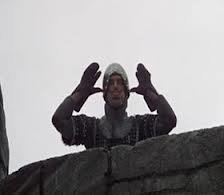
- ‘A bad chicken was brooding’
- ‘Son of a bitch’
- ‘I shit on you’
- ‘Liver eater’
- ‘Kill! Kill!’
Some of these insults are rather obvious, others take a bit of understanding. Check out the article The five most common insults and slogans of medieval rebels from Oxford University Press to learn more.
Taxes between Wales and England
Nia M.W. Powell of Bangor University writes about at taxation records from England and Wales between the 13th and 17th centuries. While it seems in the Middle Ages it could be quite difficult for the crown to get consent for tax subsidies from the commons, efforts were made to make a more uniform tax regime during the 16th century.Powell adds, "Early modern Wales has been presented so frequently as “poor little Wales”, a land of backward impoverishment lagging behind its prosperous and “progressive” English counterpart, a country lacking towns and even rejecting urban civility, a country struggling against the odds.
"This is not the picture drawn by early modern taxation records, particularly with regard to urban life. Port towns in north and south Wales reveal an enviable prosperity among its inhabitants that equalled and surpassed most urban centres in south-west England."
You can read Powell's article Welsh History Month: Tax records throw light on the story of Wales from Wales Online.
Other news bits:
Archaeologists in Estonia have discovered the skeletal remains of a man in Tartu Catherdral. Martin Malve, of the University of Tartu, says, “We can currently say that the skeleton originates from the 13-15th century, when tombs were actively used for burials. The skeleton belonged to a man aged 40-50. Initial examination shows that the teeth were relatively unworn; there were a few teeth missing from when he was alive, as well as plaque and dental cavities. The right elbow [...] had a healed bone fracture that could have resulted from trying to stop a fall,” Read more from Estonia Public Broadcasting

In Ireland thieves stole an entire window from a medieval church.
Finally, did you know that Byzantine art from 1174 influenced this year's fashion trends? No...neither did I. So says The Guardian in this article 12 great years for fashion.
Friday, March 08, 2013
Olive Oil and Cathedrals, the Last Pope, and the Cat picture
A Dash Of Olive Oil May Preserve British Cathedral
A report from NPR about using the oleic acid from Olive Oil to preserve York Minster in England
Will this be the last Pope?
According to a report from Discovery.com, a 12th century prophecy suggests that the about-to-be-elected Pope will be the last one before the Last Judgment. Apparently, in 1139 an Irish archbishop named St. Malachy gave Pope Innocent II a list of who the next 112 Popes will be. This 112th Pope will be named Peter the Roman, and according to the prophecy will “feed his flock amid many tribulations, after which the City of the Seven Hills shall be utterly destroyed, and the awful Judge will judge the people.” The document containing the prophecy was found in the Vatican Archives in 1590, and many scholars believe it was actually created in the sixteenth century.
The Cat and the Manuscript

This great picture went viral last week - Emir O. Filipovic, a scholar working in the Dubrovnik State Archives in Croatia, found this when he opened up a manuscript. Apparently, a 15th-century cat must have got his paws into the ink, then onto this document. Emir took a photo of it, and later on tweeted to Erik Kwakkel and from there it went call over the world. Click here to read Emir's article about it.
Wednesday, January 09, 2013
Sealed Under Turkish Mud, a Well-Preserved Byzantine Chapel

After some 800 years as an important pilgrimage site in the Byzantine Empire it vanished — buried under 18 feet of mud from the rampaging Myros River. All that remained was the Church of St. Nicholas, parts of a Roman amphitheater and tombs cut into the rocky hills.
But now, 700 years later, Myra is reappearing.
Archaeologists first detected the ancient city in 2009 using ground-penetrating radar that revealed anomalies whose shape and size suggested walls and buildings. Over the next two years they excavated a small, stunning 13th-century chapel sealed in an uncanny state of preservation. Carved out of one wall is a cross that, when sunlit, beams its shape onto the altar. Inside is a vibrant fresco that is highly unusual for Turkey.
Click here to read this article from the New York Times
Friday, January 04, 2013
Medieval church finds home in California
Father Paul Mark Schwan shivers in the morning chill of California's Sacramento Valley, a blue hooded sweatshirt layered over his monk's robes. It's almost eerily quiet at the Abbey of New Clairvaux, an order of Cistercian monks in this town 20 miles north of Chico, where Schwan serves as abbot. A blanket of mist hugs the walnut orchards as the abbot picks his way across the muddy ground.

Before him lies a surreal site: an intact medieval church with vaulted limestone walls and peaked windows, looking as if it was dropped there by accident.
"I believe these stones were going to be used as a changing room for an indoor swimming pool," says Schwan, 56, looking thoughtfully at the building. "Thanks be to God it didn't happen."
This is the famous Chapter House of Ovila - a Spanish Trappist monastery built in the 12th century, rebuilt in the 16th century and with a history so dramatic, it almost belongs in a pulp novel. Originally imported by William Randolph Hearst to be used in a grand estate that never was, the monastery stones were all but abandoned in Golden Gate Park for more than 60 years.
But through the tireless lobbying of Schwan's predecessor, and a 12-year campaign by the monks to raise $7 million for a painstaking reconstruction, those stones found a home in Vina.
Click here to read this article from the San Francisco Gate

Before him lies a surreal site: an intact medieval church with vaulted limestone walls and peaked windows, looking as if it was dropped there by accident.
"I believe these stones were going to be used as a changing room for an indoor swimming pool," says Schwan, 56, looking thoughtfully at the building. "Thanks be to God it didn't happen."
This is the famous Chapter House of Ovila - a Spanish Trappist monastery built in the 12th century, rebuilt in the 16th century and with a history so dramatic, it almost belongs in a pulp novel. Originally imported by William Randolph Hearst to be used in a grand estate that never was, the monastery stones were all but abandoned in Golden Gate Park for more than 60 years.
But through the tireless lobbying of Schwan's predecessor, and a 12-year campaign by the monks to raise $7 million for a painstaking reconstruction, those stones found a home in Vina.
Click here to read this article from the San Francisco Gate
Saturday, December 29, 2012
Twelve community projects receive almost £115,000 of South Norfolk Council funding

Two churches received funding with £14,070 going to the historic church at Flordon for a project to preserve it’s 13th century timber roof to turn it into a community centre. The money will pay for work to remove pews and install a level timber floor, to improve heating and lighting, restore the Victorian vestry, and install a kitchen.
Wymondham Abbey was awarded £10,000 towards the Abbey Experience Project and in particular to enhancements to the church yard. This includes funding for a medieval herb garden with seating, picnic benches, hard standing and display panels explaining the history of the Abbey.
Click here to read the full article from EDP24
Thursday, December 06, 2012
Church to sell 15th century chalice to British Museum for £1.3 million

During the rarely-held two-day hearing at St Cyriac’s Church, Lacock, the Rev Justin Gau, Chancellor of the Diocese of Bristol, gave permission for the sale of the chalice, which dates back to the 1400s and is insured for £2.2m.
The origins of the cup, which has been on loan to the London museum since 1963, are uncertain, but it is believed to have been donated to St Cyriac’s Church by Sir Robert Baynard, of Lackham Manor, 400 years ago.
Click here to read this article from the Wiltshire Times
Friday, November 23, 2012
How King's College Chapel Got Its Windows

Click here to read this book review from The Columbus Dispatch
Monday, November 12, 2012
Community project shows possibilities for Medieval Norwich church
A prototype project at St Laurence’s Church, in St Benedict’s Street, was launched on Saturday in an effort to explore new ways to use the 15th-century church.
The Common Room project temporarily transformed the church into a type of community space in an attempt to entice people to explore the Grade I listed Medieval church.

The project has been developed by Social Spaces and 00:/ (Zero Zero) in collaboration with The Churches Conservation Trust, a national charity which protects historic churches at risk and cares for over 340 buildings around the country.
St Laurence’s is one of three churches which the charity looks after in Norwich, alongside the 500-year-old Church of St John Maddermarket and St Augustine’s Church, which boasts the only 17th-century brick tower in Norwich.
Click here to read this article from EDP 24
The Common Room project temporarily transformed the church into a type of community space in an attempt to entice people to explore the Grade I listed Medieval church.

The project has been developed by Social Spaces and 00:/ (Zero Zero) in collaboration with The Churches Conservation Trust, a national charity which protects historic churches at risk and cares for over 340 buildings around the country.
St Laurence’s is one of three churches which the charity looks after in Norwich, alongside the 500-year-old Church of St John Maddermarket and St Augustine’s Church, which boasts the only 17th-century brick tower in Norwich.
Click here to read this article from EDP 24
The Fake Medieval Images in Canterbury Cathedral
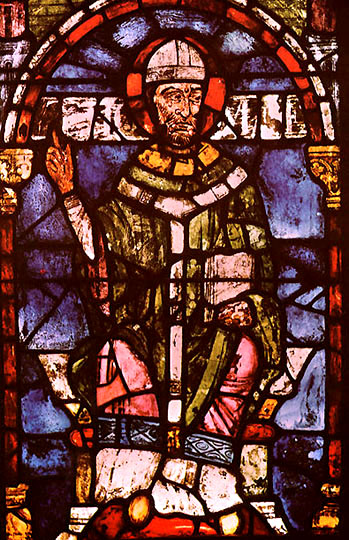
In ‘Fakes and Forgeries in Canterbury’s Stained Glass’, a lecture given last week at the University of Toronto, Rachel Koopmans explained how these images came into the cathedral and have fooled people for so long. One of the faked images is known as the Pilgrims panel, which shows four figures on the move and has been associated with the characters of the Canterbury Tales by Geoffrey Chaucer. The other is a portrait of the famous martyr and saint Thomas Becket, which some books have even described as being a contemporary depiction of the twelfth-century Archbishop.
Koopmans explains that both of these images, and many more in the Cathedral, were actually created by Samuel Caldwell Jr., who was the person in charge of restoring Canterbury’s glass for more than fifty years. During this time he created dozens of works and duped various church officials into believing they were genuine medieval images.
Click here to read this article from Medievalists.net
Saturday, November 10, 2012
Winchester Cathedral starts potentially groundbreaking research

The boxes were recently taken down from the presbytery screens and moved to the Lady Chapel at the eastern end of the cathedral where a wooden hut has been erected with a lockable door. The cathedral is hoping for funding from the Heritage Lottery Fund (HLF).
Click here to read this article from the Hampshire Chronicle
See also Notes and Queries about the Mortuary Chests
Monday, November 05, 2012
High-tech glazing for Lincoln Cathedral medieval windows
New protective glazing could be fitted to four medieval windows in Lincoln Cathedral to protect the historic stained glass.
Special monitoring sensors will even be fitted to the windows to ensure the new glazing is set at exactly the right position to keep the medieval glass protected.

The project is planned for four of the lancet windows beneath the Bishop’s Eye which date from the 13th century. The new scheme, if agreed by the cathedral’s Glazing Advisory Committee, will start early next year when the old glass is going to be removed for conservation.
New, specially made, protective glass will then be fitted to the window’s exterior recess before the conserved windows are rehung behind it on special brackets.
Click here to read this article from The Lincolnite

The project is planned for four of the lancet windows beneath the Bishop’s Eye which date from the 13th century. The new scheme, if agreed by the cathedral’s Glazing Advisory Committee, will start early next year when the old glass is going to be removed for conservation.
New, specially made, protective glass will then be fitted to the window’s exterior recess before the conserved windows are rehung behind it on special brackets.
Click here to read this article from The Lincolnite
Thursday, October 25, 2012
Urgent call for repairs to medieval churches in Honing and Crostwight

Honing Church needs the same amount for urgent work, including repairs to the already leaking roof and some replastering.
Rector the Rev Barry Furness said: “We are blessed in Norfolk to have the largest collection of medieval churches in the UK. Churches like Crostwight and Honing are typical examples of these beautiful churches which have to be preserved for future generations. If repairs are not carried out buildings can deteriorate to the point where they are lost.”
Click here to read this article from the North Norfolk News
Tuesday, October 23, 2012
Medieval Norfolk church wins heritage award
A rescued Norfolk church is among the winners of this year's English Heritage Angel Awards.St Mary's, West Somerton, has a thatched roof and medieval round tower, as well as wall paintings from the 14th century.

Pauline Burkitt and Simon Pleasley oversaw a major restoration project to replace the thatched roof, restore the plastering and install new drains to keep the magnificent wall paintings dry.
Mr Pleasley said: "Because we are church wardens we are responsible for the fabric of the church. People don't realise that. They think 'oh it's the church that does it'. It isn't. The church hasn't got the money. It has to be individuals who are prepared to stick their necks out and raise enough money to stop these places from falling down."
Click here to read this article from Christian Today
Click here to read more about the winners of the English Heritage Angel Awards from English Heritage
Tuesday, October 02, 2012
Restoring medieval frescoes in Rome
The Superintendence for Archaeological Heritage of Rome announces the extraordinary opening to the public of the restoration site of the early medieval frescoes of Santa Maria Antiqua in the Roman Forum. Guided tours of the church will be held until November 4, 2012, which can be arranged by visiting www.coopculture.it

Monday, September 10, 2012
Archaeologists discover medieval church and 300 burials in Ipswich
A team from Oxford Archaeology, in partnership with Pre-Construct Archaeology, has so far uncovered some 300 burials dating to the late Saxon and medieval periods from a site in Ipswich.
Ipswich was an important Saxon town and trading centre, and excavation at the site, located by the river on Great Whip Street, Stoke Quay, has revealed extensive Middle-Late Saxon occupation remains, including a lead strip inscribed with runic script, as well as the lost church and cemetery of St Augustine’s.
Click here to read this article from Medievalists.net
Ipswich was an important Saxon town and trading centre, and excavation at the site, located by the river on Great Whip Street, Stoke Quay, has revealed extensive Middle-Late Saxon occupation remains, including a lead strip inscribed with runic script, as well as the lost church and cemetery of St Augustine’s.
Click here to read this article from Medievalists.net
Wednesday, August 29, 2012
Reconsecration of Pannonhalma Abbey Church

Click here to read this article from Medieval Hungary Blog
Monday, July 23, 2012
Medieval demons found at Norfolk church
A set of grotesque and unique medieval carvings has been rediscovered at a church in the Fens after being forgotten for hundreds of years.
The discovery of 12 demons in the roof of the nave at St Clement’s Church, Outwell, has sparked calls for the relics to be preserved for posterity and made more accessible to parishioners and visitors.

The carvings were found by Dr Claire Daunton, a historian at Trinity Hall, Cambridge while studying equally unique stained glass in the church.
Because of the light entering the roof area of the nave, the carvings are almost impossible to see clearly but she suspected they were quite extraordinary-early 15th century examples of a type of carving found in some European churches – they appeared to have been carved the wrong way round with the evil demons apparently overcoming each of the smaller apostles.
Click here to read this article from EDP24
The discovery of 12 demons in the roof of the nave at St Clement’s Church, Outwell, has sparked calls for the relics to be preserved for posterity and made more accessible to parishioners and visitors.

The carvings were found by Dr Claire Daunton, a historian at Trinity Hall, Cambridge while studying equally unique stained glass in the church.
Because of the light entering the roof area of the nave, the carvings are almost impossible to see clearly but she suspected they were quite extraordinary-early 15th century examples of a type of carving found in some European churches – they appeared to have been carved the wrong way round with the evil demons apparently overcoming each of the smaller apostles.
Click here to read this article from EDP24
Stealing History: Nothing is sacred to Britain’s metal thieves

This week the church is surrounded by scaffolding, as a $2-million renovation begins with workmen removing Westmoreland slate tiles from the roof. They don’t have to remove the lead flashing and gutters, because those were taken by thieves in three daring raids over the past two years. With the lead gone, the rain poured in and the church began to rot from inside.
The Haworth Church, formally called St. Michael and All Angels, is particularly high-profile, but it’s merely an emblem of a much wider problem sweeping Britain during a time of rising metal theft. In a country so rich in heritage, how do you keep robbers from stealing history?
Click here to read this article from The Globe and Mail
Subscribe to:
Posts (Atom)