
Showing posts with label Literature. Show all posts
Showing posts with label Literature. Show all posts
Wednesday, August 12, 2015
What does +NDXOXCHWDRGHDXORVI+ mean?
The British Library is looking for help trying to solve an inscription on a medieval sword...

Wednesday, October 22, 2014
Damsels, Tree Bark and York/Jorvik: Medieval News Roundup
This week's roundup finds some stories on how York is promoting its connection to its Viking past, wonderful images of writing on tree bark from medieval Novgorod and the troubles of being a historian in Cambodia.


Monday, October 06, 2014
Pirates, Doodles and Sinking Castles - Medieval News Roundup
This week's collection of news and tweets for medievalists.


Friday, April 11, 2014
What does a medieval literature scholar see in 'Game of Thrones?'
From PBS Newshour: Brantley Bryant, associate professor of medieval literature at Sonoma State University, shares what he sees of The Canterbury Tales, the Morte d'Arthur and Beowulf in HBO's "Game of Thrones."

Monday, April 15, 2013
The 101 Nights - new book of Arabic tales discovered
A historian in Germany has come across a new collection of medieval Arabic stories - a kind of precursor to the famous book known as One Thousand and One Nights. Claudia Ott, a professor at the University of Erlangen-Nuremberg, discovered The Book with the Story of the 101 Nights in a 13th century Andalusia manuscript.

The 101 Nights contains 17 stories, two of which can also be found in the 1001 Nights, with most set in India. Ott adds, “It is certainly not by chance that this backdrop has something Oriental about it when seen from an Arabic perspective. It is an image of an Orient that is far away, unfamiliar and exotic — for this reason, particularly attractive."
Ott first saw the manuscript on display at a museum in Berlin, and when she had the chance to look at, soon discovered its importance. She has translated the work into German.
You can read more about this discovery from the Egypt Independent

The 101 Nights contains 17 stories, two of which can also be found in the 1001 Nights, with most set in India. Ott adds, “It is certainly not by chance that this backdrop has something Oriental about it when seen from an Arabic perspective. It is an image of an Orient that is far away, unfamiliar and exotic — for this reason, particularly attractive."
Ott first saw the manuscript on display at a museum in Berlin, and when she had the chance to look at, soon discovered its importance. She has translated the work into German.
You can read more about this discovery from the Egypt Independent
Wednesday, January 30, 2013
When Newspapers Were New, or, How Londoners Got Word of the Plague

The plague was abroad. Londoners knew not where it had come from, only that it was upon Holland. "It was brought, some said from Italy, others from the Levant, among some goods which were brought home by their Turkey fleet; others said it was brought from Candia; others from Cyprus," Daniel Defoe wrote in the opening of his historical novel, A Journal of the Plague Year.
The book, which many read as something like non-fiction, bore the webby subtitle, being observations or memorials of the most remarkable occurrences, as well public as private, which happened in London during the last great visitation in 1665, and bore stamps of authenticity -- it was "Written by a citizen who remained all the while in London" -- and intrigue, having "Never [been] made public before."
Which, as a journalist of the web era, made me think: that Defoe knew how to gin up some pageviews! And in fact, Defoe did. (If you can't see the translation to the headline argot du jour, allow me: 73 Amazing and Horrible Things That Happened During the Plague, From Someone Who Saw Them With His Own Two Eyes. And no, I didn't count. But the point is: no one's counting.)
Click here to read this article from The Atlantic
Friday, September 21, 2012
The medieval Jewish poet who preceded Chaucer
Rare poems documenting the persecution of Norwich's medieval Jewish community, in the period preceding the expulsion from England in 1290, are being given a new lease of life thanks to the work of a dedicated group of residents.

The East Anglia town was one of the hubs of Jewish life in medieval Britain, along with York and London. It became notorious in 1144 when the first recorded "blood libel" occurred there, following the discovery of the bloodied body of William of Norwich on the outskirts of the town, and persecution and attacks on the Jewish community remained common in the subsequent 150 years.
It is estimated that up to 150 Jews were living in the town in the 13th century, among them Rabbi Meir Ben Eliahu, a poet known as "Meir of Norwich" who wrote at least 20 poems.
Little is known about Rabbi Meir and it is not clear whether or not he completed his writing after fleeing England, but his connection to the town is made clear in one poem, where the initial lines are an acrostic that spell: "I am Meir, son of Rabbi Eliahu, from the city of Norwich which is in the land of isles called Angleterre. May I grow up in the Torah of my Creator and in fear of him; Amen, Amen, Selah."
Click here to read this article from TheJC.com

The East Anglia town was one of the hubs of Jewish life in medieval Britain, along with York and London. It became notorious in 1144 when the first recorded "blood libel" occurred there, following the discovery of the bloodied body of William of Norwich on the outskirts of the town, and persecution and attacks on the Jewish community remained common in the subsequent 150 years.
It is estimated that up to 150 Jews were living in the town in the 13th century, among them Rabbi Meir Ben Eliahu, a poet known as "Meir of Norwich" who wrote at least 20 poems.
Little is known about Rabbi Meir and it is not clear whether or not he completed his writing after fleeing England, but his connection to the town is made clear in one poem, where the initial lines are an acrostic that spell: "I am Meir, son of Rabbi Eliahu, from the city of Norwich which is in the land of isles called Angleterre. May I grow up in the Torah of my Creator and in fear of him; Amen, Amen, Selah."
Click here to read this article from TheJC.com
Saturday, September 15, 2012
Ancient Poem Praises Murderous Roman Emperor Nero

Based on the lettering styles and other factors, scholars think the poem was written nearly 200 years after Nero died (about 1,800 years ago), leaving them puzzled as to why someone so far away from Rome, would bother composing or copying it at such a late date.
In the poem, Poppaea ascends to heaven and becomes a goddess. The ancient goddess Aphrodite says to Poppaea, "my child, stop crying and hurry up: with all their heart Zeus' stars welcome you and establish you on the moon..."
Click here to read this article by Owen Jarus from LiveScience
Saturday, September 08, 2012
Vikings were “first to begin criminal profiling”, historian says
The Saga of Egil Skallagrimsson tells the story of a tenth-century Viking warrior who took part in raids in Europe and often fought with his own neighbours in Iceland. When his life’s story was written in the thirteenth-century, was the author using him as an example of the type of man that society had to worry about?
Tarrin Wills, a researcher from the University of Aberdeen, believes that Viking societies themselves were deeply concerned about these violent and unpredictable individuals – so much so that they took on the role of early criminal profilers – drafting descriptions of the most likely trouble-makers.
Wills presented his research yesterday to the British Science Festival, one of Europe’s largest science festivals. It is being held this year in Aberdeen and is expecting to attract over 50,000 people for its talks, discussions and workshops.
Click here to read this article from Medievalists.net
Tarrin Wills, a researcher from the University of Aberdeen, believes that Viking societies themselves were deeply concerned about these violent and unpredictable individuals – so much so that they took on the role of early criminal profilers – drafting descriptions of the most likely trouble-makers.
Wills presented his research yesterday to the British Science Festival, one of Europe’s largest science festivals. It is being held this year in Aberdeen and is expecting to attract over 50,000 people for its talks, discussions and workshops.
Click here to read this article from Medievalists.net
Friday, June 01, 2012
Is Snow White Real? A Look Back Into The Life Story Of Countess Margarete Von Waldeck
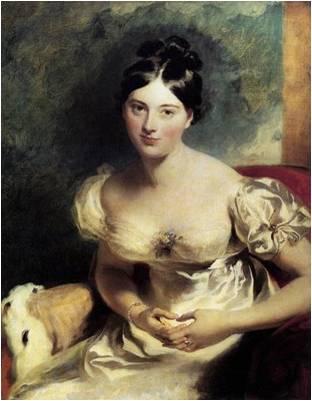
Jakob and Wilhelm Grimm, the authors of the original "Schneewittchen und die sieben Zwerge" or the story "Snow White and the Seven Dwarfs," were German scholars who collected, researched and wrote stories based on folklore in the early 1800's.Treating the stories spread by word of mouth as scholarly research, the Grimm brothers eventually compiled more than 200 stories, one being Snow White, based on accounts from various people from peasants to aristocrats, which drew some criticism based on the factual nature during the transcription process.
However, in 1994, a German scholar named Eckhard Sander wrote "Schneewittchen: Marchen oder Wahrheit?" which translates to" Snow White: Is It a Fairy Tale?" in an effort to debunk claims that the protagonist in Snow White was never a real person or not based in historical fact. According to Sander, the account from the Grimm Brothers' fairy tale Snow White was based on the life of Margarete von Waldeck, a German countess who was the mistress of a Spanish prince during the 1500's.
Click here to read this article from the International Business Times
Click here to see our page on Snow White and the Huntsman
Thursday, April 26, 2012
The ideal medieval Jewish woman

The poem contains the author’s name, R. Elazar, in an internal acrostic; its content portrays an ideal woman who seems to have been involved in an unbelievable number of activities. Dolce and Elazar were German Jewish pietists, known as Hasidei Ashkenaz. Thus the emphasis in the elegy on her piety, her God-fearing lifestyle and her saintliness are part and parcel of the values of this society.
It seems as though Dolce never sat still for a moment, or at least not according to her husband’s account. She engaged in the usual wifely activities expected of an Orthodox woman, cooking for her family and allowing her learned husband to be totally involved in Torah study and good deeds and encouraging her sons to study. This might seem to have been enough to occupy her time, but Elazar was nowhere near finished. As it turns out, Dolce was busy spinning thread for tefillin and for binding books as well as scrolls. According to this report, she sewed approximately 40 Torah scrolls and prepared the wool for prayer shawl fringes.
Click here to read this article from the Jerusalem Post
Saturday, April 14, 2012
The Riddle Of Mark Twain's Passion For Joan Of Arc

The same might also be said of his book about the French heroine. Published in 1896, when its author was 61, Personal Recollections of Joan of Arc has long been viewed as something of an aberration, a curio—the type of genre-bending work that a bored, established writer often undertakes in order to buck audience expectations. Narrated by a fictionalized version of Joan’s servant and scribe, Sieur Louis de Conte, the book spans the majority of Joan’s life, beginning with her childhood in eastern France and ending with her questionable trial and execution. While other Twain novels such as A Connecticut Yankee in King Arthur’s Court and The Prince and the Pauper are also set in medieval Europe, far from the author’s more familiar milieu of mid-19th century Missouri, Recollections is unique in its somber tone.
Click here to read this article from The Awl
Wednesday, April 04, 2012
University of Wisconsin-Madison hosts symposium on medieval Spanish literature

Events will begin Sunday, April 15 and run through Tuesday, April 17, with related activities on Wednesday, April 18.
The conference will be a triple celebration: first, a commemoration of the two Spanish literary masterpieces and the scholarship of María Rosa Lida de Malkiel, one of the greatest 20th-century scholars in the field of medieval Hispanic studies, who wrote some of her most important critical work on the two texts.
Second, it will recognize UW-Madison's distinguished scholarly tradition in Hispano-medievalism, celebrating the important publications of its faculty and staff and illustrious alums. Finally, it will be a celebration of the dramatic tradition of "Celestina" on the Madison campus in three productions from the 1950s and 1970s, all directed by emeritus professor Roberto G. Sánchez.
The symposium will bring together some of the most world-renown experts in the field, including several Madison graduatess, from the United Kingdom, Spain, Canada, and across the United States; members of María Rosa Lida de Malkiel's family; and UW-Madison students and faculty.
Events will include roundtable discussions, dramatic readings of the "Book of Good Love" and "Celestina" presented in English translation by UW-Madison students, and an array of conference papers and lectures. All events will be free and open to the public and will take place at several venues on campus, including the Memorial Library, the Pyle Center and Van Hise Hall.
Click here to see more details about the Symposium
Wednesday, February 15, 2012
Book by WUSTL English professor examines themes of medieval love poetry

What is considered “romantic” in contemporary Western society — love from afar, willingness to suffer, idealization of the love object — is partly a legacy of themes in medieval romantic poetry, says Jessica Rosenfeld, PhD, assistant professor of English in Arts and Sciences at Washington University in St.Louis and author of the book Ethics and Enjoyment in Late Medieval Poetry: Love after Aristotle (Cambridge University Press, 2010).
It was those medieval writers who first “defined love and made it the topic for literature,” Rosenfeld says. And movies.
Those medieval writers include Marie de France, Dante, Petrarch and Geoffrey Chaucer. “Chaucer is best known for the Canterbury Tales, but his Troilus and Criseyde is one of the great medieval romances,” Rosenfeld says.
Much medieval love poetry emphasizes suffering for love that can seem morbid or perverse, Rosenfeld says. “We still enjoy a story of love overcoming obstacles, but in medieval poetry, it can often seem as though the obstacles and the pain are in fact the goal,” she says. “One of the things I write about in my book is the way that certain authors found this odd and perverse themselves, and tried to depict the pursuit of love as the pursuit of happiness rather than suffering.”
Click here to read this article from Washington University in St.Louis
Monday, January 16, 2012
Welsh author digs deep to find medieval origins of Thirty Days Hath verse
It is one of the most popular and oft-repeated rhymes in the English language, serving to remind countless generations how many days there are in each month.
Now a Welsh author claims he has unearthed the medieval origins of the verse Thirty Days Hath September.
The rhyme has been passed down in oral tradition but Ceredigion writer and journalist Roger Bryan says he may have traced it as far back as 1425.
Two transcripts of the rhyme – one in the National Library in Wales in Aberystwyth and the other in the British Library in London – could hold the key to the rhyme’s ancient origins.
They were discovered by Mr Bryan while he was working on the second edition of his book on mnemonics, It’ll Come In Handy One Day.
The poem, revealed to the public for the first time in around 600 years, is in a handwritten volumecodex from the early 15th century, dating the written reference to 20 years either side of 1425.
Click here to red this article from this WalesOnline
Now a Welsh author claims he has unearthed the medieval origins of the verse Thirty Days Hath September.
The rhyme has been passed down in oral tradition but Ceredigion writer and journalist Roger Bryan says he may have traced it as far back as 1425.
Two transcripts of the rhyme – one in the National Library in Wales in Aberystwyth and the other in the British Library in London – could hold the key to the rhyme’s ancient origins.
They were discovered by Mr Bryan while he was working on the second edition of his book on mnemonics, It’ll Come In Handy One Day.
The poem, revealed to the public for the first time in around 600 years, is in a handwritten volumecodex from the early 15th century, dating the written reference to 20 years either side of 1425.
Click here to red this article from this WalesOnline
Thursday, January 05, 2012
Two poets from medieval Spain
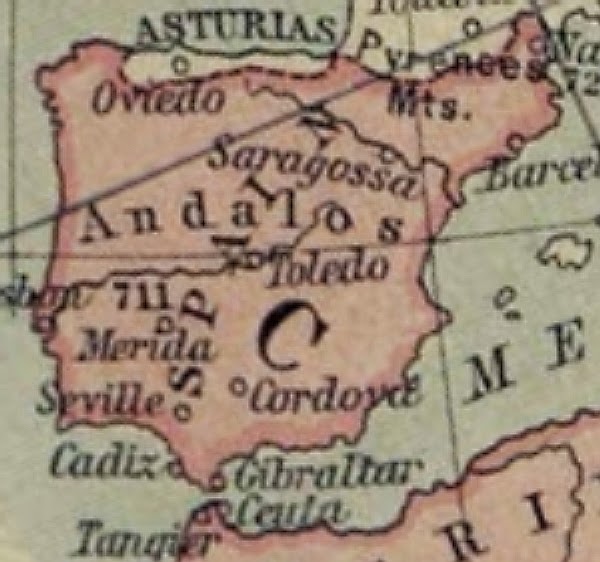
What is surprising is that during this period, there were numerous Muslim women whose poetry has been preserved. Although Muslims refer to the Jews as ahl al-kitab or “people of the book,” Muslim women seem to have been more successful in creating lasting poetic works.
It is rather difficult to account for this discrepancy, for it seems odd to imagine that Muslim women in medieval Spain were far more educated than their Jewish counterparts. Arabic became the lingua franca following the Muslim conquest of the country in 711. When Jewish poets began to compose in Arabic and later in Hebrew, were the women entirely excluded? There are very few extant poems written by Jewish women dating to this period. Although only a fraction of all poems from that time have survived, this does not mean more were not written. The poems that are available are of a high quality, but the problem of quantity cannot be ignored.
Click here to read this article from the Jerusalem Post
Friday, December 16, 2011
Scholar discovers 16th-century love poem written by an Englishwoman
A previously unknown poem dating from the mid-1500s has been discovered pasted into a rare edition of works by Geoffrey Chaucer. The erotic-love poem seems to have been by a Roman Catholic woman and sent to a Protestant scholar who was the tutor to Edward VI.
The poem was discovered by medieval scholar Elaine Treharne during a guest lecture at West Virginia University last summer .
She took several students to the Rare Book Room on the University’s main library where Treharne happened to open a 1561 edition of works by Geoffrey Chaucer that includes The Canterbury Tales. As Treharne opened it, she saw a Latin poem pasted in the back of the book.
The name in the front pages of the book and at the base of the poem is Elizabeth Dacre. And Treharne’s translation of the poem revealed another name – the person for whom the poem was written: Anthony Cooke, tutor to King Edward VI, son of King Henry VIII.
So Treharne searched for Elizabeth, from the U.S. and in England, and came up with a surprising story.
Click here to read this article from Early Modern England
The poem was discovered by medieval scholar Elaine Treharne during a guest lecture at West Virginia University last summer .
She took several students to the Rare Book Room on the University’s main library where Treharne happened to open a 1561 edition of works by Geoffrey Chaucer that includes The Canterbury Tales. As Treharne opened it, she saw a Latin poem pasted in the back of the book.
The name in the front pages of the book and at the base of the poem is Elizabeth Dacre. And Treharne’s translation of the poem revealed another name – the person for whom the poem was written: Anthony Cooke, tutor to King Edward VI, son of King Henry VIII.
So Treharne searched for Elizabeth, from the U.S. and in England, and came up with a surprising story.
Click here to read this article from Early Modern England
Monk's poem is published 900 years on
A medieval monk’s poem which describes the natural beauty of Ely has been translated, published and is now available to buy.
In Praise of Ely is a six-page, hard-copy book which was the brainchild of Chip Coakley, Janet Fairweather and Andy English, all from the Ely area.
The Latin poem, which was written in the 12th century by Brother Gregory, a monk at the abbey in Ely, is part of a large manuscript in Cambridge.
A couple of years ago, Mrs Fairweather, a scholar who speaks fluent Latin, translated the poem for a flower festival in Ely.
Inspired by the poem, Mr Coakley persuaded her it should be published.
Click here to read this article from Ely Weekly News
In Praise of Ely is a six-page, hard-copy book which was the brainchild of Chip Coakley, Janet Fairweather and Andy English, all from the Ely area.
The Latin poem, which was written in the 12th century by Brother Gregory, a monk at the abbey in Ely, is part of a large manuscript in Cambridge.
A couple of years ago, Mrs Fairweather, a scholar who speaks fluent Latin, translated the poem for a flower festival in Ely.
Inspired by the poem, Mr Coakley persuaded her it should be published.
Click here to read this article from Ely Weekly News
Monday, November 14, 2011
Multi-million funding for centre for medieval European literature
A proposed new centre for the study of medieval European literature based in York and Odense is set to become a reality thanks to an award of nearly £4.5 million funding from the Danish National Research Foundation.
The Centre of Excellence, which will be jointly based at the University of Southern Denmark and the University of York, will radically change the way in which medieval European literature is studied, allowing researchers to look at literature from a pan-European perspective, rather than one based on traditional national boundaries.
Click here to read this article from Medievalists.net
The Centre of Excellence, which will be jointly based at the University of Southern Denmark and the University of York, will radically change the way in which medieval European literature is studied, allowing researchers to look at literature from a pan-European perspective, rather than one based on traditional national boundaries.
Click here to read this article from Medievalists.net
Monday, November 07, 2011
The Farce of the Fart – new book offers scandalous plays from medieval France

More than a study in literary criticism, for entertainment value and a peek into 15th- and 16th-century life and wit, ” ‘The Farce of the Fart’ and Other Ribaldries, ” is unequaled. Enders captures the colorful characters, coarse humor, and outrageous plot lines of medieval dramas that have, for the most part, been inaccessible to contemporary readers and theater audiences. “Except for about a dozen from the hundreds that have survived over the centuries, none have been translated into English,” Enders said. “And many of them haven’t been translated into modern French, or any modern vernacular. So they’re kind of untouched.”
Click here to read this article from Medievalists.net
Subscribe to:
Posts (Atom)