 |
| 14th century Book of Hours depicting the murder of Becket |
Showing posts with label Politics. Show all posts
Showing posts with label Politics. Show all posts
Thursday, June 08, 2017
Writing about the Crusades and talking about a "meddlesome priest"
The Middle Ages are in the news again, so here is a roundup of recent news articles. We start with three good reads from historians talking about the crusades

Friday, May 16, 2014
Watch How European Borders Changed since the Middle Ages
This very cool video was found by @BeautifulMaps. It shows how the rise and fall of various states in Europe since the mid-twelfth century
Sunday, January 27, 2013
9 Most Important Medieval Assassinations

It is easy to fall into the trap of thinking that our political discourse and disagreement has never been more bitter and divisive. And while it is bad, there have been many periods in history that were equally--if not more--vitriolic and downright nasty. Take the Middle Ages, for one. Not only was it a politically raw and power hungry time, but the average citizen had very little say in matters of government.
Historian Barbara Tuchman suggests this might be attributed to the fact that the Middle Ages was a very young society, with over half the population under 21. Many of the leaders of medieval kingdoms and dynasties were on the tail end of adolescence--or younger. William, Duke of Normandy, later known as William the Conqueror of England, was only seven years old when he became duke. Charles VII of France was 19 when he was crowned king, and Louis I, became Duke of Orleans at the ripe old age of 20. All that power un-tempered by age or wisdom was a heady thing and ripe for abuse. Assassination was an oft-used tool in their arsenal.
Click here to read this article from the Huffington Post
Tuesday, January 01, 2013
The Magna Carta: an old piece of parchment that made England a nation – let's celebrate it

Yet in 1939, when this very document was put on show for just six months in the British Pavilion at the World Fair in New York, an estimated 14 million people went to see it. When war broke out, it stayed in America, locked away in Fort Knox for safe-keeping.
It was no coincidence that on a recent trip to America, David Cameron was asked while on a talk show to translate the words Magna Carta into English (he failed). Such documents are important to Americans. A trip to the National Archives Building in Washington DC to look at the Declaration of Independence and the Bill of Rights is an essential pilgrimage for any visitor to the capital. Over the years, hundreds of thousands of school children have filed past them.
Why don’t we do the same here?
Click here to read the full article from The Daily Telegraph
Tuesday, November 20, 2012
New research on how the Bayeux Tapestry was made

Her conclusion casts doubt on the widely accepted theory that nuns based in different locations across England made the tapestry in nine sections which were then stitched together.
However, questions still remain over how many embroiderers worked on the Bayeux Tapestry, which is on permanent display at a museum in Normandy, France, who they were and where their ‘workshop’ or ‘workshops’ were located.
From observing the way the stitches overlap on the back of the tapestry, Mrs Makin is also able to say in what order its different parts were sewn. The outlines for individual sections were worked first, and then filled in with colours in a set order.
Click here to read this article from Medievalists.net
Who was the mysterious Ælfgyva in the Bayeux Tapestry?
A new theory has been put forward on a mysterious scene in the Bayeux Tapestry that appears to show some sort of sexual scandal that involved a woman named Ælfgyva. Joanna Laynesmith, a medieval historian from the University of Reading offers two possibilities in a new article that appears in the October issue of History Today.

In trying to understand ”the million dollar question” as Laynesmith puts it, several different explanations have been attempted. Laynesmith believes that this Ælfgyva was most likely Emma, who was the wife of two Anglo-Saxon kings - Æthelred the Unready and Cnut, and was the mother of two more – Harthacnut and Edward the Confessor, or that it could be Ælfgyvva, the first wife of Æthelred.
Click here to read this article from Medievalists.net

In trying to understand ”the million dollar question” as Laynesmith puts it, several different explanations have been attempted. Laynesmith believes that this Ælfgyva was most likely Emma, who was the wife of two Anglo-Saxon kings - Æthelred the Unready and Cnut, and was the mother of two more – Harthacnut and Edward the Confessor, or that it could be Ælfgyvva, the first wife of Æthelred.
Click here to read this article from Medievalists.net
Friday, June 01, 2012
Is ‘Tudor England’ a myth?
The term ‘Tudor’ was hardly used in the 16th Century and its obsessive modern use by historians and writers generally gives us a misleading impression of the period, an Oxford historian has found.
Cliff Davies of Oxford University’s History Faculty and Wadham College scoured official papers, chronicles, poems, plays and pamphlets for the ‘Tudor’ name but found it hardly used as a designation of the monarchy until the last years of Elizabeth’s reign, and even then sparingly.
Of the many poems written to mark the death of Elizabeth and the accession of James I in 1603, only one talks of a change from ‘Tudor’ to ‘Stuart’.
Click here to read this article from Early Modern England
Cliff Davies of Oxford University’s History Faculty and Wadham College scoured official papers, chronicles, poems, plays and pamphlets for the ‘Tudor’ name but found it hardly used as a designation of the monarchy until the last years of Elizabeth’s reign, and even then sparingly.
Of the many poems written to mark the death of Elizabeth and the accession of James I in 1603, only one talks of a change from ‘Tudor’ to ‘Stuart’.
Click here to read this article from Early Modern England
Friday, May 18, 2012
How did medieval Europeans deal with Greek debt? They sacked their capital city
Historians of the Fourth Crusade (1202-04) have been seeking explanations why the crusaders decided to sail to the Byzantine capital of Constantinople instead of Egypt. Some believe that the crusaders were tricked into doing it by the Doge of Venice or some other conspirator, while others argue that the decision to go to Constantinople was almost an accident, where unforeseen events led to the crusader army.
But Savvas Neocleous, writing in the latest issue of the Journal of Medieval History, states ”the real reason for the diversion to Constantinople in 1203 by the Venetians and the crusaders, and for their subsequent attack on the imperial capital in 1204, was a simpler and, in their minds, increasingly pressing concern: the payment of outstanding debts.”
Click here to read this article from Medievalists.net
But Savvas Neocleous, writing in the latest issue of the Journal of Medieval History, states ”the real reason for the diversion to Constantinople in 1203 by the Venetians and the crusaders, and for their subsequent attack on the imperial capital in 1204, was a simpler and, in their minds, increasingly pressing concern: the payment of outstanding debts.”
Click here to read this article from Medievalists.net
Saturday, April 07, 2012
9 Most Important Medieval Assassinations

It is easy to fall into the trap of thinking that our political discourse and disagreement has never been more bitter and divisive. And while it is bad, there have been many periods in history that were equally--if not more--vitriolic and downright nasty. Take the Middle Ages, for one. Not only was it a politically raw and power hungry time, but the average citizen had very little say in matters of government.
Historian Barbara Tuchman suggests this might be attributed to the fact that the Middle Ages was a very young society, with over half the population under 21. Many of the leaders of medieval kingdoms and dynasties were on the tail end of adolescence--or younger. William, Duke of Normandy, later known as William the Conqueror of England, was only seven years old when he became duke. Charles VII of France was 19 when he was crowned king, and Louis I, became Duke of Orleans at the ripe old age of 20. All that power un-tempered by age or wisdom was a heady thing and ripe for abuse. Assassination was an oft-used tool in their arsenal.
Click here to read this article from the Huffington Post
Sunday, February 12, 2012
Who gave King Arthur “a crippling blow”? It was St. George, argues scholar
One of the key figures associated with the Middle Ages in England has been King Arthur, the legendary ruler who was made popular in medieval romances and chronicles. But in a recent lecture, Professor Henrietta Leyser argues that the Arthurian legend declined sharply in the later Middle Ages, replaced by a new hero emerged for the English people – St.George the Dragonslayer.
Leyser, Emeritus Fellow at the University of Oxford, spoke at the University of Toronto last month, where she is serving as a Distinguished Visiting Scholar. Her paper “Why Arthur is Never Enough: Identity Myths and Crises in the English Middle Ages”, was given to a large audience on the campus. In it, Leyser examines the role of Arthur during the High and Later Middle Ages, from the accounts by Geoffrey of Monmouth to Henry VIII, who reportedly hated the idea of King Arthur. In it she asks, “Why did the legend of Arthur tarnish?”
Click here to read this article from Medievalists.net
Leyser, Emeritus Fellow at the University of Oxford, spoke at the University of Toronto last month, where she is serving as a Distinguished Visiting Scholar. Her paper “Why Arthur is Never Enough: Identity Myths and Crises in the English Middle Ages”, was given to a large audience on the campus. In it, Leyser examines the role of Arthur during the High and Later Middle Ages, from the accounts by Geoffrey of Monmouth to Henry VIII, who reportedly hated the idea of King Arthur. In it she asks, “Why did the legend of Arthur tarnish?”
Click here to read this article from Medievalists.net
Thursday, March 10, 2011
An English Royal Wedding – from the Middle Ages
A recent article has detailed the wedding of an English princess in the fourteenth century, showing how lavish the Middle Ages could be.
In her article, “Isabella da Coucy, Daughter of Edward III: The Exception who proves the rule,” Jessica Lutkin examines the life of the eldest daughter of the famous English monarch. Isabella was born in 1332 and lived through many of the important events that shaped England in the fourteenth century.
Click here to read this article from Medievalists.net
In her article, “Isabella da Coucy, Daughter of Edward III: The Exception who proves the rule,” Jessica Lutkin examines the life of the eldest daughter of the famous English monarch. Isabella was born in 1332 and lived through many of the important events that shaped England in the fourteenth century.
Click here to read this article from Medievalists.net
Monday, June 14, 2010
Letter of Sir William Wallace to be studied by historians

A group of historians and archivists will be taking a closer look at a letter widely believed to have been in the possession of the medieval Scottish warrior Sir William Wallace.
Scotland's Culture Minister Fiona Hyslop has asked the Keeper of the National Archives of Scotland to assemble a group of experts that would be best-placed to establish exactly where and why the letter was produced. The medieval history experts - from Scotland, England and France - will investigate the 700 year old document, held at The National Archives in London, and be reporting in the spring of 2011 to Scottish and UK Government Ministers that will then allow discussions on whether to move the document to Scotland.
The National Archives of Scotland also plans to develop a website about William Wallace and the surviving documents from his time, which will include a voiced version and 3D virtualised images.
Ms Hyslop explained that, "There has always been tremendous interest in this letter and repeated claims that it should rightfully reside in Scotland's National Archives. It is right that we revisit such a case and I am delighted that such a distinguished group will be reviewing the evidence.
"The wonders of modern technology will allow people interested in this important document to follow the progress of the research group online and to make up their own minds on the letter by zooming in on the document in minute detail.
"I look forward to hearing the group's findings, which will no doubt be keenly anticipated by those interested in this document, in William Wallace and in this important part of Scotland's history."
George MacKenzie, Keeper of the Records of Scotland, said: "It is remarkable how a 700 year old document still stirs such emotion today. This letter is still a mystery, but I hope that working with our colleagues at The National Archives in London, and with the help of these distinguished historians and archivists, we can begin to solve that mystery."
Oliver Morley, Chief Executive of The National Archives, said: "The National Archives welcomes the opportunity for academic discussion on this subject and looks forward to concluding on the purpose and origin of this valuable and historic document."

 , which starred Mel Gibson as Wallace, won Best Picture at the Academy Awards.
The letter being evaluated by the National Archives of Scotland was written in 1300 by the French king Philip IV where he calls on his agents at the Papal court in Rome to assist Wallace, who going to seek the support of the Pope in his battles against the English. Only three lines long, the Latin document reads:
Philip by the grace of God King of the French to my loved and faithful my agents appointed to the Roman Court, greetings and love. We command/ you to request the Supreme Pontiff to hold our loved William le Walois [Wallace] of Scotland, knight, recommen/ded to his favour in those things which he has to transact with him. Given at Pierrefonds on Monday after the feast of All Saints.
The document was discovered among the English chancery records in the 1830s and was deposited into the Public Record Office in London (later renamed the National Archives) in 1838.
Click here to view an image of the Letter
Sources Government of Scotland, National Archives of Scotland
Friday, March 19, 2010
New Book Suggests Paradigm Shift in Understanding of Ancient and Medieval Political Theory

But that's not how history unfolded, says former Williams College president Francis Oakley. In a groundbreaking new book, he concludes that the Middle Ages, not ancient Greece and Rome, "provided the origins of our inherently secular politics."
Oakley writes in the introduction to "Empty Bottles of Gentilism: Kingship and the Divine in Late Antiquity and the Early Middle Ages (to 1050)
 " that the transition from the ancient to the Christian outlook was "a shift, not so much from a secular to a religious viewpoint, as from one ancient and widespread mode of religious consciousness to another and radically different one."
We like to point to Plato and Aristotle’s political thinking as evidence that the ancient world was secular and much like our own, Oakley writes. But the truth is, since the beginning of recorded history, most societies have had sacred kings. The “republicanism” of the ancient Greek polis was just a “fleeting episode.”
Moreover, it wasn't the kind of politics we think of today, since the status of individuals depended on their membership in a group. The modern notions of autonomous individuality and individual rights came later, in the early-modern era but rooted in the "intellectual seedbed" of the Latin Middle Ages.
The direct political legacy, then, "of Greece to the Roman world and of Rome to the European centuries that followed was in both cases a predominantly monarchical one." And so the historical "rhythm" of the ancient, medieval, and modern periods "is not a secular-religious-secular one, but rather, religious-religious-secular."
Oakley's new book proposes, "no less than a paradigm shift in our understanding of ancient and medieval political theory in the global context of sacral kingship," wrote Marcia Colish of Yale University, an expert on the intellectual history of the Middle Ages.
"Oakley confronts all the major historiographical currents relevant to his subject and reveals that none of them can withstand the force of his critique," said Steven Marrone, professor of history at Tufts University. "There is indeed nothing comparable in the literature to this single effort on Oakley's part."
At Williams since 1961, Oakley has a long history with the college. In addition to serving as dean of the faculty from 1977 to 1984 and as president from 1985 to 1993, he is the Edward Dorr Griffin Professor of the History of Ideas emeritus. In his retirement, he is back at Williams as the Bennett Boskey Visiting Professor of History, teaching a tutorial on the evolution of political thought from late antiquity to the 1700s.
Oakley has written widely on the Middle Ages and on American higher education. He is the author of 13 books, including “Community of Learning: The American College and the Liberal Arts Tradition”; “The Conciliarist Tradition: Constitutionalism in the Catholic Church 1300-1870,” winner of the 2004 Roland Bainton Book Prize; “Natural Law, Laws of Nature, Natural Rights,” named as an outstanding academic title by Choice Magazine; and “Kingship: The Politics of Enchantment.” Oakley is also co-editor of three other books and nearly 200 of his articles, translations, and reviews have appeared in print.
Oakley has served as president of the New England Medieval Conference, of the Fellows of the Medieval Academy of America, and of the American Council of Learned Societies (ACLS). He was also chair of the board of the ACLS, of the National Humanities Center in North Carolina and president of the board of the Sterling and Francine Clark Art Institute. He served on the editorial boards of The Journal of the History of Ideas and of Orion: Nature Quarterly. In 1986, he was elected Fellow of the Medieval Academy of America, in 1991 Honorary Fellow of Corpus Christi College, Oxford and, in 1998, Fellow of the American Academy of Arts and Sciences.
He received his B.A. from Oxford University and his Ph.D. from Yale. He holds seven honorary degrees, including one from Williams. Oakley has taught at Yale, Oxford, the University of Toronto, and North Adams State College.
The book was written with the support of a Mellon Foundation Emeritus Research Fellowship. Published by Yale University Press, it is the first volume in a trilogy titled "The Emergence of Western Political Thought in the Latin Middle Ages."
Source: Williams College
Friday, January 29, 2010
The Assembly Project awarded £850,000 to study Vikings and Early Medieval Europe
Over £850,000 has been made by medieval scholars from the Universities of Durham, Oslo and Vienna and the University of the Highlands and Islands, Centre for Nordic Studies, Orkney, by the Humanities in Europe Research Awards Scheme. This will fund a three-year, international effort, known as The Assembly Project, is designed to explore the role of assemblies or things in the creation, consolidation and maintenance of collective identities, emergent polities and kingdoms in early medieval Northern Europe.
Orkney and Shetland are to be research sites for a major project looking at the way the Viking communities governed themselves and strengthened their groups.
Around £118,000 has been awarded to the Centre for Nordic Studies for research on administrative organisation and Norse “thing”, meaning governing assembly, sites in areas of Viking settlement and colonisation.

The centre – supported by UHI, the prospective University of the Highlands and Islands – is involved in a three-year project with Oslo, Vienna and Durham universities.
Dr Alexandra Sanmark at the Centre for Nordic Studies, one of four principal investigators, won a bid for a total £850,000 from the Humanities in Europe Research Awards. The Assembly Project was ranked third out of 168 applications from across Europe.
The Centre for Nordic Studies research will involve archaeological fieldwork on outdoor parliament and court sites in Orkney and Shetland, as well as an Orkney workshop and an exhibition planned for 2011. Findings will be compared and contrasted to the situation in the Viking homelands.
Centre director Dr Donna Heddle said: “The development and strengthening of early historic European collectives lie at the centre of our current understanding of Europe. This project will fit in well with the centre's research agenda. I am absolutely delighted that our strategic significance has been recognised.”
Research will involve archaeological fieldwork on outdoor parliament and court sites in Orkney and Shetland, as well as an Orkney workshop and an exhibition planned for 2011, Dr Heddle explained. Findings will then be compared and contrasted to the situation in the Viking homelands, she added.
Bill Ross, principal of Orkney College UHI welcomed what now amounts to two successful project proposals relating to things. He added: “Orkney College, through our archaeology department, is a partner in another major project funded by the Northern Peripheries Programme (NPP) of the EU and focusing on linking and developing thing sites with partners in Shetland, Norway, Iceland, the Highlands of Scotland and the Isle of Man.
“We are currently looking closely at how the projects will complement each other with a view to making the total impact greater than the sum of the two parts”
The NPP things project is being led by Dr Sarah Jane Gibbon, who presented an acclaimed paper on thing sites at the Orkney-based Viking conference, Maritime Societies, in 2008, and is now co-editing the conference proceedings with Dr James Barrett of Cambridge University.
Dr Gibbon is hoping to undertake fieldwork this summer on the Orkney assembly sites.
For the NPP project, a two-islands event, hosted jointly with Shetland Amenity Trust, is planned for mid April, with details to be advertised later.
“It is exactly this kind of high quality, international knowledge exchange that raises our profile, brings visitors and makes archaeology work for the community in Orkney” stated Julie Gibson, Orkney’s county archaeologist, whose background is also in medieval archaeology.
Dr Jane Downes, head of archaeology in Orkney College, UHI stated. “We are now partners in two out of the three significant projects studying the subject across Britain and Europe — this is good news.”
Another £115,000 from the grant will come to Durham University to fund research on assemblies and assembly places and the creation of national identities in Britain and Europe.
See also the article: Places of Assembly: New Discoveries in Sweden and England
Orkney and Shetland are to be research sites for a major project looking at the way the Viking communities governed themselves and strengthened their groups.
Around £118,000 has been awarded to the Centre for Nordic Studies for research on administrative organisation and Norse “thing”, meaning governing assembly, sites in areas of Viking settlement and colonisation.

The centre – supported by UHI, the prospective University of the Highlands and Islands – is involved in a three-year project with Oslo, Vienna and Durham universities.
Dr Alexandra Sanmark at the Centre for Nordic Studies, one of four principal investigators, won a bid for a total £850,000 from the Humanities in Europe Research Awards. The Assembly Project was ranked third out of 168 applications from across Europe.
The Centre for Nordic Studies research will involve archaeological fieldwork on outdoor parliament and court sites in Orkney and Shetland, as well as an Orkney workshop and an exhibition planned for 2011. Findings will be compared and contrasted to the situation in the Viking homelands.
Centre director Dr Donna Heddle said: “The development and strengthening of early historic European collectives lie at the centre of our current understanding of Europe. This project will fit in well with the centre's research agenda. I am absolutely delighted that our strategic significance has been recognised.”
Research will involve archaeological fieldwork on outdoor parliament and court sites in Orkney and Shetland, as well as an Orkney workshop and an exhibition planned for 2011, Dr Heddle explained. Findings will then be compared and contrasted to the situation in the Viking homelands, she added.
Bill Ross, principal of Orkney College UHI welcomed what now amounts to two successful project proposals relating to things. He added: “Orkney College, through our archaeology department, is a partner in another major project funded by the Northern Peripheries Programme (NPP) of the EU and focusing on linking and developing thing sites with partners in Shetland, Norway, Iceland, the Highlands of Scotland and the Isle of Man.
“We are currently looking closely at how the projects will complement each other with a view to making the total impact greater than the sum of the two parts”
The NPP things project is being led by Dr Sarah Jane Gibbon, who presented an acclaimed paper on thing sites at the Orkney-based Viking conference, Maritime Societies, in 2008, and is now co-editing the conference proceedings with Dr James Barrett of Cambridge University.
Dr Gibbon is hoping to undertake fieldwork this summer on the Orkney assembly sites.
For the NPP project, a two-islands event, hosted jointly with Shetland Amenity Trust, is planned for mid April, with details to be advertised later.
“It is exactly this kind of high quality, international knowledge exchange that raises our profile, brings visitors and makes archaeology work for the community in Orkney” stated Julie Gibson, Orkney’s county archaeologist, whose background is also in medieval archaeology.
Dr Jane Downes, head of archaeology in Orkney College, UHI stated. “We are now partners in two out of the three significant projects studying the subject across Britain and Europe — this is good news.”
Another £115,000 from the grant will come to Durham University to fund research on assemblies and assembly places and the creation of national identities in Britain and Europe.
See also the article: Places of Assembly: New Discoveries in Sweden and England
Wednesday, December 09, 2009
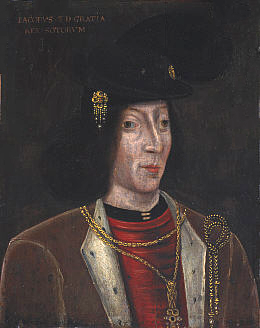
Documents shed light on the mysterious death of James III of Scotland

James III, king of Scotland from 1460 to 1488, endured a turbulent reign. Having survived war with England and rebellions by Scotland’s nobles (including his own brothers) he was eventually killed in the battle of Sauchieburn on 11 June 1488, during another rebellion: this one supported by his eldest son. The manner of his death gave rise to one of the earliest recorded conspiracy theories.
By the 16th century there were claims that James, while fleeing from the battle, had been murdered by an assassin disguised as a priest at Milltown, near Bannockburn, although another version of the story has James being thrown by a horse during the battle, either being killed by the fall or by enemy soldiers.
Now medieval documents reveal that the Scottish Parliament tried to cover up the slaying of the unpopular king.
James III became King of Scots at the age of just nine, in 1460, but his unwillingness to administer justice fairly and a policy of pursuing an English alliance caused him to be intensely disliked by his subjects.
By the early 1480s, the king was estranged from his wife, Margaret of Denmark, and was increasingly becoming alienated from eldest son by favouring James Stewart.
His problems escalated and on June 11, 1488, he faced an army raised by disaffected nobles and led by his 15-year-old son James IV, provoked by the favouritism to his younger brother.
The new documents, including an extract from the Register of the Parliament of Scotland from October 1488, show how James IV wanted to end speculation surrounding his father's death.
Parliament exonerated the new king, stating that 'oure soverane lord that now is and the trew lordis and barouns that wes withe him in the samyne feild war innocent, quhyt and fre of the saidis slauchteris feilde'.
Dr Alan Borthwick, head of medieval records section in the National Archives of Scotland, said, "It's clear from events in the following months that opinions were more divided than the record implies.
"Modern journalists would have loved this story: a king dies in battle against forces led by his own eldest son and heir. But if anyone knew who actually killed the king they kept quiet about it.
"Then the new government seemed more concerned with finding where the dead king's jewels and treasure were than in tracking down the assassin."
Public dissatisfaction with the event and the parliamentary debate was followed by open rebellion. As late as 1492, the government had to offer a reward of 100 merks' worth of land for the arrest of his killers. The reward has never been claimed.
The text from the official records of parliament is one of the exhibits in 'An Open Secret': an exhibition at the National Archives of Scotland in Edinburgh. The exhibition shows changes in government attitudes to record and information closures. Using images of records from the 15th century to the 20th century, it shows how successive governments initially sought to keep information secret and from the public gaze, while later recognising the need to satisfy increasing public demand for freer access.
Click here to read an extract from the register of the Parliament of Scotland, 17 October 1488: Enquiry into the Battle of Sauchieburn and the articles of Aberdeen
Wednesday, October 01, 2008
Matilda of Tuscany
MANTUA FETES MEDIEVAL RULER MATILDA OF TUSCANY.
25 September 2008
ANSA - English Media Service
The northern province of Mantua is celebrating the life and times of one of Italy's most powerful medieval women, Matilda of Tuscany (1046-1115). Three exhibitions exploring her steady rise to power and her close relations with the Church are running in the city and the surrounding area. Matilda was the daughter of Boniface II of Canossa, who controlled great swathes of land in northern Italy, and his second wife, Beatrice.
At the age of six, Matilda became sole heir to her father's estate when he died, even though she had an older brother. Beatrice, herself a strong, intelligent and deeply religious woman, was responsible for her daughter's upbringing, which was considered unconventional for the time.
Matilda enjoyed an extensive education and was able to speak, read and write Latin, Italian, German and French, and also developed a great love of literature that led her to acquire numerous manuscripts. Some sources also suggest she had military training, including horseriding, swordsmanship and tactical skills, and her presence on important battlefields seems to support the theory.
Matilda governed the vast tracts of land she owned in northern and central Italy for almost 40 years but is today best known for her pivotal involvement in the Investiture Controversy. This involved a struggle between Europe's secular rulers, especially the German emperors, who believed they had the power to appoint Church officials, and the papacy, which declared that the pope alone had the power.
Throughout her life, Matilda was a strong and active supporter of the papacy and played a crucial role in mediating an agreement of 1077 between the two main adversaries in the struggle, Pope Gregory VII and the German king Henry IV, later Holy Roman Emperor.
Each of the three exhibits explores a different aspect of Matilda's life.
The first and largest, in Mantua's Casa del Mantegna is entitled 'Matilde di Canossa, il Papato e l'Impero' (Matilda of Tuscany, The Papacy and the Empire). It features 250 items, including Henry IV's imperial throne of wrought iron and Gregory VII's papal throne.
The only remaining seal used by Matilda is displayed, as well as 22 documents she personally signed. Other items include hangings, jewellery, sculpture, crucifixes and weapons, as well as a host of archaeological artefacts, giving a sense of what day-to-day life was like at that time.
The second exhibition in the small town of San Benedetto Po, focuses on the Benedictine Abbey of San Benedetto Polirone founded by Matilda's grandfather, Tedaldo in 1007. Matilda withdrew to the Abbey for increasingly long periods of her life as she grew older and was eventually buried there. Entitled 'Matilda's Abbey', the exhibit collates artworks, including portraits of Matilda, and original documents from the abbey, as well as archive maps, showing work carried out by the complex's inhabitants.
The final show in the Diocesan Museum of Mantua spotlights the life of the Archbishop of Lucca Anselmo (1035-1086), sent by Gregory VII to be Matilda's advisor and confessor. This contains a variety of artworks and valuable documents. All three exhibitions are open until January 11 2009.
25 September 2008
ANSA - English Media Service
The northern province of Mantua is celebrating the life and times of one of Italy's most powerful medieval women, Matilda of Tuscany (1046-1115). Three exhibitions exploring her steady rise to power and her close relations with the Church are running in the city and the surrounding area. Matilda was the daughter of Boniface II of Canossa, who controlled great swathes of land in northern Italy, and his second wife, Beatrice.
At the age of six, Matilda became sole heir to her father's estate when he died, even though she had an older brother. Beatrice, herself a strong, intelligent and deeply religious woman, was responsible for her daughter's upbringing, which was considered unconventional for the time.
Matilda enjoyed an extensive education and was able to speak, read and write Latin, Italian, German and French, and also developed a great love of literature that led her to acquire numerous manuscripts. Some sources also suggest she had military training, including horseriding, swordsmanship and tactical skills, and her presence on important battlefields seems to support the theory.
Matilda governed the vast tracts of land she owned in northern and central Italy for almost 40 years but is today best known for her pivotal involvement in the Investiture Controversy. This involved a struggle between Europe's secular rulers, especially the German emperors, who believed they had the power to appoint Church officials, and the papacy, which declared that the pope alone had the power.
Throughout her life, Matilda was a strong and active supporter of the papacy and played a crucial role in mediating an agreement of 1077 between the two main adversaries in the struggle, Pope Gregory VII and the German king Henry IV, later Holy Roman Emperor.
Each of the three exhibits explores a different aspect of Matilda's life.
The first and largest, in Mantua's Casa del Mantegna is entitled 'Matilde di Canossa, il Papato e l'Impero' (Matilda of Tuscany, The Papacy and the Empire). It features 250 items, including Henry IV's imperial throne of wrought iron and Gregory VII's papal throne.
The only remaining seal used by Matilda is displayed, as well as 22 documents she personally signed. Other items include hangings, jewellery, sculpture, crucifixes and weapons, as well as a host of archaeological artefacts, giving a sense of what day-to-day life was like at that time.
The second exhibition in the small town of San Benedetto Po, focuses on the Benedictine Abbey of San Benedetto Polirone founded by Matilda's grandfather, Tedaldo in 1007. Matilda withdrew to the Abbey for increasingly long periods of her life as she grew older and was eventually buried there. Entitled 'Matilda's Abbey', the exhibit collates artworks, including portraits of Matilda, and original documents from the abbey, as well as archive maps, showing work carried out by the complex's inhabitants.
The final show in the Diocesan Museum of Mantua spotlights the life of the Archbishop of Lucca Anselmo (1035-1086), sent by Gregory VII to be Matilda's advisor and confessor. This contains a variety of artworks and valuable documents. All three exhibitions are open until January 11 2009.
Subscribe to:
Comments (Atom)