Showing posts with label Hagiography. Show all posts
Monday, January 07, 2013
Rich Man, Poor Man: The radical visions of St. Francis
“Why you?” a man asked Francesco di Bernardone, known to us now as St. Francis of Assisi. Francis (1181/2-1226) was scrawny and plain-looking. He wore a filthy tunic, with a piece of rope as a belt, and no shoes. While preaching, he often would dance, weep, make animal sounds, strip to his underwear, or play the zither. His black eyes sparkled. Many people regarded him as mad, or dangerous. They threw dirt at him. Women locked themselves in their houses.
Francis accepted all this serenely, and the qualities that at the beginning had marked him as an eccentric eventually made him seem holy. His words, one writer said, were “soothing, burning, and penetrating.” He had a way of “making his whole body a tongue.” Now, when he arrived in a town, church bells rang. People stole the water in which he had washed his feet; it was said to cure sick cows.
Years before he died, Francis was considered a saint, and in eight centuries he has lost none of his prestige. Apart from the Virgin Mary, he is the best known and the most honored of Catholic saints. In 1986, when Pope John Paul II organized a conference of world religious leaders to promote peace, he held it in Assisi. Francis is especially loved by partisans of leftist causes: the animal-rights movement, feminism, ecology, vegetarianism (though he was not a vegetarian). But you don’t have to be on the left to love Francis. He is the patron saint (with Catherine and Bernardino of Siena) of the nation of Italy.
Consequently, a vast number of books have been written about him. The first of the biographies appeared a few years after his death, and they’ve been coming ever since. Two more have recently appeared in English. One, Francis of Assisi: The Life and Afterlife of a Medieval Saint (Yale), is by André Vauchez, a professor emeritus of medieval studies at the University of Paris. The book appeared in France in 2009 and has now been published in English, in a translation by Michael F. Cusato. The other volume, Francis of Assisi: A New Biography (Cornell), is by Augustine Thompson, a Dominican priest and professor of history at the Dominican School of Philosophy and Theology at the Graduate Theological Union in Berkeley. The two books show that the Church is still trembling from the impact of this great reformer.
Click here to read this article from the New Yorker Magazine
Wednesday, October 31, 2012
Hildegard of Bingen's music gets modern twist in new album
A medieval nun is poised to become an unlikely chart star after her liturgical chants were transformed into music by Madonna’s record producer.
A series of compositions by Hildegard of Bingen, a Benedictine abbess who died in 1179, have been released as an album, the Telegraph reported.
The producer, Guy Sigsworth, has reworked them to create “ambient remixes.”
Sigsworth is a classically trained musician known for his work with Madonna, Britney Spears and Seal.
The album, Hildegard, is being released by Decca and industry experts predict it will become a chart success.
Sigsworth worked with Stevie Wishart, a composer who studied medieval music and has long been fascinated by Hildegard’s compositions.
Click here to read this article from Truthdrive
See also Hildegard, Sinfonye, classical album of the week
Wednesday, August 15, 2012
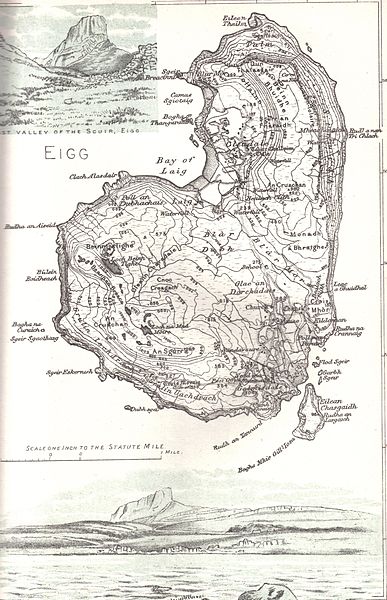
Monastery where Christian saint was martyred is uncovered on Scottish Island
An archaeological dig on a Scottish island has unearthed the remains of what is thought to be a monastery founded by one of the country’s first Christian saints.
St Donnan brought Christianity to many places in the West Highlands in the seventh century before settling on Eigg. According to local folklore, he became a martyr after he was killed by Norsemen, along with 50 monks, while giving Mass on Easter Sunday in the year 617.
Eigg History Society won £17,500 of Heritage Lottery funding to carry out an archaeological excavation on the island in an effort to locate St Donnan’s monastery. The dig at Kildonnan Graveyard on the south-east side of the island has now uncovered evidence which experts believe shows it is the exact site.
Click here to read the full article from The Scotsman
St Donnan brought Christianity to many places in the West Highlands in the seventh century before settling on Eigg. According to local folklore, he became a martyr after he was killed by Norsemen, along with 50 monks, while giving Mass on Easter Sunday in the year 617.
Eigg History Society won £17,500 of Heritage Lottery funding to carry out an archaeological excavation on the island in an effort to locate St Donnan’s monastery. The dig at Kildonnan Graveyard on the south-east side of the island has now uncovered evidence which experts believe shows it is the exact site.
Click here to read the full article from The Scotsman
Saturday, July 07, 2012
Future Saint as Medieval Superhero
In Siena's Pinocateca Nazionale museum, four chairs have been placed in a row in front of Simone Martini's Altarpiece of Blessed Agostino Novello (c. 1328). Presumably, this is to give viewers in what is perhaps the best art-museum bargain in Europe—five euros ($6) for a gander in relative solitude at a trove of great Sienese art—a chance to relax and really ponder what is, in my opinion, the museum's masterpiece.
Martini (b. 1284) was one of the most prominent figures in the "Siena school" of painting which, according to conventional art history, was less connected to the beginning of the Italian Renaissance and more an early part of something called "International Gothic"—which began in the 14th century and ended early in the 15th century—and was inferior to the rational, perspectival realism (what we generally refer to as "naturalism") of the larger, neighboring city of Florence. Sienese painting waxed mystical, went in for out-of-proportion figures in physically jumbled (but narratively quite coherent) spaces, and specialized in crisp juxtapositions of colors often so subtle that it's hard to find names for them.
In 1315, Martini completed a huge fresco of the Maestà (the Virgin and Jesus being admired by all the saints) in the Palazzo Pubblico, the town hall of Siena's experiment in democratic government that lasted about 70 years before the Black Death killed more than half the city's population in 1348. After finishing his fresco, Martini went off to Naples and didn't return to Siena for a decade. When he did, the city had grown precipitously to a population of 50,000 (it's all of 54,000 today), and the Augustinian order of monks was ready to commission an altarpiece for its beloved future saint, Agostino Novello.
Click here to read this article from the Wall Street Journal
Martini (b. 1284) was one of the most prominent figures in the "Siena school" of painting which, according to conventional art history, was less connected to the beginning of the Italian Renaissance and more an early part of something called "International Gothic"—which began in the 14th century and ended early in the 15th century—and was inferior to the rational, perspectival realism (what we generally refer to as "naturalism") of the larger, neighboring city of Florence. Sienese painting waxed mystical, went in for out-of-proportion figures in physically jumbled (but narratively quite coherent) spaces, and specialized in crisp juxtapositions of colors often so subtle that it's hard to find names for them.
In 1315, Martini completed a huge fresco of the Maestà (the Virgin and Jesus being admired by all the saints) in the Palazzo Pubblico, the town hall of Siena's experiment in democratic government that lasted about 70 years before the Black Death killed more than half the city's population in 1348. After finishing his fresco, Martini went off to Naples and didn't return to Siena for a decade. When he did, the city had grown precipitously to a population of 50,000 (it's all of 54,000 today), and the Augustinian order of monks was ready to commission an altarpiece for its beloved future saint, Agostino Novello.
Click here to read this article from the Wall Street Journal
Thursday, June 07, 2012
Research examines the ‘abortionist saints’ of medieval Ireland
A recent article on sexuality and childbirth in early medieval Ireland reveals some surprising attitudes towards abortion held among the Christians during this period, and that hagiographical texts recount four Irish saints performing abortions.
'Of Vanishing Fetuses and Maidens Made-Again: Abortion, Restored Virginity, and Similar Scenarios in Medieval Irish Hagiography and Penitentials', by Maeve Callan, appears in the latest issue of the Journal of the History of Sexuality. Callan examines a wide range of hagiographical works and other sources from medieval Ireland. She writes, “these accounts celebrate saints who perform abortions, restore female fornicators to a virginal state, contemplate infanticide, and result from incest and other ‘illegitimate’ sexual unions. Moreover, the texts themselves generally reflect a remarkably permissive attitude toward these traditionally taboo acts, an attitude also found in Irish penitentials and law codes.”
Click here to read this article from Medievalists.net
'Of Vanishing Fetuses and Maidens Made-Again: Abortion, Restored Virginity, and Similar Scenarios in Medieval Irish Hagiography and Penitentials', by Maeve Callan, appears in the latest issue of the Journal of the History of Sexuality. Callan examines a wide range of hagiographical works and other sources from medieval Ireland. She writes, “these accounts celebrate saints who perform abortions, restore female fornicators to a virginal state, contemplate infanticide, and result from incest and other ‘illegitimate’ sexual unions. Moreover, the texts themselves generally reflect a remarkably permissive attitude toward these traditionally taboo acts, an attitude also found in Irish penitentials and law codes.”
Click here to read this article from Medievalists.net
Tuesday, April 10, 2012
Thomas Becket by John Guy: review
Few figures in medieval history are as famous as Thomas Becket, and fewer have been subject to such utterly differing interpretations. To pious Englishmen up to the Reformation, he was a miracle-working saint, whose blood (widely available in diluted form) could heal lepers, make the blind see, and raise babies from the dead. To Henry VIII, who closed down the shrine at Canterbury and had his bones burned, he was “a rebel and traitor to his prince”.
To TS Eliot, he was a strangely modern Catholic intellectual, fortified by moral and theological principles but ravaged by self-doubt. To Lewis Warren, author of the classic modern biography of Henry II (Becket’s great adversary), he was a “theological dinosaur” whose resistance to his sovereign was based on little more than “narrow clericalism”.
While the interpretations are many and conflicting, the basic facts about Becket’s life are not in doubt. Born in London in 1120, he was the son of a Norman immigrant who had become a well-to-do merchant; there was money in Becket’s background but not high social status, and his aristocratic enemies would always enjoy reminding him of his humble origins. But with education and talent he was able to rise quite rapidly, working in the household of the then Archbishop of Canterbury. This brought him to the attention of the young King Henry II, who made him his Chancellor; by the age of 34, Becket was helping to run the country.
Click here to read this article from The Telegraph
To TS Eliot, he was a strangely modern Catholic intellectual, fortified by moral and theological principles but ravaged by self-doubt. To Lewis Warren, author of the classic modern biography of Henry II (Becket’s great adversary), he was a “theological dinosaur” whose resistance to his sovereign was based on little more than “narrow clericalism”.
While the interpretations are many and conflicting, the basic facts about Becket’s life are not in doubt. Born in London in 1120, he was the son of a Norman immigrant who had become a well-to-do merchant; there was money in Becket’s background but not high social status, and his aristocratic enemies would always enjoy reminding him of his humble origins. But with education and talent he was able to rise quite rapidly, working in the household of the then Archbishop of Canterbury. This brought him to the attention of the young King Henry II, who made him his Chancellor; by the age of 34, Becket was helping to run the country.
Click here to read this article from The Telegraph
Saturday, March 17, 2012
Was St Patrick a slave-trading Roman official who fled to Ireland?
The classic account of St Patrick’s life tells us that he was abducted from Western Britain in his teens and forced into slavery in Ireland for six years before escaping, during which time his faith developed.
However, a new article looking at Patrick’s own writings in their historical context argues that the saint may have in fact fled to Ireland deliberately to avoid becoming a ‘Decurion’ – a Roman official responsible for tax collection.
“In the troubled era in which Patrick lived, which saw the demise and eventual collapse of Roman government in Britain in 410, discharging the obligations of a Decurion, especially tax-collecting, would not only have been difficult but also very risky,” says Dr Roy Flechner of the University of Cambridge.
Click here to read this article from Medievalists.net
However, a new article looking at Patrick’s own writings in their historical context argues that the saint may have in fact fled to Ireland deliberately to avoid becoming a ‘Decurion’ – a Roman official responsible for tax collection.
“In the troubled era in which Patrick lived, which saw the demise and eventual collapse of Roman government in Britain in 410, discharging the obligations of a Decurion, especially tax-collecting, would not only have been difficult but also very risky,” says Dr Roy Flechner of the University of Cambridge.
Click here to read this article from Medievalists.net
Saturday, March 10, 2012
Relic Robbing: Church’s Medieval Treasures in Jeopardy?
The theft of a medieval relic from a church in Ireland earlier this week is raising questions about the security of these places of worship and the safety of the items held within them.
On Saturday morning, church officials in Dublin’s Christ Church Cathedral discovered that the preserved heart of St Laurence O’Toole (d.1180) had been stolen. Church dean Rev. Dermot Dunne said, “It’s just unthinkable that someone should steal something like that,” but this theft is just one of an increasing number of robberies that are taking place in churches.
Other Irish churches have been targeted in recent months – a rare Celtic-designed reliquary, worth €10,000, was ripped out of the wall at St Brigid’s Church in Killester, Co Dublin (fortunately the saint’s relic had been removed earlier for conservation work), while a piece of the True Cross was taken from Holycross Abbey, but was later returned. Meanwhile, the Codex Calixtinus, a 12th-century manuscript, was stolen from Santiago de Compostela last year, making international headlines. The theft of medieval relics is not just occurring in Europe – last year it was reported that a 780-year old relic purported to be part of Saint Anthony of Padua, (the patron saint of lost things) was stolen from a church in Long Beach, California.
Click here to read this article from Medievalists.net
On Saturday morning, church officials in Dublin’s Christ Church Cathedral discovered that the preserved heart of St Laurence O’Toole (d.1180) had been stolen. Church dean Rev. Dermot Dunne said, “It’s just unthinkable that someone should steal something like that,” but this theft is just one of an increasing number of robberies that are taking place in churches.
Other Irish churches have been targeted in recent months – a rare Celtic-designed reliquary, worth €10,000, was ripped out of the wall at St Brigid’s Church in Killester, Co Dublin (fortunately the saint’s relic had been removed earlier for conservation work), while a piece of the True Cross was taken from Holycross Abbey, but was later returned. Meanwhile, the Codex Calixtinus, a 12th-century manuscript, was stolen from Santiago de Compostela last year, making international headlines. The theft of medieval relics is not just occurring in Europe – last year it was reported that a 780-year old relic purported to be part of Saint Anthony of Padua, (the patron saint of lost things) was stolen from a church in Long Beach, California.
Click here to read this article from Medievalists.net
Monday, March 05, 2012
Somewhere in Ireland, a burglar has the heart of a saint
Here is a series of articles about the theft of the relic of St. Laurence O’Toole this weekend from a church in Dublin, Ireland.
Somewhere in Ireland, a burglar has the heart of a saint
Officials at Christ Church Cathedral in Dublin said Sunday they’re distraught and perplexed over the theft of the church’s most precious relic: the preserved heart of St. Laurence O’Toole, patron saint of Dublin.
St. Laurence’s heart had been displayed in the cathedral since the 13th century. It was stored in a heart-shaped wooden box and secured in a small, square iron cage on the wall of a chapel dedicated to his memory. On Saturday someone cut through two bars, pried the cage loose, and made off with the relic.
“I am devastated that one of the treasured artifacts of the cathedral is stolen,” said the Most Rev. Dermot Dunne, the cathedral’s dean. “It has no economic value but it is a priceless treasure that links our present foundation with its founding father.”
Ireland’s national police force, the Garda Siochana, said detectives were studying hours of closed-circuit TV footage to try to identify the approximately 40 people who walked out the cathedral’s front doors Saturday morning.
Click here to read this article from The Globe and Mail
Religious fanatic hid overnight to steal relic of saint's heart
A religious fanatic hid overnight in a cathedral before stealing the 800-year-old preserved heart of Dublin's patron saint, church officials believe.
The 12th century preserved heart of St Laurence O'Toole -- which has been a religious focal point in Christ Church Cathedral, Dublin, for the past eight centuries -- was stolen from a small heart-shaped wooden box which was sealed in an iron-barred case.
The Dean of Christ Church, Reverend Dermot Dunne, said yesterday that he believes the culprit secretly hid in the cathedral before closing time on Friday evening.
It has also emerged the thief lit two candles during the night before making off with the relic the next morning.
"The vergers realised it was gone when they opened the cathedral at 9.30am on Saturday morning," he said.
"It was definitely there the evening before. They also noticed that there were two peace candles lit on the Trinity Altar. It's all very strange.
"Somebody must have hid in the cathedral overnight on Friday and slipped out first thing on Saturday morning. There was no sign of forced entry and all our doors are alarmed."
Click here to read this article from the Irish Independent
Call for increased security for church relics
Church authorities who are custodians of relics have been called on to increase their security, or temporarily remove the items, in light of recent thefts.
Raghnall Ó Floinn, Head of Collections at the National Museum of Ireland, said these incidents were worrying, and that custodians of relics might have to increase security.
It follows the theft from Christ Church Cathedral in Dublin this weekend of a wooden box in which the heart of St Laurence O'Toole had been placed almost 1,000 years ago.
Click here to read this article from RTE
See also our earlier article Medieval Saint’s relic stolen from Dublin church
Somewhere in Ireland, a burglar has the heart of a saint
Officials at Christ Church Cathedral in Dublin said Sunday they’re distraught and perplexed over the theft of the church’s most precious relic: the preserved heart of St. Laurence O’Toole, patron saint of Dublin.
St. Laurence’s heart had been displayed in the cathedral since the 13th century. It was stored in a heart-shaped wooden box and secured in a small, square iron cage on the wall of a chapel dedicated to his memory. On Saturday someone cut through two bars, pried the cage loose, and made off with the relic.
“I am devastated that one of the treasured artifacts of the cathedral is stolen,” said the Most Rev. Dermot Dunne, the cathedral’s dean. “It has no economic value but it is a priceless treasure that links our present foundation with its founding father.”
Ireland’s national police force, the Garda Siochana, said detectives were studying hours of closed-circuit TV footage to try to identify the approximately 40 people who walked out the cathedral’s front doors Saturday morning.
Click here to read this article from The Globe and Mail
Religious fanatic hid overnight to steal relic of saint's heart
A religious fanatic hid overnight in a cathedral before stealing the 800-year-old preserved heart of Dublin's patron saint, church officials believe.
The 12th century preserved heart of St Laurence O'Toole -- which has been a religious focal point in Christ Church Cathedral, Dublin, for the past eight centuries -- was stolen from a small heart-shaped wooden box which was sealed in an iron-barred case.
The Dean of Christ Church, Reverend Dermot Dunne, said yesterday that he believes the culprit secretly hid in the cathedral before closing time on Friday evening.
It has also emerged the thief lit two candles during the night before making off with the relic the next morning.
"The vergers realised it was gone when they opened the cathedral at 9.30am on Saturday morning," he said.
"It was definitely there the evening before. They also noticed that there were two peace candles lit on the Trinity Altar. It's all very strange.
"Somebody must have hid in the cathedral overnight on Friday and slipped out first thing on Saturday morning. There was no sign of forced entry and all our doors are alarmed."
Click here to read this article from the Irish Independent
Call for increased security for church relics
Church authorities who are custodians of relics have been called on to increase their security, or temporarily remove the items, in light of recent thefts.
Raghnall Ó Floinn, Head of Collections at the National Museum of Ireland, said these incidents were worrying, and that custodians of relics might have to increase security.
It follows the theft from Christ Church Cathedral in Dublin this weekend of a wooden box in which the heart of St Laurence O'Toole had been placed almost 1,000 years ago.
Click here to read this article from RTE
See also our earlier article Medieval Saint’s relic stolen from Dublin church
Sunday, March 04, 2012
Medieval Saint’s relic stolen from Dublin church
The preserved heart of St Laurence O’Toole, Dublin’s patron saint has been stolen from the city’s Christ Church Cathedral. The theft occurred sometime between Friday night and noon on Saturday.
A spokeswoman for the cathedral said it was opened at 9.30am this morning and there was no of a forced entry. She said the thieves did not take valuable gold chalices and gold candlesticks in the chapel, but only took the relic. “It’s completely bizarre,” she added. “They didn’t touch anything else. They specifically targeted this, they wanted the heart of St Laurence O’Toole.”
The Dean of Christ Church Cathedral and the diocese of Dublin and Glendalough, the Most Reverend Dermot Dunne, commented that the relic “has no economic value but it is a priceless treasure that links our present foundation with its founding father, St Laurence O’Toole.”
Click here to read this article from Medievalists.net
A spokeswoman for the cathedral said it was opened at 9.30am this morning and there was no of a forced entry. She said the thieves did not take valuable gold chalices and gold candlesticks in the chapel, but only took the relic. “It’s completely bizarre,” she added. “They didn’t touch anything else. They specifically targeted this, they wanted the heart of St Laurence O’Toole.”
The Dean of Christ Church Cathedral and the diocese of Dublin and Glendalough, the Most Reverend Dermot Dunne, commented that the relic “has no economic value but it is a priceless treasure that links our present foundation with its founding father, St Laurence O’Toole.”
Click here to read this article from Medievalists.net
Sunday, February 12, 2012
Who gave King Arthur “a crippling blow”? It was St. George, argues scholar
One of the key figures associated with the Middle Ages in England has been King Arthur, the legendary ruler who was made popular in medieval romances and chronicles. But in a recent lecture, Professor Henrietta Leyser argues that the Arthurian legend declined sharply in the later Middle Ages, replaced by a new hero emerged for the English people – St.George the Dragonslayer.
Leyser, Emeritus Fellow at the University of Oxford, spoke at the University of Toronto last month, where she is serving as a Distinguished Visiting Scholar. Her paper “Why Arthur is Never Enough: Identity Myths and Crises in the English Middle Ages”, was given to a large audience on the campus. In it, Leyser examines the role of Arthur during the High and Later Middle Ages, from the accounts by Geoffrey of Monmouth to Henry VIII, who reportedly hated the idea of King Arthur. In it she asks, “Why did the legend of Arthur tarnish?”
Click here to read this article from Medievalists.net
Leyser, Emeritus Fellow at the University of Oxford, spoke at the University of Toronto last month, where she is serving as a Distinguished Visiting Scholar. Her paper “Why Arthur is Never Enough: Identity Myths and Crises in the English Middle Ages”, was given to a large audience on the campus. In it, Leyser examines the role of Arthur during the High and Later Middle Ages, from the accounts by Geoffrey of Monmouth to Henry VIII, who reportedly hated the idea of King Arthur. In it she asks, “Why did the legend of Arthur tarnish?”
Click here to read this article from Medievalists.net
Tuesday, December 20, 2011
Was St Edmund killed by the Vikings in Essex?
Keith Briggs, a visiting research fellow in linguistics at the University of the West of England, has proposed a new site for the battle in which King Edmund of East Anglia was killed in 869. If confirmed, the new proposal would change our understanding of the early history of Suffolk and especially of the town and abbey of Bury St Edmunds.
The story of Edmund, king and martyr, has become a kind of foundation myth for the county of Suffolk, but contains at least one element of truth – in 869 there was a battle between the East Anglians and the Vikings; Edmund was captured and later killed. About 100 years later the story was written down – soon after, Edmund came to be considered a Christian martyr and the new abbey (founded about 1020) at Bury St Edmunds was dedicated to him. Edmund’s remains were believed to be housed in the abbey, miracles were attributed to him, and Bury thus became a major pilgrimage site and a rich and powerful abbey for the next 500 years.
Click here to read this article from Medievalists.net
The story of Edmund, king and martyr, has become a kind of foundation myth for the county of Suffolk, but contains at least one element of truth – in 869 there was a battle between the East Anglians and the Vikings; Edmund was captured and later killed. About 100 years later the story was written down – soon after, Edmund came to be considered a Christian martyr and the new abbey (founded about 1020) at Bury St Edmunds was dedicated to him. Edmund’s remains were believed to be housed in the abbey, miracles were attributed to him, and Bury thus became a major pilgrimage site and a rich and powerful abbey for the next 500 years.
Click here to read this article from Medievalists.net
Wednesday, November 30, 2011
Alumna studies crossdressing saints at UPenn
Some may say that the world of academia is boring; those people probably aren’t studying crossdressing saints of the Middle Ages. The Young Alumni Lecture held Wednesday, Nov. 16 in the Science Complex Physics building featured Courtney Rydel, a former student of the College. Rydel is now studying to get her Ph.D in medieval literature, with a dissertation titled “Legendary Effects: Women Saints of the Legenda Aurea in England 1260-1563.” She reflected on her experiences in graduate school, giving advice to future graduate students and explaining her current research.
Rydel graduated from the College in 2006 with a B.A. in English. She is currently working towards her Ph.D. in English literature at the University of Pennsylvania.
Rydel’s work explained the role of gender created in early English literature, using saints to demonstrate this phenomenon. These literary works revolved around female saints who posed as men, concealing their gender for different reasons, some more distinct than others. According to Rydel, this representation of gender surprised her, simply because it was such an early time period.
The idea of concealing one’s gender is not uncommon among great literary works, however. “People were always interested in this theme. It’s nothing new. It’s a trend that links up to being extraordinary,” Rydel said.
Click here to read this article from The Signal
Rydel graduated from the College in 2006 with a B.A. in English. She is currently working towards her Ph.D. in English literature at the University of Pennsylvania.
Rydel’s work explained the role of gender created in early English literature, using saints to demonstrate this phenomenon. These literary works revolved around female saints who posed as men, concealing their gender for different reasons, some more distinct than others. According to Rydel, this representation of gender surprised her, simply because it was such an early time period.
The idea of concealing one’s gender is not uncommon among great literary works, however. “People were always interested in this theme. It’s nothing new. It’s a trend that links up to being extraordinary,” Rydel said.
Click here to read this article from The Signal
Saturday, August 13, 2011
Remains of Anglo-Saxon Saint discovered?
Archaeologists working in the Oxfordshire town of Bicester believe they have discovered a reliquary containing some of the bones of Saint Edburg, a seventh-century saint.
John Moore Heritage Services is conducting the excavations of a site of former apartment buildings (flats) which is being redeveloped. The land once belonged to Bicester Priory, and the archaeological work has uncovered the entire north transept of the Priory Church, After coming across thirteen other skeletons during the dig, the archaeologists found some partial remains of a skeleton wrapped in a lead sheet.
Click here to read this article from Medievalists.net
John Moore Heritage Services is conducting the excavations of a site of former apartment buildings (flats) which is being redeveloped. The land once belonged to Bicester Priory, and the archaeological work has uncovered the entire north transept of the Priory Church, After coming across thirteen other skeletons during the dig, the archaeologists found some partial remains of a skeleton wrapped in a lead sheet.
Click here to read this article from Medievalists.net
Friday, July 01, 2011
Scholars examine life and writings of Jocelin of Furness
Jocelin of Furness was one of the most significant writers to emerge from England’s north-west during the Middle Ages, but historians have tended to overlook his work. Now a team of researchers are trying to increase awareness of his importance and what his writings tell us about life at the turn of the 13th century.
A conference about one of the most significant, but shadowy figures in Cumbria’s medieval past will take place next week, as part of a wider project to uncover more about his life and works.
Jocelin of Furness was a monk who lived at the turn of the 13th century, and spent most of his life at Furness Abbey in Cumbria, as his name suggests. He was a hagiographer – a writer of Saints lives – and produced four great works including a life of Ireland’s patron Saint, Patrick.
Click here to read this article from Medievalists.net
A conference about one of the most significant, but shadowy figures in Cumbria’s medieval past will take place next week, as part of a wider project to uncover more about his life and works.
Jocelin of Furness was a monk who lived at the turn of the 13th century, and spent most of his life at Furness Abbey in Cumbria, as his name suggests. He was a hagiographer – a writer of Saints lives – and produced four great works including a life of Ireland’s patron Saint, Patrick.
Click here to read this article from Medievalists.net
Wednesday, June 15, 2011
Lecture on “Place Names and Saints’ Cults: a window on medieval Scotland” to be given in Derry
In celebration of Colmcille Day, the Northern Ireland city of Derry is hosting a lecture by Gilbert Markus on “Place Names and Saints’ Cults: a window on medieval Scotland.”
The lecture takes place today at the Tower Museum and is organised by Derry City Council’s Heritage and Museum Service as its Annual Colmcille Lecture.
The lecture will begin with a study of the cult of St Serf moving onto place names referring to Columba and Columban saints. The lecture will focus on how place names, referring to saints and their cults, can tell us about history and historical evidence.
Click here to read this article from Medievalists.net
The lecture takes place today at the Tower Museum and is organised by Derry City Council’s Heritage and Museum Service as its Annual Colmcille Lecture.
The lecture will begin with a study of the cult of St Serf moving onto place names referring to Columba and Columban saints. The lecture will focus on how place names, referring to saints and their cults, can tell us about history and historical evidence.
Click here to read this article from Medievalists.net
Monday, March 21, 2011
St Patrick's diet similar to today's health foods
Saint Patrick, the patron saint of Ireland, probably ate fare similar to today's pricey health foods such as cereal, fish and seaweed, according to a researcher who has studied the country's 5th century diet.
Food historian Regina Sexton said records kept by monks showed that Patrick, who is credited with ridding Ireland of snakes and spreading the Christian message, most likely drew his sustenance from cereals and dairy produce such as sour milk, flavored curd mixtures and a variety of soft and hard cheeses.
Click here to read this article from Reuters/Yahoo
Food historian Regina Sexton said records kept by monks showed that Patrick, who is credited with ridding Ireland of snakes and spreading the Christian message, most likely drew his sustenance from cereals and dairy produce such as sour milk, flavored curd mixtures and a variety of soft and hard cheeses.
Click here to read this article from Reuters/Yahoo
Tuesday, January 25, 2011
Book by Romance studies professor compares images of medieval saints to modern pornography
The images of saints in medieval Europe bear an uncanny resemblance to modern pornographic images, says Cary Howie, assistant professor of Romance studies and director of Cornell's Lesbian, Gay, Bisexual and Transgender Studies Program, in his new book, Sanctity and Pornography in Medieval Culture: On the Verge
(Manchester University Press).
The book, which Howie co-wrote with William Burgwinkle of the University of Cambridge, examines the physical intensity of "sacred bodies." It uses images and accounts of pain and pleasure, bodily exposure and concealment to explore the links between medieval devotion and contemporary eroticism.
Click here to read this article from Cornell University
The book, which Howie co-wrote with William Burgwinkle of the University of Cambridge, examines the physical intensity of "sacred bodies." It uses images and accounts of pain and pleasure, bodily exposure and concealment to explore the links between medieval devotion and contemporary eroticism.
Click here to read this article from Cornell University
Thursday, December 09, 2010
Jesus' great grandmother was St. Ismeria according to medieval manuscript
The great grandmother of Jesus was a woman named Ismeria, according to Florentine medieval manuscripts analyzed by a historian.
The legend of St. Ismeria, presented in the current Journal of Medieval History, sheds light on both the Biblical Virgin Mary's family and also on religious and cultural values of 14th-century Florence.
"I don't think any other woman is mentioned" as Mary's grandmother in the Bible, Catherine Lawless, author of the paper, told Discovery News. "Mary's patrilineal lineage is the only one given."
Click here to read this article from Discovery News
The legend of St. Ismeria, presented in the current Journal of Medieval History, sheds light on both the Biblical Virgin Mary's family and also on religious and cultural values of 14th-century Florence.
"I don't think any other woman is mentioned" as Mary's grandmother in the Bible, Catherine Lawless, author of the paper, told Discovery News. "Mary's patrilineal lineage is the only one given."
Click here to read this article from Discovery News
Friday, August 13, 2010
Are these the bones of John the Baptist?
In a region already rich with archaeological artefacts, the excavation of a small alabaster box containing a few pieces of bone amid the ruins of a medieval monastery might easily have passed unnoticed.
But when Bulgarian archaeologists declared they had found relics of John the Baptist, one of the most significant early Christian saints, their discovery became the subject of rather more interest -- prompting angry exchanges in the local media and even calls for a government minister's resignation.
The claim is based on a reliquary -- a container for holy relics -- found on July 28 under the altar of a fifth century basilica on Sveti Ivan, a Black Sea island off Sozopol on Bulgaria's southern coast. Inside, archaeologists found eight pieces of bone, including fragments of skull and face bone and a tooth.
Click here to read this article from CNN
But when Bulgarian archaeologists declared they had found relics of John the Baptist, one of the most significant early Christian saints, their discovery became the subject of rather more interest -- prompting angry exchanges in the local media and even calls for a government minister's resignation.
The claim is based on a reliquary -- a container for holy relics -- found on July 28 under the altar of a fifth century basilica on Sveti Ivan, a Black Sea island off Sozopol on Bulgaria's southern coast. Inside, archaeologists found eight pieces of bone, including fragments of skull and face bone and a tooth.
Click here to read this article from CNN
Subscribe to:
Comments (Atom)