
Showing posts with label Architecture. Show all posts
Showing posts with label Architecture. Show all posts
Wednesday, August 27, 2014
Thursday, June 14, 2012
Academic seeks origin of mysterious Spanish cloister

This is the historical mystery being unraveled by a medieval art expert who has been investigating a cloister that has stood since 1958 on a northeastern Spanish estate owned by wealthy German philanthropist Curt Engelhorn and his family.
Gerona University Medieval Art History Professor Gerardo Boto believes the cloister, now nestled in a pine forest on the estate in Palamos, some 120 km north of Barcelona in the northeastern Spanish region of Catalonia, could be the remains of a romanesque monastery that was originally built several hundred miles away in the central region of Castilla y León.
"If its authenticity is confirmed, that could help us rewrite a few aspects about Spanish romanesque," Boto told Reuters on his first visit to the cloister.
Click here to read this article from Reuters
Click here to read Who has a cloister around their pool?

Thursday, June 07, 2012
Who has a cloister around their pool?
.jpeg)
Click here to read this article from El Pais
Monday, June 04, 2012
New website – Getty Research Portal – offers better access to art history resources
The Getty Research Institute launched a new website last week, the Getty Research Portal, which promises to provide universal access to digitized texts in the field of art and architectural history.
The Getty Research Portal is a free online search gateway that aggregates descriptive metadata of digitized art history texts, with links to fully digitized copies that are free to download. Art historians, curators, students, or anyone who is culturally curious can unearth these valuable sources of research without traveling from place to place to browse the stacks of the world’s art libraries.
Click here to read this article from Medievalists.net
See also Getty launches full text website for art history research
The Getty Research Portal is a free online search gateway that aggregates descriptive metadata of digitized art history texts, with links to fully digitized copies that are free to download. Art historians, curators, students, or anyone who is culturally curious can unearth these valuable sources of research without traveling from place to place to browse the stacks of the world’s art libraries.
Click here to read this article from Medievalists.net
See also Getty launches full text website for art history research
Tuesday, January 31, 2012
Medieval Harmondsworth Barn to be preserved by English Heritage
English Heritage has purchased a medieval barn in west London, once described as the “Cathedral of Middlesex” for £20,000. Harmondsworth Barn is listed as a Grade I building, placing it alongside the Houses of Parliament, Westminster Abbey and Buckingham Palace for its exceptional architectural and historic interest.
Rescued by English Heritage from years of neglect and decay, the oak-framed medieval barn – dubbed by the late poet laureate and heritage campaigner Sir John Betjeman as the “Cathedral of Middlesex” – will be run by and for the local community. It will open to the public in April 2012, joining Stonehenge and parts of Hadrian’s Wall in the National Collection of Historic Sites and Monuments, under the guardianship of English Heritage.
The barn was built in 1426 by Winchester College as part of its manor farm at Harmondsworth and was used to store grain. Inside, both its size and its aisles evoke the space and shape of a cathedral – it is nearly 60 metres long, 12 metres wide and 11 metres tall and 13 massive oak trusses, resting on stone blocks, hold the roof up. The barn is a masterpiece of carpentry, contains one of the best interiors of the medieval age, and for its age is remarkably intact.
Click here to read this article from Medievalists.net
Rescued by English Heritage from years of neglect and decay, the oak-framed medieval barn – dubbed by the late poet laureate and heritage campaigner Sir John Betjeman as the “Cathedral of Middlesex” – will be run by and for the local community. It will open to the public in April 2012, joining Stonehenge and parts of Hadrian’s Wall in the National Collection of Historic Sites and Monuments, under the guardianship of English Heritage.
The barn was built in 1426 by Winchester College as part of its manor farm at Harmondsworth and was used to store grain. Inside, both its size and its aisles evoke the space and shape of a cathedral – it is nearly 60 metres long, 12 metres wide and 11 metres tall and 13 massive oak trusses, resting on stone blocks, hold the roof up. The barn is a masterpiece of carpentry, contains one of the best interiors of the medieval age, and for its age is remarkably intact.
Click here to read this article from Medievalists.net
Wednesday, December 07, 2011
Oldest surviving timber-framed house discovered in Ireland
Archaeologists in County Clare believe they have discovered Ireland’s earliest surviving example of a timber framed house. Dendrochronological analysis is expected to conclude that the timber structure at Chapel Lane, Parnell Street, Ennis, dates back to the late 16th century.
Ms. Irene Clune’s house, known as McParland’s is long understood to have been the oldest inhabited house in the Clare County capital. The building’s triple diamond stone Jacobean chimney has been an icon of medieval Ennis for centuries.
Click here to read this article from Medievalists.net
Ms. Irene Clune’s house, known as McParland’s is long understood to have been the oldest inhabited house in the Clare County capital. The building’s triple diamond stone Jacobean chimney has been an icon of medieval Ennis for centuries.
Click here to read this article from Medievalists.net
Monday, November 28, 2011
Tithe Barn restoration wins conservation prize
A medieval barn in Nailsea, which has undergone a £1.2 million refurbishment, has won a top conservation award. The Tithe Barn has won the Royal Institute of British Architects (RIBA) People's Choice award.
RIBA asked people across the South West to vote for their favourite new building project, with the 15th century Tithe Barn beating the competition to take the main prize.
The competition is in its fourth year and the shortlist represented a broad selection of publicly accessible buildings across the South West.
RIBA South West Town And Country Design Awards look at the impact of new and converted built environment projects in both rural and urban settings.
Click here to read this article from This is Bristol
RIBA asked people across the South West to vote for their favourite new building project, with the 15th century Tithe Barn beating the competition to take the main prize.
The competition is in its fourth year and the shortlist represented a broad selection of publicly accessible buildings across the South West.
RIBA South West Town And Country Design Awards look at the impact of new and converted built environment projects in both rural and urban settings.
Click here to read this article from This is Bristol
Saturday, September 10, 2011
Life in a medieval home
Shandy Hall is a good example of a late medieval timber-framed hall, built around 1430.

Shandy Hall is a bit like a museum, but charting the house's own history is difficult. The architectural scholar Nikolaus Pevsner reckoned it was built in the 17th century, but he was wrong, probably because he didn't have access to the inside. In fact, the building is a symmetrical, timber-framed hall built around 1430. The roof rafters show signs of the fire that would have been in the centre of the house, and through a hatch in the kitchen you can see the medieval outside wall.
Click here to read this article from The Guardian

Shandy Hall is a bit like a museum, but charting the house's own history is difficult. The architectural scholar Nikolaus Pevsner reckoned it was built in the 17th century, but he was wrong, probably because he didn't have access to the inside. In fact, the building is a symmetrical, timber-framed hall built around 1430. The roof rafters show signs of the fire that would have been in the centre of the house, and through a hatch in the kitchen you can see the medieval outside wall.
Click here to read this article from The Guardian
Architecture: Early medieval survivors
Because early medieval domestic buildings were usually made of wood, only the stone edifices raised for Christianity and military protection remain, says Rosemary Hill.

At the heart of the Old English epic poem Beowulf is Heorot, the splendid mead hall built by King Hrothgar to celebrate his victories in war. With its throne room, its patterned floor and its wide and towering gables, this was "the hall of halls", full of feasting and harping but, the poet adds ominously, "awaiting a barbarous burning". Such was the fate of most Anglo-Saxon architecture. Wood was plentiful in northern Europe and cheaper than stone, so houses, even those as grand as Hrothgar's, were built of timber and burned easily and often. Beyond the hints in Beowulf and the remains of halls that archaeologists have found at Cheddar and at Yeavering in Northumberland, the story of early British architecture is almost entirely told through the churches and monasteries for which stone was used. That story begins in the late sixth century with the re-introduction of Christianity and the arrival of St Augustine.
At first it was a matter of make do and mend rather than creativity. Augustine's first church in Canterbury was patched together from an existing Roman one and was in turn swept away by the later cathedral.
Click here to read this article from The Guardian

At the heart of the Old English epic poem Beowulf is Heorot, the splendid mead hall built by King Hrothgar to celebrate his victories in war. With its throne room, its patterned floor and its wide and towering gables, this was "the hall of halls", full of feasting and harping but, the poet adds ominously, "awaiting a barbarous burning". Such was the fate of most Anglo-Saxon architecture. Wood was plentiful in northern Europe and cheaper than stone, so houses, even those as grand as Hrothgar's, were built of timber and burned easily and often. Beyond the hints in Beowulf and the remains of halls that archaeologists have found at Cheddar and at Yeavering in Northumberland, the story of early British architecture is almost entirely told through the churches and monasteries for which stone was used. That story begins in the late sixth century with the re-introduction of Christianity and the arrival of St Augustine.
At first it was a matter of make do and mend rather than creativity. Augustine's first church in Canterbury was patched together from an existing Roman one and was in turn swept away by the later cathedral.
Click here to read this article from The Guardian
Tuesday, August 02, 2011
Rome's Pantheon may have been built as a massive sundial researchers reveal

Now experts have come up with an intriguing theory – that the temple acted as a colossal sun dial, with a beam of light illuminating its enormous entrance at the precise moment that the emperor entered the building.
Click here to read this article from the Daily Telegraph
Monday, August 02, 2010
Solving the 800-year mystery of Pisa's Leaning Tower
All six donkeys were impeccably behaved. They’d been ridden into Pisa’s main square, the Piazza dei Miracoli, last November by vexed vets from Pisa University and ceremoniously set down beneath its Leaning Tower. In protest at government cuts across Italian education, the profs duly gave an al fresco lecture on donkey anatomy to hundreds of bewildered tourists. Silvio Berlusconi’s photo appeared on many a banner, beside the words ‘The biggest ass of all’.
Such a display of faculty dissent would have been impossible a decade ago, when the area of piazza around the tower was completely cordoned off. It looked then more building site than World Heritage site and the howls of protest from local Pisans were far louder than a few braying donkeys.
From 1990 to 2001, the tower remained closed – many doubting it would ever reopen – as the International Committee for the Safeguard of the Leaning Tower strove to save it from collapse. Visitors to Pisa dropped off by 45 per cent.
Click here to read the article from The Telegraph
Such a display of faculty dissent would have been impossible a decade ago, when the area of piazza around the tower was completely cordoned off. It looked then more building site than World Heritage site and the howls of protest from local Pisans were far louder than a few braying donkeys.
From 1990 to 2001, the tower remained closed – many doubting it would ever reopen – as the International Committee for the Safeguard of the Leaning Tower strove to save it from collapse. Visitors to Pisa dropped off by 45 per cent.
Click here to read the article from The Telegraph
Tuesday, July 27, 2010
Women workers could be found on the medieval construction site, study finds
According to a recently published study, women could be found working on construction sites, if only occasionally, including in specialized roles such as carpenters and masons. The research is found in the article, “Appropriate to Her Sex?” Women’s Participation on the Construction Site in Medieval and Early Modern Europe, by Shelley E. Roff.
She surveyed a wide variety of records from throughout Western Europe, including tax records, inventories of wages paid on construction sites, and municipal accounts, and discovered numerous instances of women working alongside men on construction sites as far back at the 13th century.
Click here to read this news article from Medievalists.net
She surveyed a wide variety of records from throughout Western Europe, including tax records, inventories of wages paid on construction sites, and municipal accounts, and discovered numerous instances of women working alongside men on construction sites as far back at the 13th century.
Click here to read this news article from Medievalists.net
Monday, June 28, 2010
Project Gargoyle begins in Leicestershire

The first of its kind in the country, a 50-strong team of volunteers is now in place and busy taking photographs of figurative church carvings such as gargoyles. Around 300 churches locally feature stylised or caricatured human heads and weird and wonderful imaginary beasts which so far, have failed to attract the interests of art historians or specialists.
The information collected through Project Gargoyle, led by volunteer Bob Trubshaw and supported by the County Council, will become a digital resource offering fascinating insights into medieval minds.
Mr. Trubshaw said, "Leicestershire has a wealth of wonderful medieval art decorating its churches but to date, no one knows exactly what we have. Many of these carvings are superb examples of medieval art and deserve to be much better known and understood.
"At this stage we simply do not know how many carvings there - we think there are around 10,000 ranging from gargoyles which are pulling faces or poking their tongues out, to ones depicting fantasy entities such as green men or dragons."

"When complete, it will be a tremendous addition to the county's archives and hopefully inspire other areas to document their medieval carvings in a similar manner."
The Diocese of Leicester, the Diocese of Peterborough and Leicestershire Archaeological and Historical Society are involved in the initiative which was first set up last year.
For more information on the project, please visit the County Council's website - www.leics.gov.uk/gargoyle or contact co-ordinator Bob Trubshaw on 01509 880725 or email bobtrubs@indigogroup.co.uk
Source: Leicestershire County Council
Monday, June 07, 2010
Could Medieval Mason's Marks make a comeback?
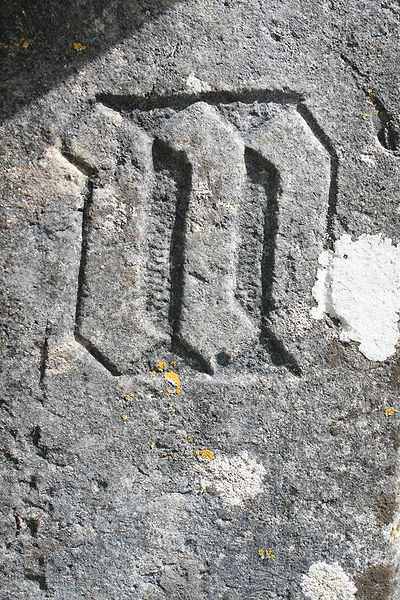
Mason’s Marks refer to marks made on the blocks of walling stone and on moulded stone as part of the construction process, and have been in use for centuries. Academics studying the use of the marks at the University of Warwick claim self-assembly furniture manufacturers could learn a lot from the ancient system and save thousands of pounds in production costs.
The marks are a sophisticated series of symbols which operated outside literacy and enabled instructions to be transferred between the designers and the constructors of buildings across the building world . The system is universal and different versions of Masons’ Marks have been found in use at various sites across the world, over a 4,000 year period. Dr Jenny Alexander from the University of Warwick’s History of Art department said the marks were used for a variety of reasons.
She said: “Each stonemason had his own mark when they were working on part of a specific project, and the mark would identify their work to make sure they got paid. While you can’t use the marks to trace itinerant masons from site to site, as there are too many co-incidences, you can use the marks to tell the story of the building in which they are found. Systems of marks of a related type are still used to identify the grade of stone in quarries today.”
Dr Alexander said the marks were also used to help assemble pieces if they had been carved and then transported to the site of construction.
She said: “Masons’ assembly marks were used to show which piece of stone needed to go alongside another. It was a very simple system that has been replicated across the world for centuries. I think companies who manufacture flat-pack furniture could learn a lot from this system. If they used a system similar to Masons’ assembly marks to show which pieces went together, it could remove the need for the complex and often impenetrable instruction booklets they currently issue in many different languages.”
Dr Alexander’s research is concerned with the architectural history of the great churches and cathedrals of the medieval period, and of the ways in which those buildings were constructed and used. She is interested in the ways in which the medieval, and early-modern construction industry was organised, how masons were trained, how buildings were designed and how the materials used were chosen, supplied, and worked. Dr Alexander is currently working on a book about Mason’s Marks which is due to be published in 2010, and has just gained funding to look at Mason’s Marks in Santiago de Compostela cathedral in Spain.
Click here to watch a short video of Professor Alexander discussing the importance of masons' marks (MP4 file)
Please also see her article The Origin of Masons’ Marks in Romanesque Buildings in England
Source: University of Warwick
Friday, December 04, 2009
Research by Architecture Professor Describes Missing 500-Year Period of Loggias, Porticos
>
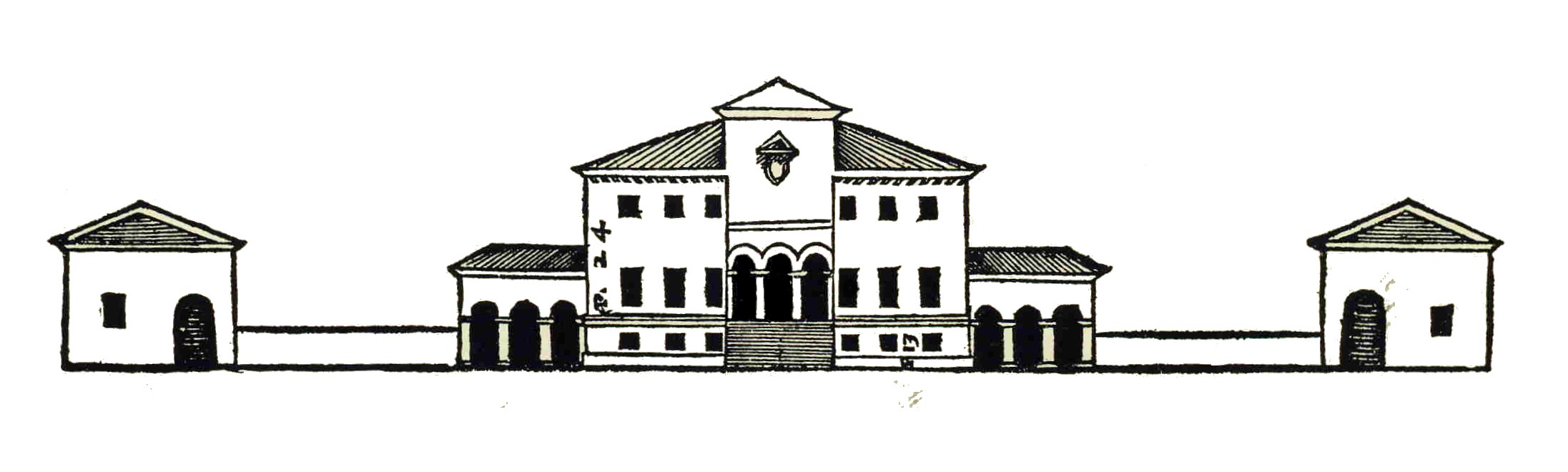
In European history, loggias represented more than just interesting architectural features. They also served important cultural functions.
That’s the focus of research presented in a recent journal article by Kim Sexton, an associate professor in the University of Arkansaw's Fay Jones School of Architecture. She had the lead article in the September issue of the Journal of the Society of Architectural Historians, a quarterly publication. .
Sexton’s 12,000-word article accounts for a number of centuries for which there are no surviving porticos. By researching text and images, she’s reconstructed what those were like between the 7th and 12th centuries. During this period, the use of porticos — roof-covered structures supported by columns — gave way to loggias, or recessed porticos.

“It’s important because we had porticos in Roman times, and then they come back in the Renaissance,” she said. “It’s like this unaccounted time, what happened in between.”
In her article, Sexton argues that they returned to prominence because different ethnic groups used them “to display their judicial systems.” As court proceedings were held outdoors, “they used different styles to frame that.”
At different times there were German and Romanic law; certain loggia announced each style. “It’s in this competitive kind of culture that they start to use the portico again,” she said. “From there it comes back into prominence in the Renaissance and late medieval Italy.”
This article resulted from research she did for The Italian Loggia, a book that looks at the use of the loggia between the 13th and 16th centuries. She’s finishing that manuscript, preparing to send it to a publisher. The information in the journal article, covering the pre-history to that book, is not part of the book.
A fascinating aspect of her research was “how there is an interrelationship between text and image and actual space. And to knit that together was I think the most interesting, but also I think the most progressive in terms of theory,” Sexton said.
Instead of seeing these sources as belonging to a distinct discipline — text for history, image for art history and space for architecture — “it’s put together in an interdisciplinary way,” she said. “It certainly would not have been possible to reconstruct without all those things.”
In her book, Sexton argues that loggias were “used to display activities that were kind of new, and maybe people felt unsure about their value. So that they wanted to display there was something good about the justice system.” She compares it to television today, as a powerful medium that can influence behavior.
 Her research came out of investigations she began while writing her doctoral dissertation at Yale University. While studying art history there, she focused on Italian Renaissance architecture.
Loggias and porticos have long interested Sexton. “They seem at once so transparent in their function because they seem like simple shelters,” she said. “But then, why did they come to be built with such magnificent architecture by some of the best architects of the Renaissance?”
Sexton discovered images in several medieval sources — the center of a gem, illustrations of the book of Psalms, illuminations from law codes and encyclopedias.
The article’s most important image, which is in color on the journal’s cover, shows the only known instance of a king in a loggia where “a trial is actually in progress,” she said.
“If you see them empty, you’re not getting what it’s about,” she said of loggias. “You have to see it when it’s full of activity.”
Dean Jeff Shannon said this about Sexton: “This journal is the premier American venue for architectural historians; it is very difficult to have work accepted. To be featured on the cover is an additional recognition of the value of Kim’s contribution. We’re very proud of her achievement.”
Sexton’s research of loggias has included travels to Florence, Rome, Venice, and Bergamo. During her 10 years on the faculty of the Fay Jones School of Architecture, she has taught survey courses in the history of world architecture, specialized courses on medieval and Renaissance architecture, and space and gender theory.
In European history, loggias represented more than just interesting architectural features. They also served important cultural functions.
That’s the focus of research presented in a recent journal article by Kim Sexton, an associate professor in the University of Arkansaw's Fay Jones School of Architecture. She had the lead article in the September issue of the Journal of the Society of Architectural Historians, a quarterly publication. .
Sexton’s 12,000-word article accounts for a number of centuries for which there are no surviving porticos. By researching text and images, she’s reconstructed what those were like between the 7th and 12th centuries. During this period, the use of porticos — roof-covered structures supported by columns — gave way to loggias, or recessed porticos.
“It’s important because we had porticos in Roman times, and then they come back in the Renaissance,” she said. “It’s like this unaccounted time, what happened in between.”
In her article, Sexton argues that they returned to prominence because different ethnic groups used them “to display their judicial systems.” As court proceedings were held outdoors, “they used different styles to frame that.”
At different times there were German and Romanic law; certain loggia announced each style. “It’s in this competitive kind of culture that they start to use the portico again,” she said. “From there it comes back into prominence in the Renaissance and late medieval Italy.”
This article resulted from research she did for The Italian Loggia, a book that looks at the use of the loggia between the 13th and 16th centuries. She’s finishing that manuscript, preparing to send it to a publisher. The information in the journal article, covering the pre-history to that book, is not part of the book.
A fascinating aspect of her research was “how there is an interrelationship between text and image and actual space. And to knit that together was I think the most interesting, but also I think the most progressive in terms of theory,” Sexton said.
Instead of seeing these sources as belonging to a distinct discipline — text for history, image for art history and space for architecture — “it’s put together in an interdisciplinary way,” she said. “It certainly would not have been possible to reconstruct without all those things.”
In her book, Sexton argues that loggias were “used to display activities that were kind of new, and maybe people felt unsure about their value. So that they wanted to display there was something good about the justice system.” She compares it to television today, as a powerful medium that can influence behavior.
 Her research came out of investigations she began while writing her doctoral dissertation at Yale University. While studying art history there, she focused on Italian Renaissance architecture.
Loggias and porticos have long interested Sexton. “They seem at once so transparent in their function because they seem like simple shelters,” she said. “But then, why did they come to be built with such magnificent architecture by some of the best architects of the Renaissance?”
Sexton discovered images in several medieval sources — the center of a gem, illustrations of the book of Psalms, illuminations from law codes and encyclopedias.
The article’s most important image, which is in color on the journal’s cover, shows the only known instance of a king in a loggia where “a trial is actually in progress,” she said.
“If you see them empty, you’re not getting what it’s about,” she said of loggias. “You have to see it when it’s full of activity.”
Dean Jeff Shannon said this about Sexton: “This journal is the premier American venue for architectural historians; it is very difficult to have work accepted. To be featured on the cover is an additional recognition of the value of Kim’s contribution. We’re very proud of her achievement.”
Sexton’s research of loggias has included travels to Florence, Rome, Venice, and Bergamo. During her 10 years on the faculty of the Fay Jones School of Architecture, she has taught survey courses in the history of world architecture, specialized courses on medieval and Renaissance architecture, and space and gender theory.
Wednesday, November 18, 2009
Pope speaks on the inspirational power of medieval cathedrals and art

Recalling the great European cathedrals of the Middle Ages, Pope Benedict XVI said that the contemplation of art and beauty offers a special way to commune with God.
Today, at his weekly general audience in the Vatican's audience hall, the pope gave a brief lesson in art history, explaining the religious significance of the Romanesque and Gothic styles of the 11th, 12th and 13th centuries in Italy and France.
Pope Benedict's emphasis on the relationship between spirituality and art came as he was preparing to meet November 21 with more than 200 artists from around the world in the Sistine Chapel.
For several weeks the pope has used his general audience talks to illustrate the lives of medieval abbots, saints and others and to offer them as relevant examples for contemporary men and women.
Looking at the cathedrals of the period is important for two reasons, he said. First, the examination of artistic movements of centuries past shows that "the masterpieces are incomprehensible if the religious spirit that inspired them is not taken into account."
And second, he said, the wonder inspired by the cathedrals shows that even today, "beauty is the privileged and fascinating pathway to the mystery of God."
In his catechesis, the pope spoke of the traditional connection between the Christian faith and its expression in art and architecture, explaining how "an extraordinary religious fervor" in 11th-century Europe coincided with greater political stability, population growth, the development of cities and increased wealth.
One of the results, he said, was a great advance in building techniques and the ability of architects to make much bigger churches that offered "salvation and majesty" to the faithful.
Long naves that could hold many people, simple design and thick walls marked the Romanesque style that developed. The churches were just right, the pope said, to display sculptures that had the purpose of educating the faithful and "capable of stirring souls with strong impressions and feelings."
Images of Jesus as a universal judge or of the apocalypse were intended to guide the faithful away from sin and toward virtue, he said.
In the 12th and 13th centuries in northern France, the pope explained, new building techniques allowed architects to build cathedrals that were ever higher and allowed in more light.
"The reach toward greater heights imitated prayer and guided the souls toward God," the pope said, while the large windows filled with stained glass "became great, luminous images that could illustrate the faith" with scenes of the lives of saints, parables or Biblical events.
Medieval cathedrals were places where the whole community participated, bringing together "the humble with the powerful, the illiterate with the doctors," the pope said. "In this common house, all the faithful were educated. ... Gothic sculpture made the cathedral into a Bible of stone," he said.
Pope Benedict called his upcoming meeting with artists "a proposal of friendship between Christian spirituality and art."
Thursday, May 14, 2009
New Insights into the Medieval Construction of Charles Bridge in Prague

Builders of Prague's Gothic Charles Bridge used modern methods
12 May 2009
CTK (Ceska Tiskova Kancelar)
The builders of the 14th century Charles Bridge in Prague used modern methods that are only ascribed to their present-day colleagues, Richard Prykril, from the Natural Sciences Faculty of Charles University, said in a lecture today.
He said this is proved by the research into the bridge in which he has participated since 2002. The construction of the bridge was ordered by King of Bohemia and Roman Emperor Charles IV (1316-78). The foundation stone was laid on July 9, 1357.
The reconstruction of the Gothic bridge decorated with some 30 statues of saints mainly in Baroque style, one of the major landmarks of the capital, was launched last August and it is to be completed in mid-2010.
Prikryl said medieval builders used to add additional agents to the mortar of the masonry that fills the bridge's interior by which they improved its quality.
Similar procedures were used by ancient Rome builders but scientists have believed to date that these technological skills disappeared with the fall of the Roman Empire.
"We maintain that there is no 1000-year-long gap in knowledge, but that it was a very carefully guarded know-how of construction works," Prikryl said, pointing to the Charles Bridge masonry.
He said scientists were surprised by the quality of the masonry. "They created a masonry whose properties are similar to modern construction materials which we describe as light construction concretes," Prikryl told CTK.
Such material is light, but at the same time firm. Prikryl said one cubic metre of Charles Bridge masonry weighs only about 1850 kilograms, but it lends great stability to the bridge.
Tuesday, April 21, 2009
Winterbourne Medieval Barn to open itself to artisans

Winterbourne Medieval Barn, which was built in 1342, is being revitalized and will soon start hosting local craftsmen on its site. Located in Gloucestershire, the barn is set to become a skills centre where traditional skills, such as carpentry, weaving and pottery can be taught and displayed.
The Winterbourne Medieval Barn Trust has received permission to rebuild six craft units in outbuildings and is starting efforts at luring local artisans to set up their shops on the historical site.
Richard Spalding, Chairman of the trust said in an interview with the Gazette Series: "We aim to breathe new life into the barn. We want to get the place working again. It will never be a working farm again because most of the land has been sold off but we are looking to create a centre for rural regeneration. We are turning full circle thinking of the local potential of growing things and resources, which more and more people are interested in during the current climate."
The barn itself was thought to be the largest of its kind when it was built in 1342 by the De Bradeston family, who owned neighbouring Winterbourne Court. It was used to store wheat and barley and for cider production.
"Every other barn like this one collapsed, for whatever reason, but because of the grade 1 soil here, this barn stayed standing," said Mr Spalding.
Several years ago, the site was sold to developers who were interested in turning it into housing, but it has since been put into a trust and restored by the local communuity.
The barn will also host the first Winterbourne Medieval Fair on Saturday, June 27. Re-enacters will help set the scene for a traditional craft and food fair with fun for all the family.
Other events include heritage open days in September, a harvest day in October and a talk by church historian Sally Badham on the Bradestons at Winterbourne Church next month.
For more details about this historic site, see the website for the Winterborune Medieval Barn Trust.
Friday, January 23, 2009
Researchers find Moors used powdered animal bones to strengthen walls close to Alhambra Palace
Researchers find Moors used powdered animal bones to strengthen walls close to Alhambra Palace
By CIARAN GILES
16 January 2009
Associated Press Newswires
A chance discovery of a medieval clay oven has revealed that Moorish architects used powdered animal bones to protect the walls of fortresses close to the Alhambra Palace in southern Spain.
The finding represents the first evidence of powdered bones being used in protective coats, or patinas, in Moorish architecture, said Granada University geologist Carolina Cardell, who headed a yearlong scientific research project at the site.
"We know this method was used in Greek, Roman and Celtic structures, but this is the first report of it in a Moorish building," Cardell told The Associated Press.
Cardell's team's findings were published Wednesday in the U.S. journal Analytical Chemistry. The discovery began when archaeologists restoring a 13-foot (4-meter) rampart a short distance from the Alhambra stumbled across the remains of a clay oven beside a pile of bones and ashes.
The wall was built sometime between 1333 and 1354 by Moorish ruler Yusuf I, who also constructed a key section of the Alhambra Palace complex. The palace is the architectural jewel near the city of Granada from which Moorish caliphs ruled most of Spain until King Ferdinand and Queen Isabella expelled them in 1492, ending 800 years of Muslim rule. The palace is now a UNESCO World Heritage Site and a major tourist attraction.
Suspecting the find had something to do with the wall's coating, the archaeologists asked Cardell and her colleagues at the city university's mineral and petrology department to investigate. The team first found that the oven -- estimated to have measured some 22 square feet (2 square meters) -- had operated at temperatures of around 1,800 degrees Fahrenheit (1,000 Celsius).
"This was far higher than the temperature normally used in firing ovens, so it was obvious they used it for something else," Cardell said.
Traces on the oven's brickwork revealed hydroxyapatite, a mineral that is the main component of bone. Bones must be heated at high temperature in before they can be powdered. The scientists then used a series of ultra-sensitive detection methods and found the same substance on the wall.
"The bone powder would have strengthened the wall's coating better than any other substance," Cardell said.
Cardell said there is evidence that the bone powder, mostly from pigs, may have been used in other Moorish structures in the area but so far there is nothing to indicate it was used in the Alhambra itself.
By CIARAN GILES
16 January 2009
Associated Press Newswires
A chance discovery of a medieval clay oven has revealed that Moorish architects used powdered animal bones to protect the walls of fortresses close to the Alhambra Palace in southern Spain.
The finding represents the first evidence of powdered bones being used in protective coats, or patinas, in Moorish architecture, said Granada University geologist Carolina Cardell, who headed a yearlong scientific research project at the site.
"We know this method was used in Greek, Roman and Celtic structures, but this is the first report of it in a Moorish building," Cardell told The Associated Press.
Cardell's team's findings were published Wednesday in the U.S. journal Analytical Chemistry. The discovery began when archaeologists restoring a 13-foot (4-meter) rampart a short distance from the Alhambra stumbled across the remains of a clay oven beside a pile of bones and ashes.
The wall was built sometime between 1333 and 1354 by Moorish ruler Yusuf I, who also constructed a key section of the Alhambra Palace complex. The palace is the architectural jewel near the city of Granada from which Moorish caliphs ruled most of Spain until King Ferdinand and Queen Isabella expelled them in 1492, ending 800 years of Muslim rule. The palace is now a UNESCO World Heritage Site and a major tourist attraction.
Suspecting the find had something to do with the wall's coating, the archaeologists asked Cardell and her colleagues at the city university's mineral and petrology department to investigate. The team first found that the oven -- estimated to have measured some 22 square feet (2 square meters) -- had operated at temperatures of around 1,800 degrees Fahrenheit (1,000 Celsius).
"This was far higher than the temperature normally used in firing ovens, so it was obvious they used it for something else," Cardell said.
Traces on the oven's brickwork revealed hydroxyapatite, a mineral that is the main component of bone. Bones must be heated at high temperature in before they can be powdered. The scientists then used a series of ultra-sensitive detection methods and found the same substance on the wall.
"The bone powder would have strengthened the wall's coating better than any other substance," Cardell said.
Cardell said there is evidence that the bone powder, mostly from pigs, may have been used in other Moorish structures in the area but so far there is nothing to indicate it was used in the Alhambra itself.
Monday, September 15, 2008
Corroy-le-Château to be sold at auction
Historic Belgian Castle’s Date with Auctioneer Approaches
8 September 2008
Business Wire
The last act in a family’s long-running ownership dispute over a magnificent, 800-year-old Belgian castle will play out in an auctioneer’s house in Brussels on September 22, 2008. On that date, the third and final session for the public sale of the historic castle, Corroy-le-Château, will occur.
The castle, situated just south of Brussels, is surrounded by a moat and borders a 12-hectare, protected park. With walls and seven massive original towers dating to the 13th century, the property’s pristine condition makes it one of Europe’s only remaining perfectly-preserved castles.
Inhabited today by the same family descended from the original owners, the castle has undergone continuous transformation over the centuries and has been maintained in immaculate condition, preserving both its mythical quality and modern comfort throughout its 5,000 square meters of habitable space.

The castle’s status as a historic landmark provides the additional benefit of eligibility for government subsidies for any major work. Its majestically decorated parlors, beautiful corridors, bright interiors and sweeping staircases continue to attract touring groups and cultural performers, offering the possibility of dual use as both a residence and commercial endeavor.
A family dispute between the existing owners over the use of the castle culminated in a court decision which led eventually to the castle’s sale by public auction. The first two rounds of bidding yielded a current offer of €2.1 million ($3.1 million), an astonishingly low price in view of current European real estate values.
The September 22 auction session will be the last time that bids will be accepted for Corroy-le-Château. Follow the final days of the centuries-old saga via daily video updates at: www.corroylechateau.com.
8 September 2008
Business Wire
The last act in a family’s long-running ownership dispute over a magnificent, 800-year-old Belgian castle will play out in an auctioneer’s house in Brussels on September 22, 2008. On that date, the third and final session for the public sale of the historic castle, Corroy-le-Château, will occur.
The castle, situated just south of Brussels, is surrounded by a moat and borders a 12-hectare, protected park. With walls and seven massive original towers dating to the 13th century, the property’s pristine condition makes it one of Europe’s only remaining perfectly-preserved castles.
Inhabited today by the same family descended from the original owners, the castle has undergone continuous transformation over the centuries and has been maintained in immaculate condition, preserving both its mythical quality and modern comfort throughout its 5,000 square meters of habitable space.

The castle’s status as a historic landmark provides the additional benefit of eligibility for government subsidies for any major work. Its majestically decorated parlors, beautiful corridors, bright interiors and sweeping staircases continue to attract touring groups and cultural performers, offering the possibility of dual use as both a residence and commercial endeavor.
A family dispute between the existing owners over the use of the castle culminated in a court decision which led eventually to the castle’s sale by public auction. The first two rounds of bidding yielded a current offer of €2.1 million ($3.1 million), an astonishingly low price in view of current European real estate values.
The September 22 auction session will be the last time that bids will be accepted for Corroy-le-Château. Follow the final days of the centuries-old saga via daily video updates at: www.corroylechateau.com.
Subscribe to:
Comments (Atom)