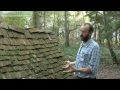
This week's news for medievalists features the mystery of how books were being stolen from a medieval monastery's library, and the plans to build an Anglo-Saxon house.
Finally, check out our Instagram page, where you can see some of the photos we have been taking, such as this fun picture from Southwark Cathedral:
Showing posts with label Medieval Houses. Show all posts
Monday, September 22, 2014
Thursday, January 05, 2012
Your chance to see £1.2m restoration of medieval Somerset tithe barn
A medieval barn in Nailsea which was restored at a cost of £1.2 million is throwing open its doors to allow people to take a peek behind the scenes of the historic building.
A series of tours of the Grade II listed Tithe Barn, which opened in June following a year-long refurbishment, are being held over the coming months.
Tours will be held every third Monday of the month from 10am to 11am on January 16, February 20 and March 19. The barn, which is one of Nailsea’s oldest buildings dating back to 1480, has been a centre of schooling since Hannah More founded Nailsea Great School in 1789.
Click here to read this article from the Bristol Evening Post
A series of tours of the Grade II listed Tithe Barn, which opened in June following a year-long refurbishment, are being held over the coming months.
Tours will be held every third Monday of the month from 10am to 11am on January 16, February 20 and March 19. The barn, which is one of Nailsea’s oldest buildings dating back to 1480, has been a centre of schooling since Hannah More founded Nailsea Great School in 1789.
Click here to read this article from the Bristol Evening Post
Wednesday, December 07, 2011
Oldest surviving timber-framed house discovered in Ireland
Archaeologists in County Clare believe they have discovered Ireland’s earliest surviving example of a timber framed house. Dendrochronological analysis is expected to conclude that the timber structure at Chapel Lane, Parnell Street, Ennis, dates back to the late 16th century.
Ms. Irene Clune’s house, known as McParland’s is long understood to have been the oldest inhabited house in the Clare County capital. The building’s triple diamond stone Jacobean chimney has been an icon of medieval Ennis for centuries.
Click here to read this article from Medievalists.net
Ms. Irene Clune’s house, known as McParland’s is long understood to have been the oldest inhabited house in the Clare County capital. The building’s triple diamond stone Jacobean chimney has been an icon of medieval Ennis for centuries.
Click here to read this article from Medievalists.net
Medieval House sold to keep Rochester Cathedral free to visitors
A medieval house in the grounds of Rochester Cathedral in Kent is being sold to keep entry to the church free for visitors.
The annual cost to run the cathedral, which attracts 126,000 visitors per year, is £850,000.
The house is part of the Old Bishops Palace and has been home to many of the cathedral's greatest figures, including Bishop John Fisher who was beheaded in 1535 for defying King Henry VIII.
Click here to see the video report from the BBC
The annual cost to run the cathedral, which attracts 126,000 visitors per year, is £850,000.
The house is part of the Old Bishops Palace and has been home to many of the cathedral's greatest figures, including Bishop John Fisher who was beheaded in 1535 for defying King Henry VIII.
Click here to see the video report from the BBC
Tuesday, September 20, 2011
Medieval home with extraordinary history up for sale
A medieval home with an extraordinary history has been put back on the market after being lovingly renovated and could be yours for just £1.3 million.
The roots of Dame Annis house, which now stands at Burgh Heath Road in Epsom, dates back to the 15th century when it was originally a grade II listed farm in Fyfield, Essex called Dame Anna’s.
In 1920 its owner was Dr Culmer, a horse-racing fan who had dreamt of moving to Epsom but could not find a property to match the charm of his 15th century farmhouse.
Click here to read this article from This is London Local
The roots of Dame Annis house, which now stands at Burgh Heath Road in Epsom, dates back to the 15th century when it was originally a grade II listed farm in Fyfield, Essex called Dame Anna’s.
In 1920 its owner was Dr Culmer, a horse-racing fan who had dreamt of moving to Epsom but could not find a property to match the charm of his 15th century farmhouse.
Click here to read this article from This is London Local
Saturday, September 10, 2011
Life in a medieval home
Shandy Hall is a good example of a late medieval timber-framed hall, built around 1430.
Shandy Hall is a bit like a museum, but charting the house's own history is difficult. The architectural scholar Nikolaus Pevsner reckoned it was built in the 17th century, but he was wrong, probably because he didn't have access to the inside. In fact, the building is a symmetrical, timber-framed hall built around 1430. The roof rafters show signs of the fire that would have been in the centre of the house, and through a hatch in the kitchen you can see the medieval outside wall.
Click here to read this article from The Guardian
Shandy Hall is a bit like a museum, but charting the house's own history is difficult. The architectural scholar Nikolaus Pevsner reckoned it was built in the 17th century, but he was wrong, probably because he didn't have access to the inside. In fact, the building is a symmetrical, timber-framed hall built around 1430. The roof rafters show signs of the fire that would have been in the centre of the house, and through a hatch in the kitchen you can see the medieval outside wall.
Click here to read this article from The Guardian
Thursday, July 28, 2011
15th century Tudor House re-opens in Southampton
Southampton’s rich history is set to come alive once again as the city’s most important historic attraction re-opens its doors to the public after being closed for nearly ten years.
Tudor House was built towards the end of the 15th century when Southampton was a very different place. Over the years the building has been home to some of Southampton’s most important residents while kings, queens and governments have come and gone. More recently the historic venue housed a much-loved public museum.
Click here to read this article from Medievalists.net
Tudor House was built towards the end of the 15th century when Southampton was a very different place. Over the years the building has been home to some of Southampton’s most important residents while kings, queens and governments have come and gone. More recently the historic venue housed a much-loved public museum.
Click here to read this article from Medievalists.net
Wednesday, September 01, 2010
Piece of medieval history for sale at knockdown price
It's a slice of medieval history at a bargain price. But anyone who buys the 14th century tithe barn at Easington in Holderness may find development opportunities limited.
The listed building will go under the hammer at a property auction on September 16 at a guide price of £125,000. The barn, at the rear of Rectory Farm, next to All Saints Church in the village, would have once been used to store tithes paid to the church as a tax – equivalent to one-tenth of the villagers' produce.
It is now a scheduled ancient monument, with the highest level of protection that can be given to any building or site.
Click here to read this article from the Yorkshire Post
The listed building will go under the hammer at a property auction on September 16 at a guide price of £125,000. The barn, at the rear of Rectory Farm, next to All Saints Church in the village, would have once been used to store tithes paid to the church as a tax – equivalent to one-tenth of the villagers' produce.
It is now a scheduled ancient monument, with the highest level of protection that can be given to any building or site.
Click here to read this article from the Yorkshire Post
Thursday, August 05, 2010
Medieval Hall in Wales to be preserved, turned into holiday home
A medieval hall house is set to become a holiday rental home, after funding was provided to restore the property. The National Heritage Memorial Fund (NHMF) and Cadw, the Welsh government agency in charge of preserving the heritage of Wales. jointly announces equal grants of £335,000 that will allow the Landmark Trust to proceed in securing Llwyn Celyn, a grade I listed, single aisled medieval hall house, considered the most significant inhabited building ‘at risk’ in Wales.
Click here to read the article on Medievalists.net
Tuesday, July 20, 2010
York's Barley Hall celebrates 650th anniversary
It’s survived the Black Death, a siege during England’s civil war and second world war air raids and still the medieval Barley Hall in York is standing strong and preparing to mark its 650th anniversary this weekend.
York Archaeological Trust, owners of York’s restored Barley Hall town house, is inviting visitors to experience two weekends of dance, plays, medieval games and birthday cake on 23rd and 24th July to mark 650 years of its existence....
Click here to read the article on Medievalists.net
York Archaeological Trust, owners of York’s restored Barley Hall town house, is inviting visitors to experience two weekends of dance, plays, medieval games and birthday cake on 23rd and 24th July to mark 650 years of its existence....
Click here to read the article on Medievalists.net
Sunday, April 18, 2010
Tunnels discovered under medieval house in England
A team of top archaeologists have been drafted in to explore a number of secret tunnels that have been found underneath a medieval building in the West Midlands borough of Sandwell in England.
The tunnels have been found at the 13th century West Bromwich Manor House.
As part of Sandwell Council's on going programme of restoration of this important historic building, an entrance and exit to a series of tunnels were found when the moat was drained earlier this year.
Frank Caldwell, principle officer for museums arts and tourism, said: "We discovered an entrance large enough for a person to crawl through that seems to connect to some open drainage channels at the other end of the building.
"It's possible that this tunnel was part of the medieval sewage disposal system for the Manor House which diverted a local spring under the building to remove toilet waste from beneath the toilets.
"It's large enough for a person to crawl into because that’s how any blockages would have been removed in medieval times.
"Clearing medieval toilets was a regular task and carried out by a particular member of a household staff know as a 'Gong Farmer', added Mr Caldwell.
Now a team of archaeologists under the direction of historic buildings expert Dr Malcolm Hislop from Birmingham University are planning to explore the tunnels.
Mr Caldwell added: "The purpose of the exploration is twofold. Firstly, to attempt to confirm this is, in fact, what the tunnels were for. Secondly, to check the condition of the tunnels and see if the network extends under other parts of the building."
Mr Caldwell said the archaeologists will access the tunnels and measure and photograph their extent to help us understand more about how the manor house was built, used and developed.
"Unfortunately the tunnels are too small to allow public access. In fact, I'm pleased about this because no way would you get me into them," he added.
West Bromwich Manor House was built by the de Marnham family in the late 1200s as the centre of their agricultural estate in West Bromwich. Only the Great Hall survives of the original complex of living quarters, agricultural barns, sheds and ponds. Successive occupants modernised and extended the Manor House until it was described in 1790 as “a large pile of irregular half-timbered buildings, black and white, and surrounded with numerous out-houses and lofty walls.”
The grade 1 listed building is being opened for free tours for the public for two days over the May Bank Holiday (May 2 and 3). Staff in medieval garb will show visitors around parts of the timber-framed house in Hall Green Road that have not been open to the public for years.
Places on the tours are limited and will be on a first come, first served basis, but there will also be free entertainment in the grounds. This includes a jester and fire eater, combat demonstrations, cooking displays, bird of prey, and re-enactment of historic manorial court cases, including appropriate punishments. Afternoon tea will be available in the allotment pavilion.
The aim is to tell people about ambitious plans to turn the building into a regional tourist attraction. They can also hear about work carried out since the council took back control of the house, previously a pub and restaurant.
The house was saved from demolition by the former West Bromwich Corporation in the 1950s.
Source: Sandwell Metropolitan Borough Council
The tunnels have been found at the 13th century West Bromwich Manor House.
As part of Sandwell Council's on going programme of restoration of this important historic building, an entrance and exit to a series of tunnels were found when the moat was drained earlier this year.
Frank Caldwell, principle officer for museums arts and tourism, said: "We discovered an entrance large enough for a person to crawl through that seems to connect to some open drainage channels at the other end of the building.
"It's possible that this tunnel was part of the medieval sewage disposal system for the Manor House which diverted a local spring under the building to remove toilet waste from beneath the toilets.
"It's large enough for a person to crawl into because that’s how any blockages would have been removed in medieval times.
"Clearing medieval toilets was a regular task and carried out by a particular member of a household staff know as a 'Gong Farmer', added Mr Caldwell.
Now a team of archaeologists under the direction of historic buildings expert Dr Malcolm Hislop from Birmingham University are planning to explore the tunnels.
Mr Caldwell added: "The purpose of the exploration is twofold. Firstly, to attempt to confirm this is, in fact, what the tunnels were for. Secondly, to check the condition of the tunnels and see if the network extends under other parts of the building."
Mr Caldwell said the archaeologists will access the tunnels and measure and photograph their extent to help us understand more about how the manor house was built, used and developed.
"Unfortunately the tunnels are too small to allow public access. In fact, I'm pleased about this because no way would you get me into them," he added.
West Bromwich Manor House was built by the de Marnham family in the late 1200s as the centre of their agricultural estate in West Bromwich. Only the Great Hall survives of the original complex of living quarters, agricultural barns, sheds and ponds. Successive occupants modernised and extended the Manor House until it was described in 1790 as “a large pile of irregular half-timbered buildings, black and white, and surrounded with numerous out-houses and lofty walls.”
The grade 1 listed building is being opened for free tours for the public for two days over the May Bank Holiday (May 2 and 3). Staff in medieval garb will show visitors around parts of the timber-framed house in Hall Green Road that have not been open to the public for years.
Places on the tours are limited and will be on a first come, first served basis, but there will also be free entertainment in the grounds. This includes a jester and fire eater, combat demonstrations, cooking displays, bird of prey, and re-enactment of historic manorial court cases, including appropriate punishments. Afternoon tea will be available in the allotment pavilion.
The aim is to tell people about ambitious plans to turn the building into a regional tourist attraction. They can also hear about work carried out since the council took back control of the house, previously a pub and restaurant.
The house was saved from demolition by the former West Bromwich Corporation in the 1950s.
Source: Sandwell Metropolitan Borough Council
Thursday, February 11, 2010
Master's House in Ledbury dates back to the 15th century
As part of the planning for the new library and customer services centre in Ledbury, a full survey has now been carried out on the historic Master’s House.
The survey, carried out by Sawyer and Fisher Quantity Surveyors, has revealed the building dates back to 1487 and is probably the only building of its kind in the country and unique as it the most complete Master’s House in the country.
Behind the 18th century façade, the survey found an extensive amount of high quality medieval fabric still survives.
As part of the survey, Sawyer and Fisher were asked to develop a feasibility study on the future repairs, phasing of the project and use of the historic building and understanding of how the project aims could be achieved.
Discussions have also been held with English Heritage about the best way to prevent the building from deteriorating further. The survey found that inappropriate alterations in the 18th, 19th and 20th century had led to defects in the building which need to be corrected.
Some £350,000 has already been earmarked to pay for works at the Master’s House so it can be brought back into use for services.
In April 2008, Herefordshire Council granted £2.9 million of capital funds to refurbish the existing Master’s House on the St. Katherine’s site, and erect a new building close by to house an extended and improved library and information centre.
An archeological project was commissioned by Herefordshire County Council. The most significant discovery was a wall made of local stone rubble and faced with lias. The wall is at least 7 metres long and 2.25 metres wide. The wall suggests a substantial stone building on the same axis and scale as a 13th/14th century hall and chapel to the east. A few shards of pottery were found in earlier and later contexts. These suggest that the building was built in the 13th century and demolished in the late 16th or 17th century. It certainly formed part of the medieval hospital of St. Katherine and may have been another hall or a range of chambers.
Other remains included a line of postholes that seem to indicate a timber scaffold. The medieval remains were buried beneath post-medieval and modern made ground. On that evidence, it is reasonable to infer that the wall belonged to a large stone building, quite possibly of two storeys. In any event, freestanding walls of this kind are not common in medieval contexts, while similar walls are found in countless medieval churches and other stone buildings.
According to tree-ring dating evidence the timber used in its roof were felled in 1487, so it would have been
erected either in the same year or the following year. It is a late example of a medieval hall house because, in Herefordshire, after about 1500, the preference was to build halls with roofs made for chimney stacks rather than an open hearth.
Plans for the new-build library and customers services centre in St. Katherine’s, Ledbury are finalised and these are now likely to go before planners in May.
The survey, carried out by Sawyer and Fisher Quantity Surveyors, has revealed the building dates back to 1487 and is probably the only building of its kind in the country and unique as it the most complete Master’s House in the country.
Behind the 18th century façade, the survey found an extensive amount of high quality medieval fabric still survives.
As part of the survey, Sawyer and Fisher were asked to develop a feasibility study on the future repairs, phasing of the project and use of the historic building and understanding of how the project aims could be achieved.
Discussions have also been held with English Heritage about the best way to prevent the building from deteriorating further. The survey found that inappropriate alterations in the 18th, 19th and 20th century had led to defects in the building which need to be corrected.
Some £350,000 has already been earmarked to pay for works at the Master’s House so it can be brought back into use for services.
In April 2008, Herefordshire Council granted £2.9 million of capital funds to refurbish the existing Master’s House on the St. Katherine’s site, and erect a new building close by to house an extended and improved library and information centre.
An archeological project was commissioned by Herefordshire County Council. The most significant discovery was a wall made of local stone rubble and faced with lias. The wall is at least 7 metres long and 2.25 metres wide. The wall suggests a substantial stone building on the same axis and scale as a 13th/14th century hall and chapel to the east. A few shards of pottery were found in earlier and later contexts. These suggest that the building was built in the 13th century and demolished in the late 16th or 17th century. It certainly formed part of the medieval hospital of St. Katherine and may have been another hall or a range of chambers.
Other remains included a line of postholes that seem to indicate a timber scaffold. The medieval remains were buried beneath post-medieval and modern made ground. On that evidence, it is reasonable to infer that the wall belonged to a large stone building, quite possibly of two storeys. In any event, freestanding walls of this kind are not common in medieval contexts, while similar walls are found in countless medieval churches and other stone buildings.
According to tree-ring dating evidence the timber used in its roof were felled in 1487, so it would have been
erected either in the same year or the following year. It is a late example of a medieval hall house because, in Herefordshire, after about 1500, the preference was to build halls with roofs made for chimney stacks rather than an open hearth.
Plans for the new-build library and customers services centre in St. Katherine’s, Ledbury are finalised and these are now likely to go before planners in May.
Monday, January 04, 2010
Two videos on the construction of early medieval buildings
Woodlandstv.co.uk, a British group that promotes the use of woodlands, has produced two videos that will be of interest to medievalists.
The first video depicts early medieval timberwork processes, showing how round logs were turned into square building beams. The second is a reconstruction of an Anglo-Saxon dwelling with a shingled roof.
Both demonstrations were presented by the East Sussex Archaeology and Museums Partnership.
Click here for more information about Woodlandstv.co.uk.
The first video depicts early medieval timberwork processes, showing how round logs were turned into square building beams. The second is a reconstruction of an Anglo-Saxon dwelling with a shingled roof.
Both demonstrations were presented by the East Sussex Archaeology and Museums Partnership.
Click here for more information about Woodlandstv.co.uk.
Subscribe to:
Comments (Atom)