Showing posts with label Teaching. Show all posts

Thursday, February 06, 2014

Sea Monsters, Bones, and Textbooks: Medieval News Roundup

The Bones of Charlemagne

Swiss researchers believe they have confirmed that the 94 bones and bone fragments kept at Aachen Cathedral belong to the first Holy Roman Emperor. Professor Frank Rühli of the University of Zurich explains, "Thanks to the results from 1988 up until today, we can say with great likelihood that we are dealing with the skeleton of Charlemagne."

The remains of Charlemagne were taken out of his grave in the 12th century and put into various reliquaries. The researchers took various measurements of the remaining bones, and conclude that he was about six feet tall and thinly built.

You can read more details from Medieval Histories

Medieval Sea Monsters

The Public Domain Review website has a posted an article about the drawings of the sea creatures made by the 16th century writer Olaus Magnus and his influence on sea lore. They note:

The northern seas of the marine and terrestrial map teem with fantastic sea monsters either drawn or approved by Olaus. The most dramatic of those, off the busy coast of Norway, below the dreaded Maelström, is the great serpent, coiling around a ship’s mast and lunging with bared teeth at a sailor on the deck.

You can see more images and the full article from the Public Domain Review

What's wrong with History Textbooks

David Cutler, writing in The Atlantic, is finding that high-school history textbooks in the U.S. are not very useful for teaching history. His reasons for this include:

  1. Textbooks present history as unchanging, but as time passes, our understanding and interpretation of the past constantly evolves. 
  2. Textbooks are one-sided, offering a top-down, often white-male-centric view of history. 
  3.  Without a thesis or any semblance or argument, textbooks don’t accurately reflect how most scholars (at least good ones) write and present history. Teachers should assign readings that model effective historical writing. 
  4. Most importantly—and this merits repeating—textbooks are boring and intimidating. 
  5. Textbooks can serve as a crutch for teachers who don’t know history or the historian’s craft.

While this article is aimed at teaching American history in High School, some of the observations might also be apt for the use of textbooks in college or first year university history courses too.

Click here to read this article from The Atlantic

Saturday, September 22, 2012

Newberry library project makes historical documents and images accessible for the classroom

I squinted at the calligraphic handwriting. (I don't read much Latin or Middle French, and in this script, it's challenging just to make out the letters.) And I marveled at the content: God stands next to Adam in the Garden of Eden in all the regalia of a 15th-century monarch. The serpent assumes the head and torso of a woman when it tempts Eve to eat the apple. Queen Tomyris wears a placid expression as, with one hand, she points a bloody knife toward King Cyrus' decapitated corpse and, with the other, she holds his severed head over a vat filled with the blood of his soldiers. Medieval theologians are astonishing.

 Then, I stepped back and asked, how might this manuscript help a teacher bring medieval Europe to life for his or her students? What does a manuscript provide that a textbook does not? What would be gained and what would be lost if we had this page digitally reproduced, that is, professionally photographed and displayed on a website? The texture, the smell would be gone. But those colors and the startling scenes would still be stunning on screen. Does the Internet's much-touted ability to overcome spatial barriers effectively dissolve the walls of a rare-books reading room?

Click here to read this article from the Chicago Tribune

Click here to visit the Digital Collections from the Classroom website

Thursday, May 31, 2012

New Vikings MLitt offered by University of the Highlands and Islands


Runes, place-names and heavy metal; these are just some of the topics in a new University of the Highlands and Islands’ course. The postgraduate qualification in Viking Studies has been developed by the University’s Centre for Nordic Studies. Modules include Viking History, Runology (the study of Runes) and Vikings in Popular Culture which looks at the way Vikings are portrayed in films, comics, music and the media.

Although the Centre for Nordic Studies is based on Orkney and Shetland, the new MLitt can be studied part or full-time from anywhere in the world. Tutors will use resources such as video-conferencing technology and a virtual learning environment to teach students wherever they are based. Enrolment opened this month, with the first intake of students starting in autumn.

Click here to read this article from Medievalists.net

Thursday, May 03, 2012

How to build a better trebuchet


The assignment was to build a trebuchet, a kind of medieval catapult, and bomb the cardboard castle with marshmallows.

But before the teams of students were allowed to start tinkering with their materials – bits of jinx wood, string and glue – they had to brainstorm 50 ideas in 20 minutes about how to do it.


This problem-solving technique, which was developed at one of Canada’s most competitive business schools, is being introduced for the first time to students in kindergarten through Grade 8 at Ledbury Park Elementary and Middle School in North York. Five Toronto private schools, including Branksome Hall and Upper Canada College, began integrating the Rotman School of Management’s I-Think program into secondary and middle-school classes in recent years, but the Toronto District School Board is the first to integrate it at the elementary level.

It made for better trebuchets in Brent Charpentier’s Grade 8 classroom. One had perfect accuracy, and another launched a marshmallow 7.65 metres.

Click here to read this article from The Globe and Mail


Click here to read more about making trebuchets in the classroom

Monday, March 19, 2012

Teaching Children the Value of Pre-Web Pages

Squeezing paint from a tube is too tame for the sixth graders in Ida Owens’s art class. They prefer making their own with malachite (a green mineral), spinach and cochineal — or dried insects. “They love cochineal,” said Ms. Owens. “To them it’s working with bugs.”

Her class at the Gordon Parks School for Inquisitive Minds (P.S./I.S. 270) in Queens is part of the Morgan Book Project, which aims to instill in children of the digital age an appreciation for books by providing authentic materials to write, illustrate and construct their own medieval and Renaissance-inspired illuminated manuscripts. The free program was developed by the Morgan Library and Museum with the New York City Department of Education for public school grades 3 through 7.

Ms. Owens said she thought her students acquired a greater affinity for physical books after designing and building one. “They see the process involved and can look at books as an art form,” she said. “When I suggest that they are doing something that keeps this art form alive, it makes them feel important.”

Click here to read this article from the New York Times


Click here to visit the Morgan Book Project website

Thursday, March 15, 2012

Social Media as a Teaching Tool

Twitter's popular hashtag, #thatawkwardmomentwhen gains another contribution when Criseyde tweets, "I just realized that my uncle is setting me up with the King's son... "

Of course, Criseyde, the ill-fated lover who makes a cover appearance in Chaucer's poem, Troilus and Criseyde, doesn't have her own Twitter account. She and others from Chaucer's Medieval writings must rely on the students in an upper-level class at Shenandoah University to say what they would if they could in a social media experiment being tried out by instructor Bryon Grigsby.

Grigsby, who is also the vice president of academic affairs at the Virginia institution, is one of multiple instructors in campuses who have dived into the deep end to test out the use of social media as a teaching tool to support student learning without knowing the outcome.

At Georgetown University, Professor Betsy Sigman is using Google+ in her courses at the McDonough School of Business. There she's trying out the social networking platform to help students keep up with current events on data, the topic of the course she's teaching.

Click here to read this article from Campus Technology

Wednesday, September 21, 2011

Baylor Undergrad Students Get Rare Chance for In-Person Research on Ancient Manuscripts

Fragments of ancient, rare manuscripts of Greek classical poetry, Greek philosophy and Judeo-Christian Scriptures are being retrieved from papier-mâché-like mummy wrappings on loan to Baylor University — all part of an international project that will give undergraduate humanities students rare hands-on research.

The project, called the Green Scholars Initiative, eventually will include more than 100 universities, with Baylor University as the primary academic research partner. Professor-mentors will guide students through research and publication of articles about rare and unpublished documents, among them an ancient Egyptian dowry contract on loan to Kent State University and an ancient papyrus of Greek statesman Demosthenes’ famed “On the Crown” Speech, said Dr. Jerry Pattengale, initiative director and a Distinguished Senior Fellow with Baylor’s Institute for Studies of Religion.

Click here to read this article from History of the Ancient World

Tuesday, August 02, 2011

The Ecology of Medieval Art - new course at DePaul University

Anne F. Harris, associate professor of art history and director of the Women's Studies Program, received a student-faculty summer stipend to write curriculum for a new interdisciplinary course she will offer next year - The Ecology of Medieval Art.

Her motivation behind designing the course is to show students that Western culture, indeed human culture, is not self-contained. "The course is an attempt to make Medieval art less white and less European," Harris says. "As I looked at the courses I was teaching, I realized that they were consistently about a very self-enclosed Medieval Europe.

"Modern Western culture is influential but also deeply influenced by other cultures," she explains. "Looking at the Crusades, opened up the Middle Ages because it made me realize that not only did Christians go to Jerusalem, but there were Christians ruling in the Middle East from 1099 - 1291. There was a 200-year colonial period right in the middle of Medieval history."

Click here to read this article from DePaul University

Wednesday, February 02, 2011

How Is New Media Reshaping the Work of Historians?

The recent AHA survey of research and teaching shows that while very few historians can be considered power users of digital software and tools, most are deeply immersed in new media and thinking critically about its effect on the way they do history.

The survey of history faculty at four-year colleges and universities asked an array of questions about the types of software and digital tools historians in academia were using, their publishing practices in print and online, and their general attitudes toward the technologies and opportunities of new media. But to provide a basic frame of reference, AHA staff classified the 4,182 respondents from U.S. institutions into four groups, based on their self-described patterns of adoption and use of new media.

Click here to read this article from the American Historical Association

Friday, January 21, 2011

Online history lessons littered with schoolboy errors, warns Royal Society

Historians have criticised Scotland's school curriculum body after inaccuracies were found in its teaching materials.

Christopher Whatley, professor of Scottish history at Dundee University, led an expert group at the Royal Society of Edinburgh (RSE) which found "a considerable number of inaccuracies".

The report by the RSE also criticised the materials from Learning and Teaching Scotland (LTS) for "excessive concentration" on the Second World War. The materials are Higher history resources, available nationwide to pupils through the school intranet, Glow.

Click here to read this article from The Scotsman

Thursday, November 25, 2010

Children 'ignorant of British history' because of trendy teaching

Pupils’ grasp of the past has been undermined because schools have “steadily downgraded” the importance of historical knowledge, it was claimed. In a letter to Michael Gove, the Education Secretary, a delegation of academics and teachers today called for history to be made compulsory up to the age of 16 to reverse a “catastrophic decline” in the subject.

They also claimed that the curriculum should be rewritten to expose children to a more coherent narrative of British history. It was suggested that at the age of 11, pupils should learn about the Romans, Anglo-Saxons, Vikings, early medieval England and the Crusades. At 12, pupils should be taught about medieval life, the English conquest of Scotland and Wales, the 100 Years’ War, the Wars of the Roses, the Renaissance, the Reformation, Elizabeth I and overseas exploration.

Click here to read this article from The Telegraph

Monday, November 01, 2010

Program's small size a strength, say medieval students

Students in large concentrations often relish the opportunity to trade big lecture halls for the intimacy of the seminar room. For students in small concentrations, tight-knit seminars and personal attention are the rule, not the exception.

Currently only 10 students are concentrating in Medieval Studies at Brown, pursuing either the medieval cultures or late antique cultures track. According to Amy Remensnyder, an associate professor of history and the program's director, this is an example of "growing interest among students" in the program.

This spring the seven seniors graduating with a Medieval Studies concentration will represent the largest group the program has produced thus far, according to Remensnyder.

Click here to read this article from The Brown Daily Herald

Tuesday, January 05, 2010

University students make modern versions of medieval mystery plays

The Canterbury Tales, Sir Gawain and the Green Knight, and medieval mystery plays – these are all expectations most students would have for a Middle English Literature class. But honing one’s acting skills is probably not high on the list of expectations. Indiana University-Purdue University Fort Wayne (IPFW) students in Damian Fleming’s class got a mix of both this past semester along with a greater understanding of medieval literature.

Fleming, Ph.D. and assistant professor of English and linguistics, divided his class into groups and challenged each to re-enact a York mystery play while maintaining the same amount of language, rephrasing it into modern English, and taking the same liberties as they would have in medieval times.

The York Mystery Plays, also known as the York Corpus Christi Plays, were a cycle of 48 plays covering religious history from the creation to the last judgment. They were enacted on the feast day of Corpus Christi in the city of York. The plays followed orthodox teaching, but had a slapstick edge to them. “While these plays are a bit controversial today, the medieval audience wouldn’t have been offended by them,” said Fleming.


Fleming asked his class to not only translate medieval mystery plays into modern-day language, but also turn those translations into productions that could help their classmates better understand both the Middle English language and the context in which they were performed. His goals were to teach the students how to read literature and translate it, get past the difficulty level and appreciate the information, and feel comfortable.

“I wanted them to get the jokes within the plays themselves,” said Fleming. “I wanted the students to take the same liberties with the material as the original presenters did. This assignment was not based on great theatre, but rather a way to get students engaged in material. Presenting the material in public brought the preparation up a notch.”

So how did the students handle the difficult language and the pressure to perform? Christopher “C.Ray” Harvey, an IPFW senior, worked with his group to enact the story of Adam and Eve’s fall from grace. He said he would recommend other professors use similar techniques.

“Personally, I found the activity challenging, but enjoyable,” said Harvey. “Not to get cheesy/spiritual, but every translation includes part of the translator. Our task was to reinvent the York script, a task that requires one to break down the language and the intent in order to repackage it. Going through this process allowed me to gain a better understanding of the concerns, motivations, etc. of the York authors, especially in terms of their religious lives.”

How did the students fare in their medieval endeavor? Fleming said just about everyone got an A. “We didn't shy away from competition,” said Harvey. “I think competitive spirit probably played a key role in the York tradition. As people undergo an exhausting tour of an entire town, traveling from scene to scene, I imagine that every group worked to make their assigned play stand out.”

Click here to go to the Class website

Wednesday, December 09, 2009

West Virginia University offers online Religious Studies minor


From Buddhism to Christianity, Judaism to Hinduism the introduction of an online religious studies’ minor at West Virginia University allows students from all over the world to study the various realms of religion.

“A lot of traditional and non-traditional students are very interested in religious studies,” said Aaron Gale, program coordinator for WVU’s Program for Religious Studies. “Especially with the popularity of the multidisciplinary studies program, non-traditional students and distance students can all take advantage of the program.”

In order to complete the minor, students must complete a total of five religious studies courses. Two of the courses can be any 100-200 level courses offered, which include Religion 102: Introduction to World Religions and Religion 219: The History of Christianity.

The other three courses must be upper level including: Religion 303: Studies in Christian Scriptures, Religion 304: Studies in Hebrew Scriptures and Religion 350: Biblical Ethics and Current Issues.

“Religious studies is generating more contemporary interest because it’s always on TV and in the news, so the minor provides a way for students from all over West Virginia and the world to learn more about religious issues,” Gale said.

The online minor also gives students an opportunity to participate in various study abroad experiences offered through the Religious Studies’ program. Currently students can participate in an archeological dig in Israel, and a trip to Turkey and Greece is being planned for the summer of 2010. In the future there are plans to add two more summer programs in Egypt and Tunisia, and Thailand and Japan.

For more information, visit http://religiousstudies.wvu.edu/.

Friday, December 04, 2009

Great Northern Medieval Fayre in Canada offers Educational Experience

The Great Northern Medieval Fayre, a medieval festival located near Toronto, Canada, is offering special educational packages for schools and teachers who are interested in giving their students some lessons on life in the Middle Ages.

Designed for students in Grade 4, the educational program offers lessons about the food, work, art and people found in medieval society, using artisans and re-enactors dressed in medieval garb.

Linda Laforge, the Show Co-ordinator for the Great Northern Medieval Fayre, tells Medievalists.net, "We're attempting to put all of the Medieval pieces together, to show kids and adults what people did to get through a day in the middle ages. We have a fantastic jousting troupe that will put on an exciting and yet informative show, explaining how things were done once upon a time. Wye Marsh is coming out to give us a Bird of Prey show, where kids can get up close and personal with these most magnificant birds. They'll discover how integral these flying beasts were, and who got to use them.

"The show will be filled with colourful characters who are willing show them how they made anything, from clothes to weapons. They'll be able to throw an arrow at a target or maybe even learn how to fight, the medieval way. There isn't a more intensive, interactive or exciting way to learn about Medieval days this side of Toronto."


The fair will be held from June 3-6, 2010, and marks the first time the event will be held. The organizers expect several thousand people to attend over the four day period, which is being held near the town of Collingwood, about an hour north of Toronto.

Linda Laforge, a Celtic artist who has taken part in other medieval fairs in Canada, explains that she wanted to create this event after "realizing what the huge audience in this area were missing out on, I aimed to develop a quality, educational and entertaining show. It's also a chance not only to share something this cool on a larger scale, but I get to add my own creative flare to the show."

For more information, please go to the Great Northern Medieval Fayre website.

Tuesday, November 24, 2009

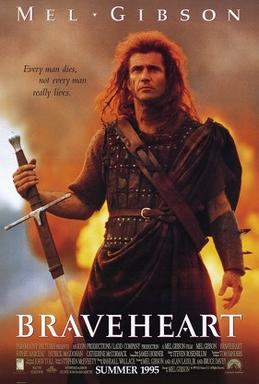
Hollywood gets mixed reviews in history class, study suggests


Students who learn history by watching historically based blockbuster movies may be doomed to repeat the historical mistakes portrayed within them, suggests a new study from Washington University in St. Louis.

The study, forthcoming in the journal Psychological Science, suggests that showing popular history movies in a classroom setting can be a double-edged sword when it comes to helping students learn and retain factual information in associated textbooks.

"We found that when information in the film was consistent with information in the text, watching the film clips increased correct recall by about 50 percent relative to reading the text alone," explains Andrew Butler, a psychology doctoral student in Arts & Sciences.

"In contrast, when information in the film directly contradicted the text, people often falsely recalled the misinformation portrayed in the film, sometimes as much as 50 percent of the time."

Butler, whose research focuses on how cognitive psychology can be applied to enhance educational practice, notes that teachers can guard against the adverse impact of movies that play fast and loose with historical fact, although a general admonition may not be sufficient.

"The misleading effect occurred even when people were reminded of the potentially inaccurate nature of popular films right before viewing the film," Butler says. "However, the effect was completely negated when a specific warning about the particular inaccuracy was provided before the film."

Butler conducted the study with colleagues in the Department of Psychology's Memory Lab. Co-authors include fellow doctoral student Franklin M. Zaromb, postdoctoral researcher Keith B. Lyle and Henry L. "Roddy" Roediger III, the Lab's principal investigator and the James S. McDonnell Distinguished University Professor of Psychology.

"These results have implications for the common educational practice of using popular films as an instructional aid," Butler concludes.

"Although films may increase learning and interest in the classroom, educators should be aware that students might learn inaccurate information, too, even if the correct information has been presented in a text. More broadly, these same positive and negative effects apply to the consumption of popular history films by the general public."

Click here to go to read the abstract of the article

Sunday, September 13, 2009

Jorvik Viking Centre using Skype to teach students


The York Archaeological Trust has launched an innovative project to bring history to life in the classroom.

The Skype Experience initiative uses the latest video conferencing facilities to bring the Vikings of Jorvik and their Roman, Tudor and archaeologists into schools.

The online learning resource will allow students who cannot visit the Jorvik Centre to talk to a virtual Viking or Roman.

The Skype Experiences are 45-minute sessions in which costumed characters engage with pupils and teachers via a live web link against a period backdrop, talking about their lives and showing relevant artefacts.

The lessons are intended to engage pupils in an interactive way, and are recorded to allow teachers to revisit the content.

Rachel Tumman, education manager at York Archaeological Trust, said: "We already provide costumed characters for schools to enhance, extend or replace visits. Skype Experiences take this one step further, making educational resources more widely available in a cost effective way.

"The beauty is that they remove the boundaries of geography and enable any school with a broadband connection and interactive whiteboard to take part. The costumed characters can also show and talk about precious objects that are not generally available for public viewing; and children can interact with the characters - in real time, either by speaking with them on screen or via a chatroom facility."

Seven schools across the UK have taken part in Skype Experiences over the six-month trial, including All Saints Primary School in Montacute.

Teacher Deborah Court said: "The Tudor Skype Experience was extremely professionally executed.

"All of the children's questions were answered informatively, with plenty of detail to engage the class. The children really enjoyed the experience of seeing a 'real life' Tudor, and being able to interact with him first hand was very exciting for them."

York Archaeological Trust now plans to launch Skype Experiences across the UK after receiving positive feedback about the lessons.

Rachel Tumman explained: "The trial has shown that the technology works; and the demand is certainly there. The next stage is to roll it out in primary schools across the UK, and look at how we could link it in with more of the trust's activities such as our live Hungate excavations in York city centre and education institutions."

The York Archaeological Trust run the Jorvik Viking Centre, DIG archaeological adventure and Barley Hall medieval townhouse in York.