For those living in North America who were envious of the British Museum's recent exhibition on Vikings, there is now an exhibition under way at the Royal BC Museum in Victoria, British Columbia. Vikings: Lives Beyond the Legends features over 500 artifacts. It will be on display until November 11th.
Beginning today, we will be changing how the Medieval News blog is presented. We hope to bring you a new post every day or two, which will cover what medieval and history news stories are out there, and some interesting things that were also found online. We hope you enjoy the links and videos!
Pope Benedict XVI announced today that he will be resigning as the Pontiff effective February 28, 2013. Also known as Joseph Ratzinger, the 85-year old Pope has been suffering from poor health. Still, this is a very surprising announcement, with the last Pope to resign being Gregory XII in 1415. A few months ago, we posted about The Pope who Quit, by Jon M. Sweeney, which details the papal intrigues surrounding the resignation of Celestine V in 1294.
The Financial Times has profiled the British Library's efforts at digitizing its 25,000 medieval manuscripts, and profiles six of these items. Claire Breay, head of medieval and earlier manuscripts at the British Library, explains “Anybody can enjoy them whether they are the leading academic on some aspect of that manuscript … or a schoolchild doing a project." Some beautiful images here.
Jason Peters has been examining records related to royal forests in Huntingdonshire during the Middle Ages. Using local archives and geographic computer programs, he was able to locate various royal and private forests in the county. In fact, nearly all of the county was legally considered a forest.
Peters explains, “A Norman-Medieval forest was, in effect, a legally defined conservation area where no matter who was the landowner construction, resource exploitation, habitat degradation and hunting of game could not be undertaken without Crown approval. The Forest of County Huntingdon was an evolving, dynamic, socio-political phenomenon, not limited to woodland habitat but extending across pastures, Fenlands, arable, meadows and rivers.
“There is 800 years of history that hasn’t been understood. People could be living somewhere that was a forest. By mapping areas that we now know were woods, we can understand the ecology of the area, which could be very important when considering any future development.”
The City of Leicester is already showcasing the story of Richard III, and has a temporary exhibition about the discovery of the English King. Here is a video of how it looks:
Richard III Memes
Some pretty funny work being done with Richard III this week...
Top Tips for Visiting Medieval Cairo
Finally, I want to point you to a podcast I heard the other day: Elizabeth Eva Leach, Professor of Music at the University of Oxford, spoke as part of the Engage: Social Media Talks series, about Blogging and Tweeting. Professor Leach is a medievalist who has developed a very good website about her work, and also tweets from @eeleach. For those interested in using social media as part of their academic career, this is well worth a listen too!
The anonymous 16th-century painter who recorded a scene of everyday life at the king’s fountain (Chafariz d’El Rei) in Lisbon depicted an impressive range of people and animals. In addition to a swan, a seal, fish, horses, dogs and birds, the artist also included more than 150 human figures. There’s so much going on in the busy scene along Lisbon’s port that Joaneath Spicer, the James A. Murnaghan Curator of Renaissance and Baroque Art at the Walters Art Museum in Baltimore, can be forgiven for initially overlooking an important detail. Only after she had finished working on the exhibition catalog did Spicer notice how many Jews appeared in the work.
The artist depicted at least half a dozen Jewish men — the women’s religious identities are more difficult to discern — including two Jewish policemen hauling away a black man who appears, according to the wall text, to be “drunk and sheepish.” The latter figure and several other Africans explain the painting’s appearance in the exhibit “Revealing the African Presence in Renaissance Europe,” which is at the Walters through January 21. It subsequently travels to the Princeton University Art Museum, where it will be shown from February 16 to June 9.
“I was really unaware of the presence of so many Jews in this painting until I began to blow up details of a photo in preparation for installing the work,” says Spicer, who recognized the Jewish figures from research she conducted for a 1996 article, “The Star of David and Jewish Culture in Prague around 1600,” which appeared in The Journal of the Walters Art Gallery. “This is the only image I know of — certainly painting from this period that purports to show Jews from life.”
At the beginning, surrounded by verdant farmland, the archaeological secrets of two ancient cities lay dormant below the surface on a Mediterranean island. That changed when William Childs, Professor of Art and Archaeology Emeritus, arrived at that rustic spot on the northwest coast of Cyprus in the early 1980s to explore the possibility of establishing an archaeological expedition for Princeton.
Childs brought with him a handful of graduate students who, under hardscrabble conditions, worked with basic tools — pickaxes, shovels, trowels, brushes and wheelbarrows — while all along taking notes. Little did they know that their efforts would unearth a Cypriot “City of Gold” that would lead to decades of educational opportunities for Princeton students.
Since a course called “Archaeology” was introduced on campus in 1843, the University has challenged students in the classroom and on excavations abroad to experience the culture, history, art, architecture and politics of the ancient world. In 1883, a formal Department of Art and Archaeology was founded.
A century later, the Princeton University Archaeological Expedition at Polis Chrysochous — that scrap of land in Cyprus — was established with Childs as director. The excavation set the stage for hands-on learning experiences for hundreds of Princeton students; new academic courses; and a major loan exhibition, “City of Gold: Tomb and Temple in Ancient Cyprus,” on view until January 20, 2013, at the Princeton University Art Museum.
The Wenlock Jug, a medieval artefact that was stolen earlier this year from a museum in Luton, England, was recovered this week by Bedfordshire Police.
Police officials said that they discovered the historical treasure in the early hours of Monday morning (September 24) at a property in Tadworth, Surrey. Two people were arrested at the location. One has been charged with handling stolen property and the second has been released on police bail pending further enquiries. The investigation continues, and the police are still appealing to the public for information regarding the burglary.
Det Sgt Barry Townson of the Bedfordshire Police explained, ”We are, of course, delighted that the jug has been recovered and will be returned to its rightful home but the investigation continues into how it came to be in Surrey and who was responsible for the burglary. I would like to re-appeal to anyone with information about the burglary to come forward.”
“Magnifici tre” is title of a spectacular exhibition in Firenze this autumn. On show are three manuscripts representing the absolute state of the art anno 1486-7.
The three manuscripts were ordered by Lorenzo de’ Medici, also known as Il Magnifico, as gifts to his three daughters, Luisa, Maddalena and Lucrezia. For the first time in five centuries the three manuscripts – two originals and one facsimile – will be exhibited along side each other at the Biblioteca Medicea Laurenziana. All three manuscripts belong to the category “Book of Hours”. They were ordered in connection with their betrothals and marriages at the Florentine workshop of Antonio Sinibaldi. The extreme preciousness of the glittering gold, the semi-precious stones and the enamel – and the exceptional quality of the illuminated pages of these three books – turn them into veritable jewels and absolute masterpieces of Florentine Renaissance.
Exhibition in Brussels of so-called Macedonian Manuscripts is met with uproar
The republic of Macedonia is on of the odd results of the break-up of former Yugoslavia. Officially it was recognised by UN 1993 under the provisional reference of the Former Yugoslav Republic of Macedonia, sometimes abbreviated as FYROM. Macedonia is a member of the Council of Europe. Further, since December 2005 it has also been a candidate for joining the European Union and has applied for NATO membership.
However the use of the epithet “Macedonia” has consistently met with opposition from the surrounding countries – as Macedonia is also the name of a wider region, transgressing the current national borders, which were the result of the civil war in Balkan.
People have been urged to get behind a fundraising campaign to keep a bit of Stone’s Medieval history in the town where it belongs.
The 12th century seal that was discovered by a metal detector in Cobham, Surrey, was recently named the 17th best historical find in the UK on Britain’s Secret Treasures, a TV collaboration between ITV and the British Museum.
£8,000 is needed to keep the seal in our Stone, so please support the campaign if you can.
If you’d like to contribute to the appeal now you can send a cheque, payable to “Seal Appeal”, to Steve Booth, Treasurer, 18 Larchfields, Redwood, Stone ST15 0DD.
The Jewish Museum in New York will be featuring over 60 medieval Hebrew, Arabic, and Latin manuscripts this fall as it presents a new exhibition based on works found in the Bodleian Library at Oxford University. Crossing Borders: Manuscripts from the Bodleian Libraries will be running from September 14, 2012 through February 3, 2013.
Included will be the splendid Kennicott Bible as well as two works in the hand of Maimonides, one of the most prominent Jewish philosophers and rabbinic authorities. This presentation showcases a selection from the Bodleian’s superb holdings within the larger context of the history of medieval Christian Hebraism – the study by Christian scholars of the Hebrew Bible and rabbinic sources, which first received full expression in the twelfth and thirteenth centuries. As Protestantism took hold in the sixteenth century, Hebraist trends resurged, sparking interest in the collecting of Hebrew books, and propelling the formation of the Bodleian’s outstanding Hebraica collection.
As the movie Brave draws in big crowds around the world, Scotland is set to take advantage of this new attention to showcase its medieval heritage. Two important exhibits will be taking place next year at the National Museum of Scotland, while construction is underway to create a visitors centre at the site of the Battle of Bannockburn.
Earlier this month the National Museum of Scotland announced that it will be holding two special exhibitions in Edinburgh, entitled Vikings and Mary Queen of Scots.
Vikings (1 February – 26 May 2013) explores the perceptions of the Vikings as warriors, explorers, pirates and merchants. The exhibition gives fascinating insights into death rituals, the power of mythology and the symbolism of the Viking ships, their crafts and workmanship and also their domestic lives. Among the objects on display will be spectacular jewellery and metalwork, textiles, glass, bone, amber and religious artefacts.
Few people realise that the medieval undercroft, near to the front of the Herbert Art Gallery and Museum, exists, and it is now being opened to the public.
On 23 and 24 June, and by prior appointment on later dates, members of the public will be able to see where goods were stored 600 years ago.
Mr Demidowicz, who was involved in the conservation of the undercroft, said that the merchant also bought and sold wool and traded in girdles, which were fashionable at the time.
Six Lewis Chessmen are to be displayed long-term at a new museum on the Western Isles, where more than 90 of the historic pieces were found.
An agreement has been reached between Comhairle nan Eilean Siar (Western Isles Council) and the British Museum.
The British Museum will loan the six pieces to the new museum at Lews Castle, in Stornoway, from 2014.
Figures from the Lewis Chessmen have only previously been displayed on the islands on a short-term basis.
A five-month exhibition last year, called Lewis Chessmen: Unmasked, attracted more than 23,000 visitors.
Under the new arrangement, six pieces will go on show at the 19th Century Lews Castle following the completion of a major revamp of the building.
Could Cleopatra have used these ancient glass bottles? Were these 3,000 year old figures ‘servants’ in the afterlife?
Questions which excited staff at Swansea University Egypt Centre are hoping to solve when they study a valuable collection of over 30 ancient Egyptian objects which has travelled from Surrey to Swansea, and arrived at the centre today.
The artefacts, donated by Woking College, includes two glass bottles (perhaps for scent or make-up) from late in Egyptian history (c100BC-AD200), around the time of Cleopatra and several shabtis (servant figurines) which the ancient Egyptians believed would do work for their deceased owners in the afterlife.
One of the shabtis is an ‘overseer shabti’. Shabtis, mirroring real life work teams, were organised in gangs of 10. Each gang would be overseen by a foreman, or overseer. The shabtis are around 3,000 years old.
Other objects include amulets, including an amulet of Sekhmet (a fiery, female goddess with a feline head) and another amulet of Shu (who separated heaven and earth); a head of the god Bes (protector of children and women in childbirth); a pendant in the shape of a lotus or papyrus sceptre; several pottery vessels and a Sokar hawk (Sokar was a god associated with rebirth).
Nearly 300 works of art are now on display at The Metropolitan Museum of Art to mark how the Middle East and eastern Mediterranean underwent important changes between the seventh and ninth centuries. Byzantium and Islam: Age of Transition represents the first major museum exhibition to focus on this pivotal era in medieval history.
The exhibition, which began on March 14, will be hosting a couple of important events within the next few days.
The exhibition brings together works of art from museums in more than a dozen countries, including Denmark, France, Germany, Greece, Israel, Italy, Jordan, the Republic of Georgia, the United Kingdom, and Vatican City among others. Many of these works have never been shown before in the United States.
“Byzantium and Islam will contribute immeasurably to the intellectual legacy that was established by the Met’s previous three widely acclaimed exhibitions on the Byzantine Empire,” said Thomas P. Campbell, Director of the Metropolitan Museum. “By bringing to general attention a complex historical period that is neither well-known nor well-understood, this exhibition will provide an important opportunity for our audiences.
Friends of Cosmeston Medieval Village held their first public meeting – and pledged to set up a registered charity to operate activities at the village.
Held on May 16 at the Lower Penarth Community Centre on Brockhill Way, around 40 people attended, including archaeologists, living history enthusiasts, local residents and newly elected councillors.
The meeting, organised by archeologist Karl-James Langford, campaigner Valerie Poole, and councillors Tracey Alexander and Mark Wilson, saw a steering committee established to run the charity.
Karl-James Langford, a senior archeologist with Archaeology Cymru, said the ultimate aim was to lease the village from the Vale Council and get visitors to return to the increasingly desolate site.
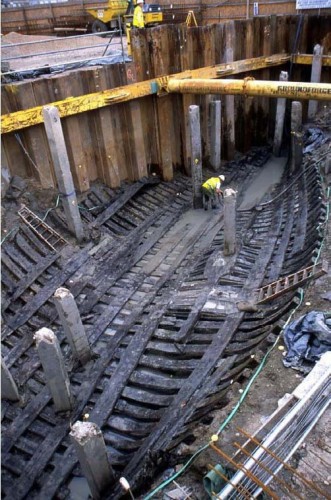
A decade of the Newport Medieval Ship will be celebrated next month at the site of the original discovery.
‘The Newport Medieval Ship: A Decade of Discovery’ event will be held at The Riverfront on June 1.
Visitors will be taken on a journey from the initial excavation to present day discoveries.
Speakers will include the Friends of the Newport Ship and local historian Bob Trett.
The National Poet of Wales Gillian Clarke will also debut her poem marking the anniversary.
A rare bronze Medieval jug, Chinese treasures and items that once belonged to Admiral Lord Nelson have all been stolen from museums in England this year.
But while the theft of ancient artefacts in Greece has been blamed on austerity measures and the recession, could the financial climate be a factor behind recent crimes in the UK?
Cuts to local authority finances have already resulted in museums across the country having their budgets slashed.
Last year the Museums Association reported 73% of museums that had seen their budgets cut had reduced staffing levels.
The report's authors interviewed staff representing 140 museum services and found many were worried about the future impact on visitors.
But are the cuts already having an effect?
A "nationally significant" bronze medieval jug has been stolen from a Bedfordshire museum.
The Wenlok Jug was taken from the Stockwood Discovery Centre in Luton at about 23:00 BST on Saturday.
In 2005 it was nearly sold abroad, but a temporary export ban provided the opportunity for Luton Museum to raise the £750,000 needed to buy it.
Director of Museums, Karen Perkins, called the theft "extremely serious and upsetting".
She said: "We are extremely proud that the Wenlok Jug is part of the collections at Stockwood Discovery Centre and are working extremely closely with police and investigators to do all we can to recover it.
"The Wenlok Jug is a nationally significant medieval object."
The jug is a very rare example of metalwork that can be associated with royalty from the 1400s.
The jug was on display in a high security display cabinet when it was taken on Saturday between 11pm and 11.25pm.
‘The Wenlok Jug’ bronze jug is a rare example of metalwork that can be associated with royalty from the 1400s. It stands at 31.5cm in height, weighing 6.1kgs and it's decorated with coats of arms, inscribed with the words “My Lord Wenlok”.
Karen Perkins, Director of Museums, said: "This is an extremely serious and upsetting situation.
"The Wenlok Jug is a nationally significant medieval object, which came close to being lost to the UK when it went up for sale with Sotheby’s in May 2005."
A Connecticut seventh-grader says workers at the Metropolitan Museum of Art in New York City didn't believe him when he pointed out an inaccuracy with a map that was on exhibit.
The map purported to show the Byzantine Empire at its largest size in the 6th century, but he noticed that Spain and part of Africa were missing from the depiction.
Benjamin Lerman Coady knew he was right, because he had just studied the empire in school before last summer's trip to the museum with his mother.
He was told to fill out a form.
"The front desk didn't believe me," Benjamin told The Hartford Courant. "I'm only a kid."
The 13-year-old West Hartford resident filled out the form and never expected a response, but a museum official wrote him in September saying his comments were under review. Then came an email in January from Helen Evans, the museum's curator for Byzantine art.
Four medieval stained glass windows made in Norwich are to stay in the county after almost £200,000 was raised to buy them.
Experts believe the rare circular windows, known as roundels, were made in the 16th century by city artist John Wattok for the home of former Norwich Mayor Thomas Pykerell.
In the 19th century they moved to Brandiston Hall near Reepham, but in the 1980s scholars lost track of where they had gone.
Last year they were acquired by a London dealer and offered for sale.
To prevent them ending up in private hands, Norwich Castle Museum and Art Gallery raised £194,000 to snap them up, with the cash coming from the National Heritage Memorial Fund, the Art Fund, the Friends of Norwich Museums, the Pilgrim Trust, The Ruddock Foundation for the Arts and the Paul Bassham Charitable Trust.